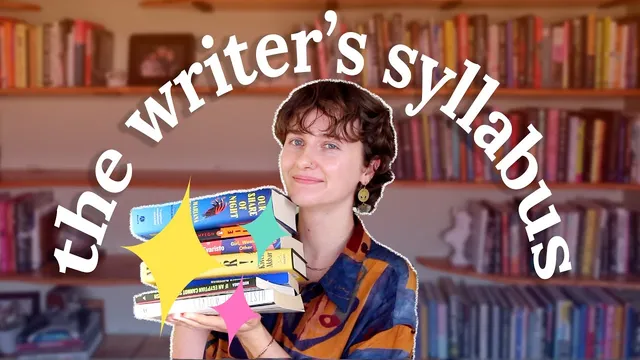
reading these books will make you a better writer | the writer's syllabus ep. 1
Based on ShaelinWrites's video on YouTube. If you like this content, support the original creators by watching, liking and subscribing to their content.
Reading should function as craft nourishment, so prioritize books that achieve the effects you want rather than using low-quality work as practice material.
Briefing
A new “Writer’s Syllabus” series builds a practical reading list around one goal: using high-quality fiction to sharpen craft. Shayen frames reading as nourishment for writers—feeding on strong work, not “bad books”—and treats each recommendation like an intentional class text aimed at a specific element of writing craft. The through-line isn’t genre variety for its own sake; it’s the way certain novels changed her perspective on what fiction can do, opening “creative doorways” at the right moment.
The inaugural episode spotlights books that reshaped her approach to voice, character, structure, and the handling of reality. Mariana Enríquez’s “Our Share of Night” (translated by Megan McDow) is praised for epic scale paired with richly drawn characters, while leaning into horror and historical portraiture of Argentina’s military dictatorship. The novel’s disturbing ritualistic child abuse is described as purposeful rather than gratuitous, and Enríquez is credited with transcending multiple traditions—love story, family saga, magical realism, and Stephen King–style horror—by building a unique, spiritual, complex lore. The call for an HBO-style limited series underscores how cinematic and expansive the book feels.
Essa M. Emeg’s “Eileen” shifts the focus to character work. Set in a juvenile prison in the 1950s or 60s, the story follows Eileen’s fascination with a new secretary, Rebecca, and the horrific consequences that follow. The structure is described as deceptively simple and mostly linear, using a familiar pulp-like setup to lure readers into false security before delivering an unfamiliar character. Emeg’s key craft move, as framed here, is refusing to apologize for Eileen—no moral hand-washing, no emotional steering—so readers are trusted to see humanity inside grotesqueness.
Bernardine Evaristo’s “Girl, Woman, Other” is recommended for unconventional structure and line-level experimentation. With multiple Black women and non-binary characters in the UK, the book builds and unravels a “web” of relationships through short, character-centered chapters. Evaristo’s stylistic choice—using line breaks instead of standard sentence-ending periods—turns a potential obstacle (reading a long book without periods) into a rhythmic flow that rewires the reader’s expectations.
Kav Akbar’s “Murder by the Book” is singled out for poetic instincts that drive both structure and sentence-level revelation. The protagonist, Cyrus, an Iranian immigrant’s son grappling with addiction, becomes obsessed with whether death can mean anything after his mother’s plane was shot down by the US military. The novel’s lyrical clarity, simultaneous cleverness and devastation, and an ending described as weird but mind-blowing all point to a writerly method where each sentence feels “necessitated” by the one before.
Other picks expand the craft lesson into reality-bending technique. Alexander Chee’s “You Can Have a Body Like Mine” is framed as uncanny—real enough to feel familiar, but not quite real enough—turning everyday elements like reality TV and advertising into something forbidding. Naga’s “If an Egyptian Cannot Speak English” deconstructs a boy-meets-girl premise through alternating vignette perspectives, delivering rich characterization in a brief, lyrical form.
Finally, Emily Fridlund’s “History of Wolves” is treated as the personal benchmark book. Read during a transitional period between writing styles and genres, it provided clarity about the kind of story she wants to write. The novel’s quiet, eerie atmosphere, nonlinear but gently structured design, and organic-feeling character perspective set a “bar of quality” for her—less about universal acclaim and more about alignment with her own artistic aspirations.
The episode ends by inviting viewers to submit writing struggles via a Google form, promising future recommendations tailored to specific craft needs.
Cornell Notes
The “Writer’s Syllabus” episode recommends novels that improved craft by changing how the writer thinks about fiction. The list emphasizes reading quality work—books that accomplish the effects writers want—rather than using “bad books” as practice material. Each pick is tied to a craft lesson: horror and historical lore in Mariana Enríquez’s “Our Share of Night,” unflinching character work in “Eileen,” unconventional structure and line-level rhythm in “Girl, Woman, Other,” and sentence-level poetic structure in “Murder by the Book.” The episode closes with Emily Fridlund’s “History of Wolves” as a personal standard for organic voice, eerie delicacy, and intricate yet gentle structure.
Why does the episode reject the idea of reading “bad books” to improve writing?
What craft lesson is highlighted through “Our Share of Night”?
How does “Eileen” use structure to change reader expectations?
What makes “Girl, Woman, Other” stand out as a structural and line-level experiment?
What does the episode claim about poetic structure in “Murder by the Book”?
Why is “History of Wolves” treated as a personal benchmark rather than a universal favorite?
Review Questions
- Which recommended novel most directly matches your current writing need (voice, character, structure, or reality-bending), and what specific craft mechanism from the episode would you try to imitate?
- How do the episode’s descriptions of “Eileen” and “Girl, Woman, Other” differ in their approach to reader guidance—moral steering versus structural/rhythmic design?
- What does the episode suggest about how sentence-level decisions (line breaks, lyrical cadence, sentence necessity) can change the way a story feels and moves?
Key Points
- 1
Reading should function as craft nourishment, so prioritize books that achieve the effects you want rather than using low-quality work as practice material.
- 2
Mariana Enríquez’s “Our Share of Night” is recommended for blending epic scope, horror, and historical dictatorship into a single, transcendent narrative tradition.
- 3
“Eileen” is presented as a model for unlikable character writing by refusing apology, moralizing, or emotional hand-holding while keeping the plot gripping.
- 4
“Girl, Woman, Other” is highlighted for unconventional structure (a slow web of relationships) and for line-level experimentation using line breaks instead of standard periods.
- 5
Kav Akbar’s “Murder by the Book” is framed as an example of poetic sentence-level structure where each sentence feels required by the one before.
- 6
Alexander Chee’s “You Can Have a Body Like Mine” is recommended for creating an uncanny reality—familiar enough to recognize, but skewed enough to disturb.
- 7
Emily Fridlund’s “History of Wolves” is treated as a personal “bar of quality” for organic voice, eerie delicacy, and intricate yet gentle nonlinear structure.