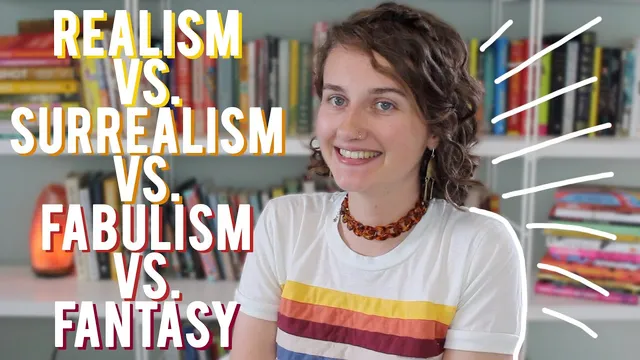
Reality in Fiction | Writing Tips
Based on ShaelinWrites's video on YouTube. If you like this content, support the original creators by watching, liking and subscribing to their content.
Treat “reality in fiction” as a sliding spectrum, not a binary, and decide where the story should sit before drafting.
Briefing
Fiction doesn’t just borrow from reality—it can deliberately shift how “real” a reader feels, and that shift can be engineered through concept, worldbuilding, style, and even small choices like imagery and names. The core idea is a sliding spectrum of realism: stories can sit close to everyday life, push reality’s intensity up, or tilt it into altered, magical, or fully separate worlds. Getting that placement right matters because readers judge believability not only by plot events, but by consistency in tone, character behavior, and internal rules.
At the grounded end sits “grounded realism,” where nothing is polished for drama and mundane pain—daily tasks, small details, and the texture of ordinary life—stays intact. Brandon Taylor’s Real Life is offered as an example, with emphasis on the everyday hurt of being alive rather than sensational set pieces. Just a step up is “realism,” where events may be more dramatic or coincidental than real life, but still remain believable enough that readers accept them without noticing the manipulation.
Next comes “high realism,” a term learned from a fiction professor and treated as reality with saturation turned up: the world is still recognizable, but everything feels more intense, vivid, or slightly more strange. From there the spectrum enters “non realism.” Surrealism is described as reality shifted “a couple degrees,” where the world feels off or altered—sometimes subtly, sometimes overtly—often by changing how people act or how cause-and-effect behaves. Magical realism (the transcript also uses “fabulous” as a preferred term) is framed as a different kind of tilt: magical elements are integrated into an otherwise ordinary world and treated as normal by characters, without a formal magic system and usually without explanation.
Fantasy splits further. “Low fantasy” keeps the story in a realistic setting but introduces magic as something that exists within that world—often with a system, logic, or social structure—so the narrative must justify its rules. “Urban fantasy” is given as a common example. “Fabulous” is contrasted with low fantasy by arguing that it doesn’t need logical justification so much as symbolic justification. “High fantasy,” at the far end, is explicitly not of the real world—set in a separate world or alternate reality.
Several craft levers determine where a story lands on this spectrum. Concept is the first: if the premise includes magic, the story’s plane of reality changes immediately. Worldbuilding matters too, especially how systematically magic is handled and what internal logic is established. Writing style can also drag readers toward a different category; the creator notes that even realistic work can get labeled “magical realism” if the prose is florid or “over-the-top.” Details and imagery act as cues as well: a seemingly real-world object (like a creepy doll nailed to a signpost) can push a scene toward high realism or surrealism purely through the specificity of what’s chosen. Names provide another fast signal—more whimsical or non-human naming patterns can tell readers the world isn’t quite theirs.
Finally, the transcript stresses consistency and intention. Unreal behavior or illogical events feel like bad writing when accidental, but become powerful when consistently aligned with the story’s chosen plane of reality. The examples Alexander Kleman’s You Too Can Have a Body Like Mine and My Year of Rest and Relaxation are used to illustrate how complex works can blend high realism and surrealism, sometimes resisting easy placement on a single scale. The takeaway: decide what reality level the story needs, then make every element—tone, character action, imagery, and rules—pull in the same direction.
Cornell Notes
The transcript lays out a spectrum for how fiction can manipulate “reality,” from grounded realism to high fantasy. It distinguishes grounded realism (mundane life without drama-polish), realism (believable but sometimes heightened events), and high realism (recognizable reality with intensified vividness). It then moves into non realism: surrealism as reality shifted slightly or strongly “off,” and magical realism/fabulous as magical elements treated as ordinary without a magic system. Fantasy is split into low fantasy (magic in our world with its own logic/system) and high fantasy (a fully separate world). The craft guidance centers on consistency: concept, worldbuilding, style, imagery, names, and character behavior must all align with the chosen plane of reality.
How does the transcript define “grounded realism,” and what makes it different from ordinary realism?
What’s the practical difference between surrealism and magical realism/fabulous in this framework?
Why does the transcript insist that low fantasy and fabulous can look similar but behave differently?
What craft choices can “cue” readers about the story’s plane of reality?
What does “consistency and intention” mean for handling unrealistic events?
Why does the transcript avoid rigidly placing every book on the scale?
Review Questions
- Where does the transcript draw the line between realism and high realism, and what changes for the reader’s sense of intensity?
- What specific cues—names, imagery, character behavior, tone—most strongly signal a shift toward surrealism or fabulous in this framework?
- How does the transcript distinguish low fantasy from fabulous when both include magic inside a realistic setting?
Key Points
- 1
Treat “reality in fiction” as a sliding spectrum, not a binary, and decide where the story should sit before drafting.
- 2
Grounded realism prioritizes unpolished everyday life and pain, avoiding drama-polish and sensational trimming.
- 3
High realism keeps the world recognizable but turns up vividness and intensity, creating a heightened yet still believable feel.
- 4
Surrealism shifts reality’s tone or logic so the world feels “off,” while magical realism/fabulous integrates magic as ordinary without a formal system.
- 5
Low fantasy requires magic to operate with internal rules and logic, whereas fabulous leans on symbolic justification rather than strict explanation.
- 6
Writing style, imagery, and names can push readers toward a different realism category even when the plot stays “realistic.”
- 7
Unreal or illogical elements must be consistent and intentional; otherwise they read as mistakes rather than worldbuilding.