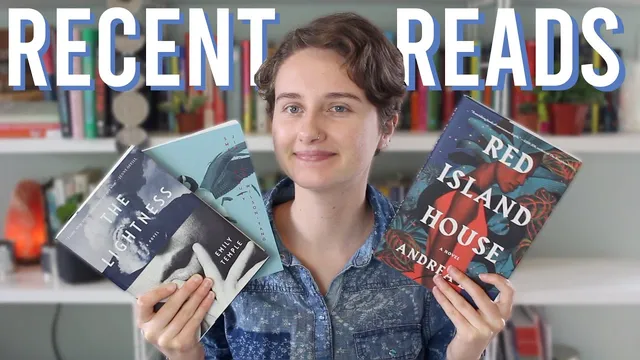
Recent Reads #30
Based on ShaelinWrites's video on YouTube. If you like this content, support the original creators by watching, liking and subscribing to their content.
Flash fiction’s power comes from compression: a single page can carry both emotional heart and thematic critique when prose is direct and precise.
Briefing
“Recent Reads #30” is a rapid-fire set of book reactions that keeps circling one craft obsession: how writers create emotional force through precision—sometimes by compressing a moment into a page, sometimes by letting prose behave like poetry, and sometimes by trusting brief scenes to land hard.
Roxane Gay’s short-story collection *Ayiri* sets the tone. The stories are mostly flash fiction, and Gay’s strength is described as compression as an aesthetic: she can deliver both the heart and the fault of a book in just a couple sentences, and her own fiction does the same. The result is direct, precise writing where a single page can accomplish what longer fiction often tries to do. That idea—precision over sprawl—becomes a measuring stick for later reads.
Stephanie Danler’s *Sweetbitter* brings a different lesson, focused on character logic rather than style. The prose and atmosphere are praised for their hazy, artsy rhythm, and the narrative is framed as a year of Tess’s life in New York, drifting through vignettes. But Tess is called out as internally intelligent yet externally portrayed as “dumb,” creating a mismatch that undercuts the character’s credibility. More importantly for writing craft, the reviewer says the “young woman moves to the big city to find herself” plotline doesn’t work without concrete backstory explaining why the longing matters. Abstract desire alone isn’t enough; the emotional transformation needs grounding.
Billy Ray Belcourt’s memoir *A History of My Brief Body* is celebrated for form as much as content. The book blends essay, personal anecdote, and poetry, with the poetic sections especially admired. The looseness is described as intimate—like reading a large poem rather than a conventional memoir. Still, the reviewer sometimes wants more expansion when Belcourt’s lines land so sharply they feel like they cut off just as the idea begins to deepen.
Several poetry-forward books reinforce the same theme: language can carry meaning more efficiently than explanation. Sophie Robinson’s *Rabbit* is praised for technically constructed “chaos,” including lack of punctuation and no capital letters, which makes the thoughts feel frenetic and impactful. Pauline de la Broilard’s *All About Sarah* (translated from French, per the reviewer) is intense and atmospheric in its Paris setting, but the second half is criticized as emotionally dark in a way that feels unearned and repetitive, derailing the momentum built earlier.
Andrea Lee’s *Red Island House* is immersive and sensory, with a strong sense of place, but the central relationship between Shea and her husband Sanand is harder to fully believe. The reviewer finds Shea perceptive and compassionate enough that her attraction and compatibility with a colonizer husband don’t quite add up, especially given the narrative’s distance and critical framing.
Lily King’s *Writers & Lovers* is liked more than expected: the “writing about writing” premise works here because the philosophy feels writerly and the main character’s day-to-day life grows increasingly affecting. Emily Temple’s *The Lightness* becomes the standout favorite, with feral teenage energy, brief but punchy scenes, and detail-rich prose that demands rereading.
The remaining reads—Jia King Wilson Yang’s *Small Beauty* and Lily Wong’s *Saturn Peach*—continue the emphasis on smallness, tenderness, and stream-of-consciousness intimacy, with the reviewer repeatedly valuing how form shapes emotional access.
Cornell Notes
The core throughline across these “Recent Reads #30” reactions is how writers generate impact through precision: flash fiction compression, poetic prose, and brief scenes that still feel complete. Roxane Gay’s *Ayiri* is praised for flash fiction’s aesthetic of compression and for direct, precise storytelling. Stephanie Danler’s *Sweetbitter* earns style praise but loses points for character credibility and for a coming-of-age arc that lacks concrete backstory to justify the protagonist’s longing. Billy Ray Belcourt’s *A History of My Brief Body* is admired for blending essay and poetry to create intimacy, while Emily Temple’s *The Lightness* stands out as a favorite for feral teenage energy and detail-packed, short scenes. Overall, the reviewer treats craft choices—structure, voice, and grounding—as the difference between “pretty” writing and writing that truly lands.
What does “compression” mean in the context of flash fiction, and why does it matter for craft?
Why does *Sweetbitter*’s protagonist feel inconsistent, and how does that affect the narrative’s emotional logic?
How does blending forms (essay, anecdote, poetry) change the reading experience in *A History of My Brief Body*?
What structural and stylistic choices make *The Lightness* especially compelling to this reader?
Where does *All About Sarah* succeed, and why does it lose momentum later?
Review Questions
- Which craft principle shows up most often across these reactions—compression, poetic prose, or scene-based structure—and where do you see it applied differently?
- Pick one criticized book (e.g., *Sweetbitter*, *All About Sarah*, *Red Island House*). What specific narrative weakness is named, and how would you fix it using the craft lessons implied here?
- Why does the reviewer repeatedly connect “form” (flash fiction, poetry, vignette scenes) to “emotional access” for the reader? Cite at least two examples.
Key Points
- 1
Flash fiction’s power comes from compression: a single page can carry both emotional heart and thematic critique when prose is direct and precise.
- 2
Character arcs that rely on abstract desire need concrete backstory; otherwise transformation feels unearned.
- 3
Poetic voice in prose can create intimacy and immediacy, especially when form blends genres like memoir and poetry.
- 4
Brief scenes can be more effective than long stretches if each scene is bold and purposeful rather than merely atmospheric.
- 5
Narrative credibility depends on internal/external consistency; mismatches between what a character thinks and how they act can weaken engagement.
- 6
A strong sense of place and sensory immersion can’t fully compensate for unclear relationship dynamics or motivations.
- 7
Even technically well-constructed “chaos” can be satisfying when it feels intentional and edited for effect, not sloppy.