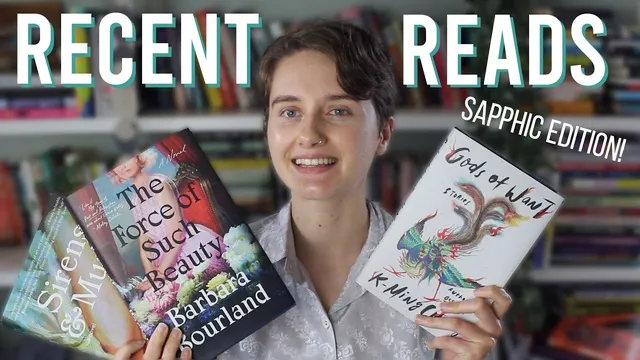
Recent Reads #43 | I read a bunch of sapphic books and it healed me
Based on ShaelinWrites's video on YouTube. If you like this content, support the original creators by watching, liking and subscribing to their content.
The reading streak is framed as a deliberate dive into Sapphic fiction, with “healing” tied to nuance in queer interiority rather than plot resolution.
Briefing
Sapphic fiction became a kind of emotional reset for ShaelinWrites, and the reading streak in “Recent Reads #43” is less about plot mechanics than about what these books do to inner life—tenderness, desire, shame, and selfhood—often against surreal or quietly brutal backdrops. The through-line is that many of these stories feel “healing” not because they’re uniformly happy, but because they render queer experience with specificity: what gets said, what gets withheld, and how a single early rupture can echo for years.
The strongest early anchor is Kaming Chang’s short story collection “Gods of Want,” praised for inventive prose and surreal settings where the characters’ conflicts stay deeply human. Chang’s worlds are imaginative to the point that even when longer pieces share structural similarities, the line-by-line originality keeps readers invested. The collection also lands humor alongside tenderness, including a highlighted exchange about rejecting the “male gaze” and being “literally being seen,” which captures the book’s blend of wit and emotional clarity.
Kyung-suk Shin’s “Violets” (translated by Anton) shifts to a quieter, more enigmatic tone. A childhood kiss triggers Namay’s rejection, and the adult San’s life in Seoul—music, a flower shop romance, and moving in quickly—plays like a surface calm over repressed pain. The writing is straightforward, but the emotional core is never fully spoken; daily details (what she eats, when she wakes) become a way to show what the story won’t name. As events accumulate, the internal pressure rises until San begins to “fall apart at the seams,” making the early chapter feel like the key that unlocks the rest.
Antonia Angress’s “Sirens and Muses” brings campus intensity and art-world questions into the mix, set against Occupy Wall Street. The novel’s appeal is its balance of artistic ambition and personal sacrifice, plus a romance/love-triangle dynamic among students Louisa, Katrina, and Preston. The prose is described as compulsively readable, and the author’s credibility is tested by the sheer number of art exhibits referenced—so much so that the reader was surprised to learn Angress isn’t an artist.
Barbara Borland’s “The Force of Such Beauty” stands out for its fairy-tale premise: an Olympic marathon runner, Caroline, sets a world record, then is sidelined by injury and arthritis. Recovery leads to meeting the prince of a fictional European micronation and marrying into monarchy, turning body autonomy into a central tension—especially when athletic identity is tied to being “the best ever.” The book is likened to Netflix/Hallmark “royal” fantasies, but praised for nuance in how it treats control, identity, and psychological fallout.
Other picks widen the emotional palette. Michelle Hart’s “What We Do in the Dark” is a spare, fast novel about a college freshman’s first queer affair with a professor and the loneliness it leaves behind. Nivea Corneliusin’s “Crimson” is propulsive and structurally playful—five queer friends in Greenland over a weekend—but the reader notes occasional melodrama and a few unrealistic turns. Bonnie Hui’s “Notes of a Crocodile” is described as nuanced and quotable, yet more abstract than expected, with dialogue often summarizing rather than dramatizing.
Poetry and youth fiction deepen the mood. Sophia El Hilo’s “Girls That Never Die” is celebrated for immersive poems about girlhood, shame, rebellion, and tenderness after violence. Andrea Abreu’s “Dogs of Summer” (translated by Julia Sanchez) is praised for sound-driven, visceral language and hazy atmospheric youth—though the handling of a sexual assault that isn’t revisited afterward is flagged as devastating and destabilizing.
Finally, Nell Stephen’s “Briefly a Delicious Life” blends historical fiction with a ghost narrator: Blanca, a ghost from Mallorca, becomes entangled with George Sand and Frederick Chopin. The sensory, tactile narration is credited with making the story feel fresh rather than gimmicky, even if the multi-layered narrative momentum stalls mid-book. Across the stack, the common payoff is clear: these books make queer interiority feel specific, lived-in, and—at least in this reader’s experience—repairing.
Cornell Notes
The reading list centers on Sapphic fiction that treats queer identity as something built from both what’s said and what’s suppressed. Kaming Chang’s “Gods of Want” is praised for surreal worlds where character conflicts stay intensely human, while Kyung-suk Shin’s “Violets” uses quiet, detailed daily life to show the lasting impact of childhood rejection. Antonia Angress’s “Sirens and Muses” mixes campus relationships with art-world questions under the shadow of Occupy Wall Street. Several other titles broaden the emotional range—body autonomy in “The Force of Such Beauty,” loneliness and aftermath in “What We Do in the Dark,” and sensory tenderness in “Briefly a Delicious Life.” Together, the books matter because they render queer experience with nuance rather than explanation, leaving room for complexity and healing.
Why does “Gods of Want” land so strongly for this reader even when some stories share structural similarities?
How does “Violets” portray repression without relying on explicit statements of feeling?
What makes “Sirens and Muses” compelling beyond its romance elements?
Why is “The Force of Such Beauty” framed as more than a royal-fantasy premise?
What criticism appears most often about “Notes of a Crocodile,” and what does the reader still value?
How does “Dogs of Summer” handle tone and time, and what major issue is flagged?
Review Questions
- Which books use “withholding” as a technique—showing emotion through routine, structure, or omission—and how does that affect the reader’s sense of realism?
- Pick one title that’s praised for world-building or setting (surreal worlds, Greenland, monarchy, Mallorca). What specific detail makes the setting feel integral rather than decorative?
- Where does the reader draw the line between melodrama and effective emotional intensity? Cite an example from one of the novels or poems.
Key Points
- 1
The reading streak is framed as a deliberate dive into Sapphic fiction, with “healing” tied to nuance in queer interiority rather than plot resolution.
- 2
Kaming Chang’s “Gods of Want” is praised for surreal settings paired with intensely human conflicts, plus humor that lands alongside tenderness.
- 3
“Violets” uses quiet surface narration and detailed daily life to show repression, with a childhood event casting a long shadow over adult choices.
- 4
“Sirens and Muses” blends campus relationships with art-world debates under Occupy Wall Street, making romance inseparable from questions of value and sacrifice.
- 5
“The Force of Such Beauty” turns a royal-fantasy setup into an argument about body autonomy and identity after athletic decline.
- 6
Several titles are evaluated through translation/style effects—especially where line-level melodrama, dialogue density, or sound-based prose changes emotional impact.
- 7
“Dogs of Summer” is admired for sound-driven, hazy youth atmosphere, but a sexual assault that isn’t revisited is treated as a major ethical/emotional failure.