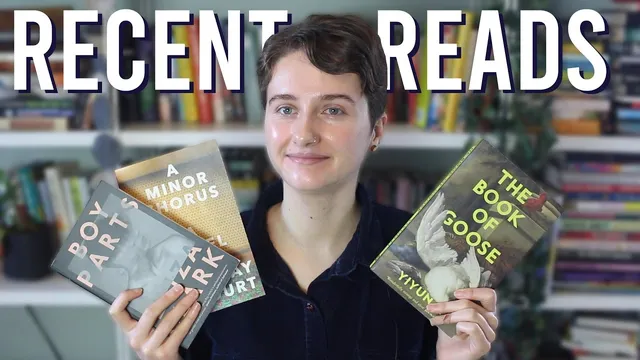
Recent Reads #45 | The good, the bad, and the ugly
Based on ShaelinWrites's video on YouTube. If you like this content, support the original creators by watching, liking and subscribing to their content.
“Slow Foot” is criticized most for framing: Indigenous characters are portrayed through stereotypes and positioned as invaders to demonic beings, while Puritans are treated as justified because Satan is real in the story’s logic.
Briefing
A sharp split emerges across these October reads: several books win praise for language, form, and emotional precision, while others are criticized for flattening characters and—most severely—using stereotypes in ways the reviewer finds morally and artistically indefensible.
The most pointed negative reaction lands on Brom’s “Slow Foot.” Set in a Puritan village during an apparent witch trial, it blends demonic entities (“The Wild folk”) with a supernatural framing that, in the reviewer’s view, turns into a pro-Christian, anti-Indigenous story. Indigenous characters are described as stereotyped—naive and “childishly” spiritual—and the plot’s supernatural logic is treated as reinforcing harmful ideas: Indigenous people are cast as invaders to demonic beings, while the Puritans are positioned as the ones facing a genuine threat because Satan is real in this world. The reviewer argues that this structure makes the Puritans “right” in a way that can’t be excused by historical setting, and that the book’s framing never meaningfully grapples with colonization from the perspective of the groups it depicts. Beyond the offense, the criticism extends to craft: predictable plot beats, flat characters, and writing the reviewer calls mediocre.
Other books receive more mixed verdicts. Elizabeth V. Aldrich’s novella “Ruthless Little Things” is described as an experimental, fever-dream cascade of sex, drugs, and stream-of-consciousness poetry. The reviewer wanted more queer literature and felt the pain beneath the hedonism, but says the stakes and emotional “grounding” are too abstract. As the novella shifts into poems, the second half feels disjointed and, in their view, emotionally unearned—something that would have worked better as a standalone poetry collection.
Sarah Freeman’s “Times” earns admiration for its precise, dreamy vignettes, but the reviewer says the style prevents tension from building and makes later events feel unearned. James Lee Mather’s “Uncertain King,” by contrast, is praised for subtle strangeness: domestic scenes in the Bahamas carry a “tinge of weirdness” that makes them urgent, with cross-generational relationships recurring throughout. The standout story “boyo” is singled out as exceptional.
On the poetry side, Hanif Abdurraqib’s “Vintage Sadness” is celebrated as a free ebook and recommended as an accessible entry point into his work. The reviewer highlights how the poems start from mundane images and expand in scope, culminating in a powerful long final poem structured as an exchange between a poet and editor.
Several later picks lean toward form-driven experimentation and character dynamics. Sama L. Wardani’s “These Impossible Things” is fast and centered on three Muslim women at major life turning points, but the reviewer finds the tone too contemporary for their usual taste and complains that male characters are either “perfect” or “suck,” leaving little romantic tension. Tupelo Hassman’s “Gods with Little G” begins promisingly with a floaty, Camino-like feel in an evangelical town where media is cut off; yet the reviewer says the setting’s pressure fades and the middle slows. Billy Ray Bell Court’s “Minor Chorus” is described as essayistic and braided—more illumination than narrative—while Eliza Clark’s “Boy Parts” is praised for its unhinged, charismatic photographer protagonist whose control spirals into collapse. Ian Lee’s “The Book of Goose” closes the list with a luminous, nuanced girlhood story about friendship, authorship, and the burden of another person’s thoughts, even if the reviewer sometimes wishes it pushed further.
Overall, the throughline is craft and ethics: when language and structure deepen character and emotion, these books land. When framing becomes predictable or stereotypes are treated as supernatural truth, the reviewer’s disappointment turns sharp.
Cornell Notes
Across these October reads, the reviewer draws a clear line between books that earn emotional impact through language and form—and books that fail through flat characterization or ethically troubling framing. “Slow Foot” is the harshest critique: a Puritan witch-trial story with demonic forces is read as reinforcing anti-Indigenous stereotypes and positioning Puritans as justified because Satan is “real” in the narrative. “Ruthless Little Things” and “Times” are also mixed, with experimental style that the reviewer says blocks tension or emotional grounding. Several titles are praised for subtlety and precision—especially “Uncertain King,” “Vintage Sadness,” and “Minor Chorus”—while “Boy Parts” and “The Book of Goose” stand out for compelling character dynamics and nuanced girlhood.
Why does “Slow Foot” trigger the strongest negative reaction, beyond general dislike?
What does the reviewer mean by “emotional grounding” being missing in “Ruthless Little Things”?
How does “Times” manage to be admired for style yet still leave the ending underwhelming?
What makes “Uncertain King” compelling according to the reviewer’s reading experience?
How does “Minor Chorus” differ from a conventional novel in structure and effect?
What does the reviewer find most compelling about “Boy Parts” as it spirals?
Review Questions
- Which specific narrative choices in “Slow Foot” make the reviewer see the book as ethically harmful rather than merely historically inaccurate?
- What craft elements (tension-building, grounding, pacing) does the reviewer say distinguish “Times” from books they enjoyed more?
- How do the reviewer’s descriptions of form—poetry collection, essayistic novel, braided essay—predict what kind of emotional payoff they expect?
Key Points
- 1
“Slow Foot” is criticized most for framing: Indigenous characters are portrayed through stereotypes and positioned as invaders to demonic beings, while Puritans are treated as justified because Satan is real in the story’s logic.
- 2
“Ruthless Little Things” is praised for intensity and queer joy but faulted for abstract stakes and an emotionally unearned shift into poems that feels disjointed.
- 3
“Times” earns admiration for precise, dreamy vignettes yet disappoints because the style prevents tension from building, making later events feel unearned.
- 4
“Uncertain King” stands out for subtle domestic realism in the Bahamas paired with recurring weirdness and strong attention to cross-generational relationships, especially in “boyo.”
- 5
“Vintage Sadness” is recommended as a free ebook entry point, with poems that expand from mundane images into larger emotional scope, culminating in a standout long final poem.
- 6
“These Impossible Things” is fast and relationship-centered, but the reviewer finds the romantic tension weakened by flat male characters and a tone they consider more contemporary than their usual preference.
- 7
“Minor Chorus” is valued for its essay-like, braided structure—more illumination than narrative closure—while “Boy Parts” is praised for a charismatic, controlling protagonist whose unraveling keeps attention locked in.