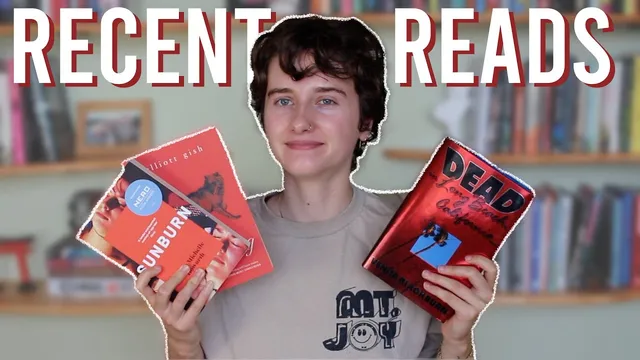
Recent Reads #56 | The perfect fall folk horror book, meta-fiction, surrealism!
Based on ShaelinWrites's video on YouTube. If you like this content, support the original creators by watching, liking and subscribing to their content.
Reading is treated as inherently subjective, and the notes repeatedly reject “objective craft” expectations in favor of personal resonance.
Briefing
A standout theme across these 20 “Recent Reads” is how experimental or meta storytelling can still land emotionally—when the structure serves the characters instead of replacing them. Several books here lean hard into surrealism, fractured reality, or in-world texts, and the strongest reactions come when that strangeness sharpens intimacy, dread, or meaning rather than just adding confusion.
The most consistently praised relationship-driven work is “Thirst for Salt” by Meline Lucas, an Australian novel centered on a young woman’s relationship with a man about 20 years older. Even though the plot stays quiet, the writing carries “languid heat,” with atmosphere and intensity doing the heavy lifting. The same sensory focus shows up in “I Love You So Much It’s Killing Us Both” by Maria Stovall, where a protagonist’s invitation to a party for a newly adopted daughter triggers deep, protagonist-centered remembrance of a formative friendship. The voice is described as strong and immersive, with punk-rock energy and realistic weirdness—though the ending loses some momentum for the reader.
Where the list turns more structurally inventive, “How It Works Out” by Miriam Lacro earns major praise for its meta, kaleidoscopic approach: each chapter imagines an alternate reality for a lesbian couple, yet the realities interweave rather than functioning as isolated “what if” snapshots. The result is described as bizarre but immediately legible—strange rules, shifting worlds, and escalating weirdness that still keep the reader oriented.
Several books use disintegration of reality as a core engine. “Dead in Long Beach California” by Vanita Blackburn follows Coral, a successful author whose brother’s suicide leads her to impersonate him to his contacts; the week-long deception triggers a collapsing personal reality. The reaction emphasizes how the book stays engaging even when “not much” happens, because character, emotion, and detail keep tightening the trap. “Lost in the Garden” by Adam S. Lesley also builds a creepy, lush road-trip mood toward a destination called “Almond Be,” but the criticism is that the plot meanders and the characters lack depth to compensate for the drawn-out structure.
Horror and folk unease appear as another major lane. “Gray Dog” by Elliot Gish is singled out as a genuinely creepy, slow-burn folk horror told through a teacher’s journal entries—intimate, immersive, and “perfect fall” in its dread. “Earthlings” by Sayaka Murata (translated by Jenny Taple Takamori) is less “enjoyable” but still compelling for its traumatic, graphically intense alien-lens on trauma response; the reader credits its strength and challenge as the same thing—its refusal to make the path from one point to the next feel straightforward.
Not every experiment lands. “Glorious People” by Sasha Salzman, set in Soviet-era Ukraine, is praised for characters and context but criticized for arbitrary-feeling section transitions and modern-day jumps that don’t add narrative impact. “A Sweet Sting of Salt” by Rose Southernland disappoints as a lesbian retelling of the Suki myth: the romance lacks heat and tension, characters feel flat, and the handling of diversity reads as modern moral signaling rather than lived complexity.
Other notable reactions include “Dayspring” by Anthony Ola (a gay verse Bible retelling with humor and abstraction that may reward readers raised Christian), “Rainbow Black” by Maggie Thrash (fast escalation and twistiness, but uneven character logic and a weaker second half), and “The Extinction of Arena Ray” by Jennifer Croft (a highly original satire built from translators, footnotes, and in-world texts—intricate and weird, sometimes slow). The overall takeaway is that these books succeed when their formal risks—meta structure, surreal worlds, epistolary dread—serve emotional truth, not just aesthetic novelty.
Cornell Notes
Across 20 reads, the strongest reactions come from books that use experimental form—meta narration, fractured timelines, surreal world-building, or collapsing reality—to intensify character emotion. “How It Works Out” by Miriam Lacro is praised for interwoven alternate realities that stay readable and build a kaleidoscopic view of a lesbian couple. “Dead in Long Beach California” by Vanita Blackburn and “Gray Dog” by Elliot Gish both use disintegration (mental or atmospheric) as a hook, with the latter’s journal format delivering slow-burn folk horror. Several titles fall short when structure becomes arbitrary or characters lack depth to carry the weirdness, such as “Lost in the Garden” and “Glorious People.” The list also repeatedly frames reading as subjective: craft experiments can be brilliant or frustrating depending on what a reader connects to.
What makes “How It Works Out” by Miriam Lacro stand out among alternate-reality books?
How does “Dead in Long Beach California” by Vanita Blackburn use deception to drive psychological collapse?
Why is “Gray Dog” by Elliot Gish described as an ideal “fall” folk horror?
What criticism shows up when a surreal or experimental book feels under-supported?
How does “The Extinction of Arena Ray” by Jennifer Croft turn translation into a meta-fiction engine?
What goes wrong for “A Sweet Sting of Salt” by Rose Southernland, according to these notes?
Review Questions
- Which books in this list use shifting structure (alternate realities, footnotes, journal entries) to increase emotional intensity—and which ones use structure but lose character depth?
- What patterns show up in the reader’s reactions to meta-fiction: when does it feel instantly legible versus confusing or arbitrary?
- Pick one praised horror/unease title and one criticized surreal title. What specific element (format, pacing, character work, clarity) seems to determine the difference?
Key Points
- 1
Reading is treated as inherently subjective, and the notes repeatedly reject “objective craft” expectations in favor of personal resonance.
- 2
“How It Works Out” succeeds as meta-fiction because alternate realities interweave across chapters rather than staying isolated.
- 3
“Dead in Long Beach California” uses impersonation as a mechanism for reality collapse, keeping the story engaging through emotion and detail even when action slows.
- 4
“Gray Dog” delivers folk-horror dread through epistolary journal intimacy, making the protagonist’s unraveling feel grounded and creepy.
- 5
Several surreal or experimental books are criticized when pacing meanders or when character depth doesn’t compensate for a loose plot structure.
- 6
Not all retellings land: “A Sweet Sting of Salt” is faulted for flat characterization, low romantic tension, and diversity handled in a way that feels modern-performative rather than lived.
- 7
Satire and meta layers can be highly original—“The Extinction of Arena Ray” uses translators, in-world texts, and footnote disputes to turn literary stardom into a target.