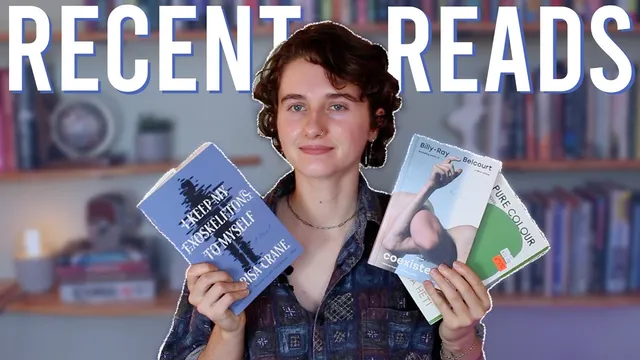
Recent Reads #57 | moody post-apocalyptic fiction & accessible philosophy
Based on ShaelinWrites's video on YouTube. If you like this content, support the original creators by watching, liking and subscribing to their content.
Private Rights by Julia Armfield turns never-ending rain into mood while making queer sisterhood and partnership dynamics the core engine of dread.
Briefing
A string of recent reads leans hard into slow-burn apocalypse, cultish communities, and experimental ideas—but the standout throughline is how authors use character psychology and relationships to make speculative premises feel intimate. Private Rights by Julia Armfield delivers a bleak, moody apocalyptic setting—never-ending rain reshaping society in the background—while the emotional weight lands on three estranged queer sisters reunited after their father’s death. Their work cleaning out his strange glass house becomes a magnet for grief, desire, and complicated partnership dynamics, with the apocalypse functioning more as atmosphere than plot engine. The result is a relationship-driven horror that feels creepier for being gradual, and it earned a four-star rating.
Several other books test how well a premise can sustain intensity. The Coin by Ymin Zaher, pitched partly as a pyramid-scheme story, mostly turns into a vignette-style psychological portrait of a woman obsessed with cleanliness as she moves from Palestine to America and spirals through relationships and work. The hygiene fixation flips “weird girl fiction” expectations—often coded as gross-for-shock—into something punchy, honest, and compulsively strange, with micro-chapters that keep the character’s oddities grounded in lived detail.
Spoiled Creatures by Amy Twig starts with a cult-and-commune setup centered on Iris joining a women’s community (Breach House). The premise is intriguing and occasionally delivers striking moments, but tension and emotional escalation don’t arrive often enough; long stretches of time dilute the impact. Winter Animal by Asie Lewis also begins with a compelling concept—wealthy young squatters living in off-season ski resorts, including a queer desire thread—but the themes of wealth, class, utopia, and desire remain too obvious and underdeveloped. The characters feel more like vehicles than people making meaningful decisions, and even the logistics of the setting strain credibility.
A different kind of payoff comes from Billy Ray Bort’s Coexistence, a gentle, slice-of-life short story collection focused largely on gay Indigenous men in academia. The writing is praised as poetic and precise, with stories that feel less like fiction and more like access to quiet, vulnerable lives—melancholic, intimate, and quietly important.
Act of Service by Lilian Fishman and Pure Color by Sheila Heti show two poles of experimental fiction. Act of Service is complex on the sentence and paragraph level, but its moral and thematic stance stays so ambiguous that the narrator’s affair dynamics with Nathan never crystallize into clear commentary or revelation—leaving the reader wanting thematic clarity and an arc of change. Pure Color, by contrast, is described as revelatory and playful: a philosophical, idea-driven love story that becomes cosmic in scope, involving God’s “first draft of the universe,” a woman’s love for another woman, and a consciousness inhabiting a leaf alongside her deceased father’s spirit.
Two final dystopian/speculative entries sharpen the emotional stakes. Thirst by Marina Yua (translated by Heather Cleary) uses vampire lore to explore immortality’s grief—its first half is praised for capturing centuries of time with animalistic hunger and loneliness, while the second half feels weaker and less connected. I Keep My Exoskeleton to Myself by Mac Crane imagines a near-future U.S. where extra shadows are assigned to people who commit crimes instead of incarceration; a newborn’s extra shadow after a partner’s death becomes a personal lens on motherhood, grief, and queerness. The narrator questions whether the book’s symbolic “worse-than-real” framing holds, arguing that mass incarceration and capital punishment are already harsher in reality. The overall mood across these reads is moody, intimate, and frequently uneasy—less about spectacle than about what speculative conditions do to human bonds.
Cornell Notes
Recent reads favor character intimacy over plot mechanics, especially in apocalyptic or speculative settings. Private Rights by Julia Armfield uses never-ending rain as background while centering three queer sisters and their relationships after their father’s death. The Coin by Ymin Zaher impresses with vignette-style psychological weirdness, including a protagonist whose obsessive cleanliness refreshes “weird girl fiction.” Coexistence by Billy Ray Bort stands out for gentle, poetic slice-of-life storytelling that feels like real access to vulnerable lives. Several experiments divide readers: Act of Service by Lilian Fishman is praised for craft but criticized for lacking thematic clarity, while Pure Color by Sheila Heti is celebrated as revelatory, playful, and idea-driven.
How does Private Rights make apocalypse feel personal rather than sensational?
Why does The Coin stand out within “weird girl fiction”?
What goes wrong with Spoiled Creatures despite a strong premise?
How do Act of Service and Pure Color differ in what they deliver to the reader?
What is the main critique of I Keep My Exoskeleton to Myself’s dystopian logic?
Review Questions
- Which books use speculative elements mainly as atmosphere, and how does that choice affect the emotional focus?
- Pick one experimental title (Act of Service or Pure Color). What kind of “clarity” does the reader expect, and did the book provide it?
- Compare how the reviews treat premise vs execution: where does a strong setup fail to deliver, and where does it pay off?
Key Points
- 1
Private Rights by Julia Armfield turns never-ending rain into mood while making queer sisterhood and partnership dynamics the core engine of dread.
- 2
The Coin by Ymin Zaher refreshes “weird girl fiction” by centering a protagonist’s obsessive cleanliness and using vignette-style micro-chapters to sustain psychological intensity.
- 3
Spoiled Creatures by Amy Twig has a cult/commune premise with striking moments, but the narrative tension and emotional escalation are described as uneven.
- 4
Winter Animal by Asie Lewis is criticized for using themes of wealth, class, utopia, and queer desire in a way that feels obvious, underdeveloped, and logistically implausible.
- 5
Coexistence by Billy Ray Bort is praised for gentle, poetic slice-of-life stories that feel like intimate access to real vulnerabilities rather than plot-driven fiction.
- 6
Act of Service by Lilian Fishman earns craft praise but is criticized for staying too ambiguous to deliver thematic clarity or a satisfying arc of change.
- 7
I Keep My Exoskeleton to Myself by Mac Crane is valued for its personal dystopia of motherhood and grief, while its symbolic “worse-than-real” framing is challenged against real-world mass incarceration and capital punishment.