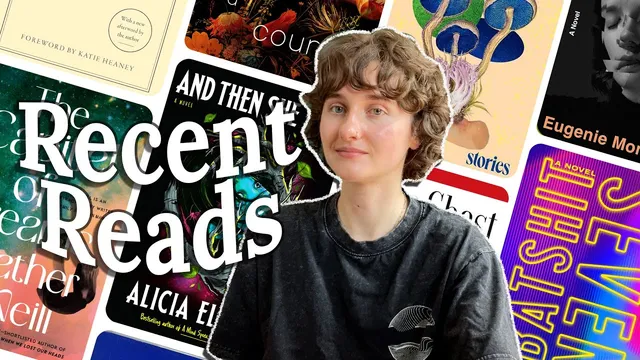
Recent Reads #58 | ghosts, fairytales, & a book I bet you've never heard of
Based on ShaelinWrites's video on YouTube. If you like this content, support the original creators by watching, liking and subscribing to their content.
The same book can feel like a different experience to different readers because reading involves personal choices in interpretation, emotion, and expectation.
Briefing
A run of recent reads leans hard into a single, recurring idea: books can be “valuable” even when they don’t land the same way for every reader. Shayen frames the list as a pushback against online book culture that treats opinions as moral verdicts or intelligence tests. Reading the same words still produces different emotions because people supply different intonations, expectations, and subconscious choices—so disagreement isn’t a failure of taste, it’s part of how literature works.
The strongest through-line across the picks is how authors reshape familiar forms—fairy tales, theater, stream of consciousness, verse novels, and meta internet fiction—to get at darker or more politically charged feelings. Heather O’Neal’s Capital of Dreams is pitched as a dark fairy tale set in a myth-heavy European country under invasion, where Sophia is sent to smuggle her mother’s manuscript to the capital. The novel’s humor and whimsy are used to handle tragedy and probe “dark corners” of society, and the stakes feel grand. Yet the plot drags at points, making the journey feel meandering despite the high life-or-death tension.
Isabella Hammad’s Enter Ghost shifts the question to resistance and art under occupation. A Palestinian woman in the UK returns to the West Bank and gets pulled into a Hamlet production, turning the book into a meta inquiry: is acting resistance, or just performance? Ghostliness becomes thematic—Sophia feels like a haunting presence in Palestine—while the prose is described as confident and intellectually precise rather than “ghostly.” The main critique is that the character Sophia can feel overcomplicated at times, with occasional moments where fewer pages might have sharpened the impact.
Several titles stand out for formal experimentation. Marie-Claire Blais’s David Stern (a niche French-Canadian stream-of-consciousness novel) follows a thief and sex worker named David Stern, mixing irreverence, magic, and sustained suffering. Katherine Harland’s Fru(t) and Bodies is a gothic, queer-women-centered collection that contains a standout story about a graduate researcher studying an underground secret fay gambling ring; the rest of the book is praised for imagination and clarity, but many stories feel too long-winded, with repeated calls for trimming 20% or more.
The list also tracks how intimacy and meta-structure can both help and hinder. Chloe Caldwell’s Women is a spare, hyper-intimate coming-of-age romance between a writer and an older butch lesbian, valued for its raw confessional plainness—though the second half loses some focus. Eugene Mono’s Swallow the Ghost uses a three-part structure to move from hypnotic spiraling work on an internet murder mystery, to a more conventional investigation, and finally into a dizzying metasphere; the third section is thematically apt but feels drawn out.
Later picks emphasize healing and psychological descent. Katheria “Kattia” Ikup after hearing her read, Firekeeper follows Nyla, an Indigenous teen in northern Canada who is neglected and drawn to fire-setting; the second half pivots into Indigenous healing practices, though the reviewer wants more continuity and purpose behind the trauma introduced earlier. Alicia Elliot’s And Then She Fell is a descent into madness for Alice, a Mohawk new mother in a white Toronto suburb, with the reviewer questioning why Alice stays with her husband Steve if she already understands the power dynamics.
Finally, Sophia Elhillo’s Home Is Not a Country lands as a verse novel (not a typical poetry collection) about a Somali teenage girl navigating identity in suburban America, praised for lyrical imagery and emotional tactility. Shan King’s Batshit Seven, despite multimedia touches like QR codes and an internet-saturated Hong Kong setting, captivates early but loses momentum as the narrative charm fades and sex scenes start to feel like they replace meaning rather than build it—especially compared with King’s debut, You Are Eating an Orange You Are Naked, which remains the recommended starting point.
Cornell Notes
The central takeaway is that reading outcomes are personal: the same book can feel different to different people, and that doesn’t make anyone’s response wrong. Across the list, many novels are praised for reshaping familiar forms—dark fairy tales, Hamlet-based theater, stream-of-consciousness, gothic short stories, verse novels, and meta internet fiction—to reach emotional or political truths. Several titles are also criticized for pacing or structure: plots that meander, characters that feel overcomplicated, stories that run long, or sections that become drawn out. The most consistent “why it matters” theme is that form and structure directly affect how themes land—especially around resistance, haunting, healing, and identity.
How does the list connect “value” in books to reader experience rather than universal approval?
What is the core thematic engine in Enter Ghost, and what formal choice supports it?
Why does Capital of Dreams feel both triumphant and occasionally tedious?
What makes David Stern distinctive, and what tradeoff comes with that style?
How do Swallow the Ghost’s three parts change the reading experience?
What does the reviewer want more of in Firekeeper, despite praising its healing turn?
Review Questions
- Which books in the list use form (not just plot) to carry theme, and what specific formal technique is tied to that theme?
- Where does pacing become the main reason for disappointment, and how is that pacing problem described (meandering, drawn out, long-winded, losing steam)?
- Pick one “meta” or “identity” book from the list and explain how the reviewer’s critique depends on structure (sections, halves, or narrative mode).
Key Points
- 1
The same book can feel like a different experience to different readers because reading involves personal choices in interpretation, emotion, and expectation.
- 2
Capital of Dreams blends dark fairy-tale elements with humor and high stakes, but its plot sometimes wanders enough to weaken momentum.
- 3
Enter Ghost uses Hamlet and theater as a meta framework to ask whether resistance is performance, while ghostliness functions as a central emotional metaphor.
- 4
David Stern’s stream-of-consciousness form is central to its uniqueness, even though it can reduce clarity.
- 5
Fru(t) and Bodies is praised for imagination and a standout queer gothic story, but many stories feel too long and could be tightened.
- 6
Women and Swallow the Ghost both rely on intimate or meta structures that shift effectiveness across halves/sections, with later parts losing some clarity or focus.
- 7
Firekeeper and And Then She Fell both hinge on psychological and cultural pressures, and the reviewer repeatedly asks for more continuity or transformation where it feels incomplete.