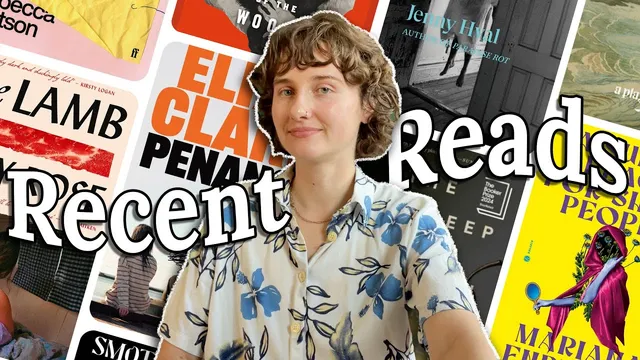
Recent Reads #60 | experimental fiction, horror, & hidden gems
Based on ShaelinWrites's video on YouTube. If you like this content, support the original creators by watching, liking and subscribing to their content.
Penance stands out for using a collage of in-world documents (testimonials and Tumblr excerpts) to create morally layered unreliability where no single truth can be confirmed.
Briefing
A run of experimental and genre-bending fiction left the reader most impressed by books that make form do the emotional work—especially works that mimic how trauma, memory, and online life actually feel. The strongest standout was Eliza Clark’s Penance, a “fictional true crime” built from testimonials, Tumblr excerpts, and found-footage-style fragments about a seaside murder involving three teenage girls. The result lands as gripping and morally layered: the non-fiction packaging creates a new kind of unreliable narration where no single version of events can be trusted, and the mid-2010s online culture details feel uncomfortably accurate.
Several other titles also earned praise for immersive craft, even when they didn’t fully land. Brandy George’s Fawn blends play, verse, myth, and fiction into a woodsy Greek-tragedy atmosphere after a woman experiences sexual assault and encounters mythic forest figures. The prose is described as visceral and electric—so immersive it feels like a fairy tale that turns insidious—though a 40-page alphabetical “poem” is criticized for pulling the reader out of the story’s momentum. Rebecca Watson’s Little Scratch goes even further into experimental form: a one-day stream of consciousness rendered through overlapping, shifting columns, designed to feel simultaneous rather than sequential. It’s described as claustrophobic, loud, and maddening in a productive way, especially because the chaotic layout is treated as a closer match to how internal experience works.
Not every experiment succeeded. Lear Hunt’s In the House in the dark of the woods is called confusing without the “intentional” kind of confusion that would make it feel purposeful; the reader never feels grounded in place, character, or plot cohesion. Sabrina Ora’s Wild Milk is praised as clever and playful in individual pieces, but the consistent tonal stasis and brevity make the collection blur when read back-to-back. Lucy Rose’s The Lamb delivers the feral literary folk horror vibes the reader wanted, with a tender, complex protagonist and impeccable atmosphere, but the themes are judged too on-the-nose and the middle drags through repeated plot points.
Other books land as strong executions of familiar blends rather than breakthroughs. Gil Vanderbuden’s The Safekeep is praised for sleek, punchy, fragment-heavy prose and a tense Dutch-countryside setup that cracks into unexpected territory; the ending is criticized for tipping into melodrama too quickly. Cayman Cheng’s Cecilia is celebrated as perverse, tender, and visceral, with maximalist style that works in novella form—though timeline collisions can disorient beyond the intended effect. Alyssa Alluring’s Southern Moss is richest in the sister relationship and queer identity undercurrents, while the murder mystery engine sputters later.
Two works are singled out for different kinds of dissatisfaction. Meline Doctrree’s Gender Theory uses second person across a long life arc but becomes monotonous and emotionally underdeveloped, with endometriosis depiction standing out as the most impactful element. New Abby Nool’s Supplication offers stunning, jarring sentences yet remains so disorienting that even close reading can’t restore clarity, leading to an unrated verdict. Annette Sanuk Clap Saddle’s Even as We Breathe starts with a promising World War II resort/P-camp premise and a compelling voice, but the story drifts into new directions without committing, leaving the ending half-cohesive.
Across the slate, the through-line is clear: the reader rewards writing that uses structure—whether mythic verse, overlapping columns, or true-crime collage—to make lived experience feel immediate. When that craft fractures into confusion, monotony, or melodrama, the spell breaks quickly, even if the prose remains impressive.
Cornell Notes
The strongest reactions cluster around experimental forms that simulate real experience—especially trauma and uncertainty. Eliza Clark’s Penance uses a fictional true-crime structure (testimonials, Tumblr excerpts, found-footage-like fragments) to create a layered, morally tense unreliability where no one “truth” can be known. Rebecca Watson’s Little Scratch similarly turns form into meaning through overlapping, shifting columns that make thought feel simultaneous rather than sequential. Several other books impress on atmosphere and language (Fawn, The Safekeep, Cecilia, Southern Moss), but many lose momentum through disorientation, tonal repetition, or endings that tip into melodrama. Overall, the reader values execution that matches subject matter—while rejecting experiments that confuse without purpose or characters that stay too thin to sustain the plot.
What makes Penance’s “fictional true crime” approach feel uniquely gripping rather than just stylized?
Why does Little Scratch’s layout matter as much as its subject matter?
Where does Fawn succeed, and what specifically breaks immersion?
Which books are criticized for confusion, and how is that confusion characterized?
What pattern emerges in the critiques of character development across multiple titles?
How do the reader’s preferences shape what counts as a “successful” folk horror or gothic blend?
Review Questions
- Which experimental techniques in Little Scratch and Penance are described as making the reading experience feel more realistic, and what realism are they trying to capture?
- Pick one book praised for atmosphere (Fawn, The Lamb, The Safekeep, Cecilia, or Southern Moss). What specific element is credited with immersion, and what element is blamed for breaking momentum?
- Compare the critiques of confusion in In the House in the dark of the woods versus Supplication. How does each book’s confusion differ in purpose and effect?
Key Points
- 1
Penance stands out for using a collage of in-world documents (testimonials and Tumblr excerpts) to create morally layered unreliability where no single truth can be confirmed.
- 2
Little Scratch’s overlapping, shifting-column format is treated as a formal solution to the mismatch between sequential writing and simultaneous lived experience.
- 3
Fawn’s mythic, verse-driven immersion is praised, but a 40-page alphabetical poem is criticized for being too long relative to the book’s 160-page length and for interrupting momentum.
- 4
Several titles are faulted for confusion that doesn’t feel purposeful—either by failing to ground readers in place/character (In the House in the dark of the woods) or by preventing clarity even under close reading (Supplication).
- 5
The Lamb delivers strong literary folk horror atmosphere and a complex protagonist, but it’s criticized for over-explicit themes and a middle that repeats plot points.
- 6
Gender Theory is judged emotionally underdeveloped and stylistically monotonous after the novelty of second person fades, with endometriosis depiction singled out as the most impactful part.
- 7
Even as We Breathe starts with a compelling World War II resort/P-camp premise and voice, but the story drifts and the Essie relationship promise doesn’t sustain through the ending.