Research Gaps - AI Editor - AI Paraphraser and Empthy Review using AnswerThis.io
Based on Research With Fawad's video on YouTube. If you like this content, support the original creators by watching, liking and subscribing to their content.
Use the Research Gap Finder with a narrowly defined topic, including field keywords, methodologies, and—when relevant—both disciplines for interdisciplinary questions.
Briefing
AnswerThis.io is positioned as a research workflow toolkit that helps users (1) locate research gaps, (2) restructure and format academic writing with AI, (3) paraphrase text in an “academic” style, and (4) run an empathy-based peer-review editor to make feedback clearer and more constructive. The central value is turning scattered literature into actionable next steps—first by identifying what’s missing in a field, then by producing better drafts and more usable peer-review comments.
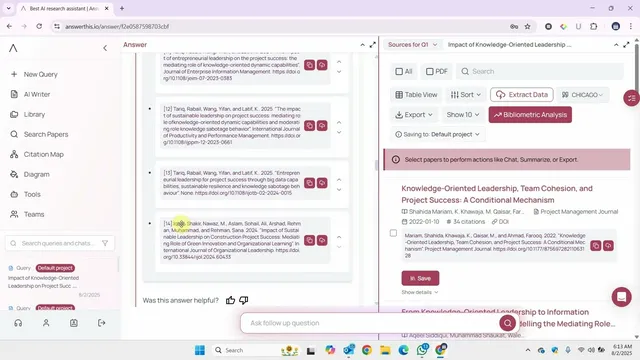
The session starts with the Research Gap Finder, which relies on advanced search features but demands specificity to work well. Users are encouraged to narrow from broad topics to precise research areas and to include relevant keywords, specific methodologies, and—when appropriate—both disciplines in interdisciplinary searches. An example search on “impact of knowledge oriented leadership on project success” yields a structured overview: knowledge-oriented leadership is defined as leadership that emphasizes knowledge creation, sharing, and application within teams and organizations. In project management, it’s described as increasingly important for successful outcomes.
From there, the tool surfaces what research exists and where uncertainty remains. A common pattern highlighted is that the direct effect of knowledge-oriented leadership on project success is often only partially mediated by mechanisms such as team empowerment, team cohesion, and knowledge management processes. It also points to moderators—contextual and organizational factors—and compares knowledge-oriented leadership against other leadership styles. The gap signal comes when evidence is limited or contradictory, producing a lack of conclusiveness and motivating additional research.
To push the gap forward, the session demonstrates a follow-up “recommendations search,” generating future-research guidance. Recommendations include building and testing models using robust multi-theory perspectives, improving theoretical clarity by distinguishing mediators versus moderators, and raising methodological rigor through designs like multi-level or group-level analysis. It also suggests using different statistical approaches and validating measurement instruments. For mechanisms and moderators, examples include cultural or organizational change and technology, while mediators can be identified by opening relevant papers and extracting the mediating processes they recommend.
The workflow then shifts from gap discovery to writing support. Users can download a PDF, convert it to markdown, and “edit with AI” to generate outlines, adjust heading structures, and reformat into APA style with citation details. The AI Writer supports rewording, summarizing, generating questions, and applying custom prompts. A Paraphraser tool offers “academic” rephrasing with controls for length and variation, but the session stresses that paraphrased output still requires careful reading to ensure it meets the user’s requirements.
Finally, the Empathy tool is used to improve peer review tone and impact using a seven-step editorial framework. Reviewers paste their draft feedback and can run stage-by-stage recommendations, accepting or rejecting suggested revisions. The example stage focuses on aligning comments with journal scope and mission—flagging sentences that describe information broadly without clearly explaining how the work substantively contributes to the journal’s goals. The result is updated peer-review text that aims to be more aligned, clearer, and more constructive while preserving the reviewer’s voice.
Cornell Notes
AnswerThis.io is presented as a research-and-writing workflow that helps users (1) find unexplored research gaps, (2) restructure and format academic documents with AI, (3) paraphrase text in an academic style with adjustable length/variation, and (4) strengthen peer review using an empathy-based framework. The gap workflow emphasizes specificity—narrowing topics, adding field keywords, naming methodologies, and including both disciplines for interdisciplinary questions. For the example topic (knowledge-oriented leadership and project success), the tool highlights partial mediation through mechanisms like team empowerment, cohesion, and knowledge management, plus contextual moderators and evidence gaps where findings are contradictory or inconclusive. It then generates future-research recommendations such as multi-theory modeling, clearer mediator/moderator definitions, and higher methodological rigor via multi-level or group-level designs. The writing tools translate these insights into drafts and more constructive reviews.
How does the Research Gap Finder produce useful gap results instead of generic summaries?
What mediating mechanisms are highlighted for knowledge-oriented leadership and project success?
What kinds of moderators does the gap workflow point to, and why do they matter?
What future-research recommendations are generated after identifying gaps?
How do the AI writing tools differ in purpose—outline generation, paraphrasing, and peer-review editing?
What is the Empathy tool’s practical workflow for improving peer review comments?
Review Questions
- When building a gap-finding query, what specific details (keywords, methodologies, interdisciplinary terms) are recommended to improve result quality?
- In the knowledge-oriented leadership example, which factors are described as mediating mechanisms and which categories are described as moderators?
- How does the Empathy tool’s seven-step framework change the way peer-review feedback is written, and what does the journal-scope stage look for?
Key Points
- 1
Use the Research Gap Finder with a narrowly defined topic, including field keywords, methodologies, and—when relevant—both disciplines for interdisciplinary questions.
- 2
For knowledge-oriented leadership and project success, evidence is described as often partially mediated through team empowerment, team cohesion, and knowledge management processes.
- 3
Gap signals include limited or contradictory evidence that produces a lack of conclusiveness, indicating where additional research is needed.
- 4
Generate future-research plans by combining multi-theory modeling, clearer mediator/moderator definitions, and stronger methodological designs such as multi-level or group-level analysis.
- 5
Use AI editing to restructure documents (headings/subheadings), generate outlines, and convert drafts into APA style with citation details.
- 6
Apply the Paraphraser tool in an academic mode with adjustable length and variation, but verify output by reading and checking requirements.
- 7
Improve peer review with the Empathy tool’s seven-step framework, accepting or rejecting stage recommendations to strengthen clarity and journal-scope alignment.