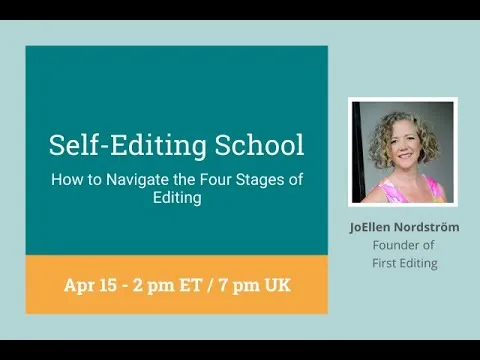
Self-Editing School: How to Navigate the Four Stages of Editing with JoEllen Nordstrom
Based on ProWritingAid's video on YouTube. If you like this content, support the original creators by watching, liking and subscribing to their content.
Treat editing as a sequence: structural/story editing first, then line editing, then copy editing, and save proofreading for the formatting/upload stage.
Briefing
Editing isn’t one pass—it’s a sequence of distinct “levels,” and getting the order right is what lets writers improve their work without getting stuck in endless rewrites. The core takeaway is that structural (story) editing comes first, then line and copy editing, with proofreading saved for the formatting stage. That workflow matters because each level targets different problems: structure fixes what the story *is*, line editing fixes how it *sounds*, copy editing fixes the mechanics, and proofreading fixes what formatting and publishing platforms might break.
JoEllen Nordstrom frames editing as both a skill for self-editing and a way to collaborate effectively with professional editors. Understanding what each editor is responsible for helps authors ask better questions, evaluate the feedback they receive, and avoid paying for services they aren’t actually getting. She emphasizes that story engagement—keeping readers invested in the journey—outweighs isolated word choices, even though words are still necessary to deliver that experience.
At the highest level sits structural/story (also called content, developmental, or substantive) editing. This is where editors examine the overall story arc and the internal mechanics of scenes: beginning, inciting incident, conflict, resolution, and the placement of key elements throughout the manuscript. Structural editing also includes checking scene-by-scene balance, including word count per scene, and verifying that characters, plot, pacing, and settings support the narrative rather than distract from it. Nordstrom highlights a framework of “38 story elements” used to ensure nothing is overlooked, and she encourages writers to learn to locate these elements themselves—ideally with the help of software that can map them.
Once the story structure is sound, the process moves to line editing. Line editing focuses on tone, voice, mood, and consistency—reading line by line to ensure the writing stays aligned with the intended perspective and emotional beats. It’s also where pacing and transitions get refined, and where self-editing tools can generate reports that compare style and tone against genre expectations. Nordstrom recommends separating writing time from editing time to protect creative flow, then using reports and targeted revisions afterward.
Copy editing is the next stage, treated as the final pass before formatting and submission. It targets grammar, spelling, punctuation, and style-guide consistency across the entire manuscript. Nordstrom notes that copy editing is often well-suited to AI-assisted tools like ProWritingAid because the work is rule-based and can be checked systematically. After copy editing comes proofreading, which she distinguishes from editing: proofreading happens after formatting and upload, catching layout problems (like blank pages or misplaced text/images) and any last-minute typos introduced by publishing workflows.
In Q&A, she adds practical guidance: beta readers should generally be used after structural editing and during mid-to-late line editing, not before the manuscript is structurally ready or mechanically clean enough to avoid distracting “low-hanging fruit” feedback. She also stresses that different types of editing exist for different genres and even different kinds of non-fiction—academic manuscripts may require editors with subject-matter and peer-review experience. Overall, the message is clear: learn the stages, use the right tools at the right time, and demand specific capabilities from any editor hired—especially the ability to evaluate story arc, scene balance, and key elements with evidence.
Cornell Notes
Editing works best when authors treat it as four separate levels rather than one continuous rewrite. Structural/story editing comes first, focusing on story arc, scene structure, character and plot alignment, and scene-by-scene balance (including word count). Line editing follows, targeting tone, voice, mood, perspective consistency, pacing, and transitions while keeping the author’s artistic voice intact. Copy editing then fixes grammar, spelling, punctuation, and style-guide consistency as final revisions before formatting. Proofreading happens last after formatting and upload to catch layout and last-minute errors that distract readers.
What makes structural/story editing the “highest” level, and what does it actually check?
How does line editing differ from structural editing?
Why does Nordstrom recommend separating writing from editing time?
What does copy editing target, and why is it often a good fit for AI-assisted tools?
When should proofreading happen, and what kinds of problems does it catch?
When are beta readers most useful in the editing timeline?
Review Questions
- If a manuscript still has unclear inciting incidents or uneven scene word counts, which editing level should be prioritized first—and why?
- How would you distinguish a line-edit request from a structural-edit request when communicating with an editor?
- What types of errors are most appropriate to catch during proofreading versus copy editing?
Key Points
- 1
Treat editing as a sequence: structural/story editing first, then line editing, then copy editing, and save proofreading for the formatting/upload stage.
- 2
Structural editing focuses on story arc and scene mechanics—beginning, inciting incident, conflict, resolution, and scene-by-scene balance such as word count.
- 3
Line editing targets tone, voice, mood, perspective consistency, pacing, and transitions while preserving the author’s artistic voice.
- 4
Copy editing is the final rule-based pass for grammar, spelling, punctuation, and style-guide consistency before formatting.
- 5
Proofreading happens after formatting and upload to catch layout and presentation errors introduced by publishing workflows.
- 6
When hiring an editor, ask for evidence of story-arc and scene-level evaluation capability (including how they identify key elements and balance).
- 7
Use beta readers after structural editing and during mid-to-late line editing to avoid distracting feedback on basic mechanical issues.