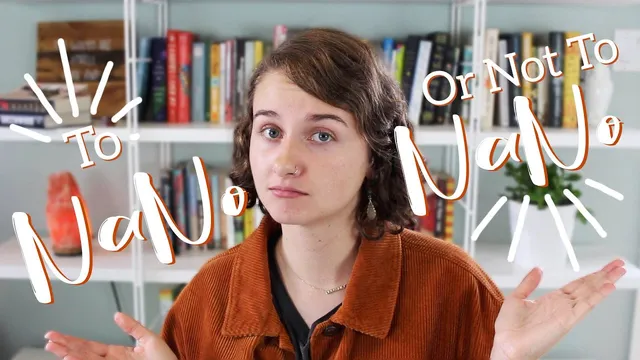
Should You Do NaNoWriMo?
Based on ShaelinWrites's video on YouTube. If you like this content, support the original creators by watching, liking and subscribing to their content.
Assess whether pressure and deadlines energize you or overwhelm you before committing to NaNoWriMo’s 50,000-word sprint.
Briefing
NaNoWriMo is worth doing only if the monthlong push fits both a writer’s temperament and their current life constraints—especially around stress, deadlines, and creative energy. The core decision comes down to whether a 50,000-word sprint in November will motivate someone or tip them into burnout. For ShaelinWrites, NaNoWriMo was a major annual goal for years (winning five times from 2010–2014), but the challenge stopped after 2014 because the timing and workload no longer matched her writing process and health needs.
A major reason to skip NaNoWriMo is that the pressure and deadline structure can backfire. Writing 50,000 words in a month demands consistent daily output, even though the math looks manageable on paper. Some people thrive under that kind of external deadline; others “crumble,” especially if they already struggle with pressure or deadlines. Closely related is whether fast drafting works for someone. NaNoWriMo is essentially a speed-drafting challenge: drafting quickly without the slow, reflective passes that normally shape scenes and lines. For some writers, speed helps them enter flow and stay engaged; for others, it can cause the draft to spiral away from their intended quality or direction.
Project fit matters just as much as personal temperament. NaNoWriMo’s “write without editing” mentality may be a poor match for certain stages—like redrafting, rewriting, or polishing a manuscript that needs careful attention. If the current project is meant to be cleaned up rather than generated from scratch, the sprint can become counterproductive. Timing also affects readiness: starting too early on an idea that isn’t fully cooked can lead to a weaker outcome, and writers may benefit from waiting a few extra months rather than forcing a draft.
Health and self-care are presented as the most important filter. November can already be overloaded—especially for college students facing midterms, final projects, and finals. ShaelinWrites describes her own competitive drive as a double-edged sword: once she commits, she pushes hard enough that it can become unhealthy. She also flags creative burnout as a real risk. Even if the goal is achievable, recovering from burnout can be “brutal,” so preventing it can matter more than hitting a word-count target.
On the flip side, NaNoWriMo can be a strong fit when it matches how someone naturally writes. It suits writers who work in bursts—writing intensely for a period, then stepping back, then returning with renewed energy. It also helps writers who do better with a little pressure because deadlines mentally organize them and create momentum. NaNoWriMo can be especially useful for first-time novelists: the community support and framework provide structure and a push to finish a book, even if it ends up messy. It’s also a low-regret experiment for writers still figuring out their process—trying the challenge can reveal whether this scheduling style and drafting pace actually work. Finally, it can be enjoyable even without winning, as long as the mindset stays healthy and the challenge doesn’t cost more energy than someone can spare.
Cornell Notes
NaNoWriMo is a 50,000-word sprint in November that can either accelerate a writer’s progress or harm their process—depending on stress tolerance, deadline comfort, drafting style, and current life load. Skipping is recommended when pressure and deadlines overwhelm, when fast drafting undermines quality or direction, when the current project needs editing/polishing rather than a messy first draft, or when the month would damage self-care or trigger burnout. Doing NaNoWriMo can be ideal for writers who work well under deadlines, write in bursts, benefit from momentum, or are stuck on a first book. It can also function as a practical experiment: even if someone doesn’t win, the attempt can clarify what kind of writing schedule actually works for them.
What personal traits make NaNoWriMo a risky fit?
Why does “fast drafting” matter to the decision?
When can NaNoWriMo be a bad match for a project?
How does self-care change the recommendation?
What conditions make NaNoWriMo a strong fit?
Why might someone participate without caring about winning?
Review Questions
- Which two factors—personal and project-related—most directly determine whether NaNoWriMo will help or hurt a writer?
- How does the transcript connect fast drafting to both quality and emotional sustainability?
- What self-care signals would lead someone to opt out of NaNoWriMo this year?
Key Points
- 1
Assess whether pressure and deadlines energize you or overwhelm you before committing to NaNoWriMo’s 50,000-word sprint.
- 2
Treat NaNoWriMo as fast drafting without editing; decide whether that workflow matches your natural drafting and revision habits.
- 3
Skip NaNoWriMo when the current project needs redrafting, rewriting, or careful polishing rather than a messy first draft.
- 4
Don’t start a book before the idea is ready; forcing an early draft can be less productive than waiting for the idea to “cook.”
- 5
Use self-care as the deciding factor: if November already strains your health or schedule, the sprint can trigger burnout.
- 6
NaNoWriMo can be ideal for burst writers who regain energy after intense work periods.
- 7
A healthy, non-winning mindset can make NaNoWriMo worthwhile if the challenge doesn’t cost more energy than you can spare.