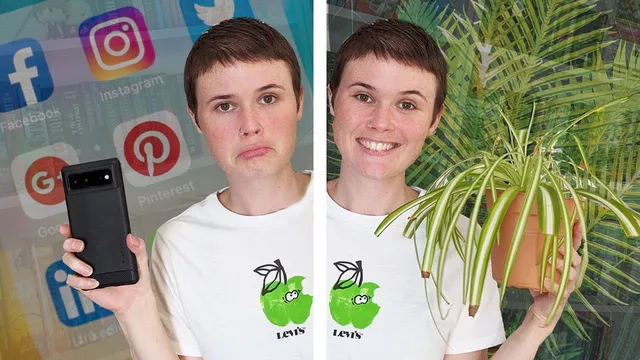
Social Media vs Plants
Based on morganeua's video on YouTube. If you like this content, support the original creators by watching, liking and subscribing to their content.
Doom scrolling is driven by a dread-and-update loop that intensifies under uncertainty, and it can persist even after deleting social media.
Briefing
Doom scrolling isn’t just a bad habit—it’s a self-feeding loop built for platforms that profit from sustained attention, and it can intensify anxiety when life already feels uncertain. During the early pandemic, one PhD student described how uncertainty and isolation multiplied, driving compulsive checking of COVID updates and other feeds. Even after deleting Facebook, Instagram, and Twitter (keeping only YouTube), the urge didn’t disappear; it simply migrated to other refresh behaviors like Google News and even “refreshing nothing” on a phone. The turning point came from Jenny O’Dell’s *How to Do Nothing*, which reframed “doing nothing” as a two-part practice: first disengage from the attention economy, then re-engage with something grounded in the present. The core insight is that attention is limited and valuable, and social media monetizes it by keeping users angry, worried, jealous, scared, or sad—emotions that reliably hold eyeballs longer.
That realization set up a practical replacement: house plants. After a period of anxious pacing and rearranging furniture, the student began buying indoor plants—pothos, spider plants, alocasia, and a rubber tree—naming them and treating them as living projects. The plants initially served as decoration, but the real shift happened after hearing a plant shop owner describe plants as therapeutic for reducing anxiety after a high-pressure job. Instead of assuming the benefit came from “plants are therapy” as a slogan, the student started using plants as a structured alternative to compulsive checking: when work stalled or anxiety spiked, the phone stayed closed and attention moved to something local and changeable.
The most concrete example was pothos propagation. By cutting vines, placing cuttings in jars of water, and watching roots emerge from brown nodes over weeks, breaks became active observation rather than passive scrolling. Each new root or leaf offered a small, time-based update—something to look forward to that didn’t come with algorithmic outrage. As the collection grew to multiple plants and jars, the routine expanded into regular care: checking for new growth, watering needs, and pests. A later “project plant” moment with an alocasia black velvet sharpened the effect—repotting, removing dying leaves, and then watching a new leaf unfurl at the desk created a firsthand sense of slow, tangible progress.
The takeaway isn’t that quitting social media automatically fixes anxiety. The missing piece is what replaces the attention that used to be captured by feeds. House plants, the student argues, can fill that gap by making mindfulness feel productive: caring for living things creates ongoing, contextual tasks and reduces the urge to seek constant external updates. The closing advice is straightforward—if social media is gone and the next step feels unclear, start with a house plant or ask for cuttings, then use the daily care cycle as a low-cost, accessible stress-relief hobby.
Cornell Notes
The transcript describes doom scrolling as a loop driven by platforms that profit from keeping people’s attention on emotionally charged content. Even after deleting social media, the anxiety didn’t vanish because the habit of refreshing and seeking updates persisted. Jenny O’Dell’s *How to Do Nothing* reframed the solution as disengaging from the attention economy and then re-engaging with something grounded in the present. House plants become that replacement: propagation and daily care turn breaks into mindful, time-based observation rather than algorithmic stimulation. The result is a hobby that feels productive while reducing stress by shifting attention to a living, local process.
Why does doom scrolling become compulsive, especially during uncertainty?
What does “doing nothing” mean in the attention-economy framing?
Why doesn’t quitting social media automatically solve anxiety?
How do house plants function as a substitute for scrolling?
What specific plant-care activities made the change feel real?
What practical advice is offered for someone who has quit social media?
Review Questions
- How does the transcript connect emotional content to platform incentives and user behavior?
- What two-step approach to “doing nothing” is used to replace doom scrolling, and what does each step accomplish?
- Which plant-related routines (propagation, repotting, daily checks) are described as most effective at shifting attention away from phone refreshes?
Key Points
- 1
Doom scrolling is driven by a dread-and-update loop that intensifies under uncertainty, and it can persist even after deleting social media.
- 2
Social platforms monetize attention by keeping users engaged with emotionally charged content such as anger, fear, jealousy, and worry.
- 3
Quitting an app doesn’t automatically reduce anxiety if the habit of refreshing and seeking updates has no replacement.
- 4
Reframing “doing nothing” as disengaging from the attention economy and then re-engaging with present, contextual activity helps break the cycle.
- 5
House plants can replace scrolling by turning breaks into mindful observation and structured care tasks.
- 6
Plant propagation (like pothos cuttings in water) creates slow, tangible progress that offers “updates” without algorithmic outrage.
- 7
Horticultural therapy is mentioned as a field, but the transcript argues that ordinary plant care can still reduce stress and support well-being.