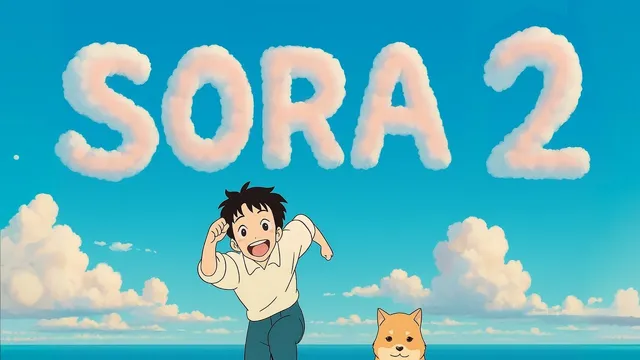
Sora 2 - OpenAI's TikTok
Based on Sam Witteveen's video on YouTube. If you like this content, support the original creators by watching, liking and subscribing to their content.
Sora 2 is being launched as a consumer platform: an iOS app plus a web feed that supports browsing, generating, publishing, and remixing short videos.
Briefing
OpenAI’s Sora 2 is arriving not just as a better video-generation model, but as the foundation for a TikTok-style social network—complete with an iOS app, a public web feed, and “cameos” that let users insert themselves (or approved people) into AI-generated clips. The practical shift matters because it turns video generation from a standalone tool into a distribution engine, where engagement, remixing, and identity features can drive repeat usage and future monetization.
Sora 2’s capabilities are positioned as a major step up from the original Sora preview in early 2024. Outputs highlighted in the discussion include longer-form generation, 1080p video quality, and richer audiovisual control: cutscenes, full audio with lip syncing, sound effects, and music. The model also appears fast and efficient enough to make generation viable at scale—an important detail because the app currently generates content without charging users.
What’s arguably more consequential than raw quality is how OpenAI packages the system. The app is iOS-only for now and invite-only, but invites are designed to expand after sign-up, suggesting rapid rollout. On mobile, the experience resembles TikTok’s swipe-based browsing. On the web, the feed presents multiple videos at once, and users can scroll while also generating new clips.
A key feature is “cameos,” which effectively turns the system into an identity-aware video generator. Users record themselves in the mobile app—voice capture prompts and head-movement guidance are used to calibrate the avatar—then describe who should appear in the generated scene. Cameos can be restricted to the user, approved people, mutuals, or everyone, and settings can include preferences such as pronouns and appearance constraints (for example, specifying a black t-shirt so it carries through to rendered cameos). The system also supports remixing: a generated video can be used as input for a new version that adds or changes the cameo presence.
The discussion notes that cameo-based renders take longer than text-to-video generations, implying different underlying models or heavier compute when identity conditioning is involved. That efficiency is part of why the app can offer free generation—at least initially—despite OpenAI’s broader reputation for compute constraints.
The business implications are framed as a direct challenge to competitors. If Sora 2-style generation is free for users, it could pressure other providers that have been charging per video (the comparison cited is Google’s up-to-$6 pricing for V3 video generation). More broadly, the shift points to monetization beyond “tokens or pixels.” With ChatGPT reportedly at hundreds of millions of users, the argument is that advertising becomes the most natural path, and a social feed is where ads can be inserted without disrupting the core conversational experience.
OpenAI is also positioning Sora 2 for broader access via an API, though pricing remains unknown. The invite rollout and the move toward consumer-facing products—alongside APIs—signal a pivot from frontier model building toward building platforms that can attract mass audiences. The central question left hanging is how quickly this social-network strategy will translate into sustainable revenue, and whether the cameo-driven, remixable feed becomes the real product—not just the model behind it.
Cornell Notes
Sora 2 is presented as more than an improved text-to-video model: it’s bundled into an iOS-first app and a TikTok-like feed that lets people generate, browse, publish, and remix short AI videos. The standout feature is “cameos,” which uses mobile capture (voice and head movement) plus prompts and privacy controls to insert a user’s avatar (or approved others) into generated scenes, with options like pronouns and appearance constraints. Cameo renders take longer than plain text-to-video, suggesting heavier compute when identity conditioning is involved. OpenAI’s decision to offer free generation—at least initially—raises competitive pressure, especially against paid video-generation offerings. The broader bet is that a social feed enables future monetization, likely through advertising, while Sora 2’s API availability will reveal the underlying cost structure.
What makes Sora 2 feel like a platform rather than a standalone model?
How do “cameos” work, and why are they central to the product experience?
Why does cameo generation take longer than text-to-video, and what does that imply?
What does “free generation” signal about OpenAI’s approach to scaling Sora 2?
How does the social-network strategy connect to monetization and competition?
What’s the significance of Sora 2’s API availability?
Review Questions
- What specific features in the Sora 2 app and feed design turn video generation into a social experience?
- How do cameo privacy settings and appearance preferences affect who can be used in generated videos and how they appear?
- Why might OpenAI choose advertising in a feed rather than monetizing directly through the core ChatGPT product?
Key Points
- 1
Sora 2 is being launched as a consumer platform: an iOS app plus a web feed that supports browsing, generating, publishing, and remixing short videos.
- 2
Cameos are identity-aware generation: users record voice and head movement on mobile, then prompts and privacy controls determine who appears and how the avatar is rendered.
- 3
Cameo-based renders take longer than plain text-to-video, implying heavier compute or different model pathways for identity conditioning.
- 4
OpenAI is currently offering free generation in the app, suggesting Sora 2 is efficient enough to run at scale despite broader compute constraints.
- 5
The social-feed strategy is framed as a monetization path, with advertising likely inserted into the feed rather than disrupting ChatGPT’s conversational experience.
- 6
Sora 2’s API availability will be a key indicator of real unit economics once pricing is known.
- 7
Free or low-friction generation could intensify competition against paid video-generation offerings, including cited per-video pricing for Google’s V3 videos.