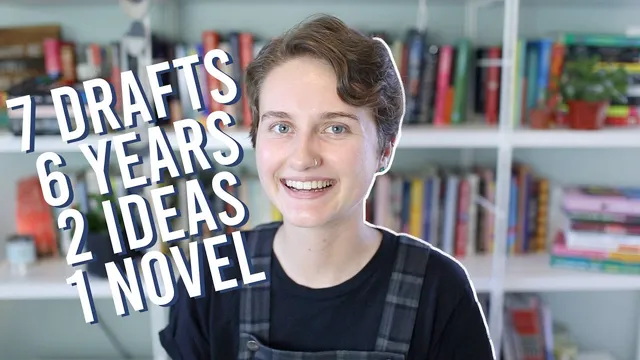
Taking 6 Years to Write a Book | Thoughts on Finishing a First Draft!
Based on ShaelinWrites's video on YouTube. If you like this content, support the original creators by watching, liking and subscribing to their content.
A six-year first draft can be driven by emotional distance as much as by craft problems.
Briefing
A first draft can take years—not because the writing is slow, but because the writer has to rediscover what the story actually is. ShaelinWrites describes a six-year path to finishing Holding a Ghost, starting with a sudden creative spark in 2015 and ending with a completed draft in 2020 after multiple emotional and structural resets.
The origin moment came in February 2015, when a Tumblr photograph of a broken gravestone (“will not be forgotten” with the name missing) triggered an immediate story vision. Within three days, she had a full outline and began drafting during a high-stakes period of high school exams and scholarship pressure. She wrote the first draft quickly—about three months—then later edited it during university. The early version, originally titled I'm Fine, functioned as a kind of emotional channel: the main character’s feelings drew from her own, even though the plot and characters were not based on real people. She describes the book as comfort during a difficult time, especially as a young adult story that helped her process what she couldn’t yet name.
By 2017, the emotional distance became a problem. As she grew and moved on from the feelings that fed the original draft, she lost empathy for the character and even disliked the “bones” of the story. Over one summer she ran through five drafts, improving prose and cutting “cringy” parts, but still feeling that the essence didn’t work. The book became a relic of a past self—one she no longer wanted to inhabit—creating a painful mismatch between what she’d hoped to share and what she could no longer love.
A year later, the project revived through a new lens. In summer 2018, she considered whether the story needed to become a sequel or a full re-envisioning, then chose to “gutted” it rather than polish it. The arrival of a new character, Nadia, helped breathe life into the narrative, and the process aligned with a major personal turning point: recognizing her own bisexual identity. She notes that the protagonist’s bisexuality—Andy June’s—had been present but overlooked, and that clarity changed how the story could move.
By late 2018, the narrative form finally clicked. She shifted toward a ghost-narrator structure, building on brief hallucination scenes from the fifth draft until the dead character became the book’s narrator. She also reworked character identity—Juniper as the protagonist’s full name and Andy as a nickname—so the later timeline felt consistent with who the character had become.
In 2020, momentum returned when she finished Honey Vinegar in March and started Holding a Ghost immediately. The first push produced about 20,000 words, but the opening didn’t feel alive. The fix wasn’t about motivation; it was about structure. She realized she’d made two key technical mistakes: writing in past tense despite the story’s present-tense “sound” in her head, and shaping it into standard scenes rather than the vignette-like, experimental form she’d always wanted. Restarting for NaNoWriMo in November made the book “instantly better.” From there, the draft flowed—about 30,000 words during NaNoWriMo, then steady work through spring 2019—until the full manuscript landed at roughly 70,000 words.
The finished draft, she says, felt easy only after the hard part was done: finding the protagonist’s true narrative rather than treating the character as a stand-in for therapy. Holding a Ghost became a softer, joyful counterpoint to darker fiction, and she credits the six-year journey with teaching her that characters and stories remain “there for you” as long as the writer keeps wanting them—sometimes in changed form, but still worth finishing.
Cornell Notes
Holding a Ghost took six years to finish because the writer had to rediscover both the story’s emotional center and the right way to tell it. The initial draft (I'm Fine) began with a sudden gravestone image in 2015 and was written quickly, but later editing failed because she no longer felt connected to the character’s original emotional source. In 2018, the project revived when a new love-interest character (Nadia) and a clearer understanding of the protagonist’s bisexual identity gave the story new life. The breakthrough came in late 2018–2019 when the dead character became the ghost narrator and the book’s structure shifted toward experimental vignettes. A restart in November for NaNoWriMo fixed tense and formatting issues, turning a stalled opening into a draft that ultimately reached about 70,000 words.
What triggered the original idea, and how fast did it turn into an outline and draft?
Why did the early version (I'm Fine) stop working for her after the first round of editing?
What changed in 2018 that helped her revive the project instead of abandoning it?
What structural breakthrough transformed the story into Holding a Ghost?
What went wrong in the first 2020 drafting push, and what did the restart fix?
How did the final draft’s process affect her confidence about writing and revision?
Review Questions
- What emotional mismatch caused the writer to lose interest in the early version, and how did she recognize it?
- Which two technical choices (tense and structure) did she identify as the main problems in the first 2020 draft?
- How did Nadia’s arrival and the protagonist’s bisexuality shift the story from a personal relic into a narrative with its own momentum?
Key Points
- 1
A six-year first draft can be driven by emotional distance as much as by craft problems.
- 2
The original concept came from a specific gravestone image and produced an outline within three days.
- 3
Five drafts improved surface-level quality but still failed when the writer no longer connected to the character’s emotional source.
- 4
The project revived in 2018 through a new love-interest character (Nadia) and a clearer recognition of the protagonist’s bisexual identity.
- 5
The ghost-narrator structure emerged from earlier hallucination scenes, turning a side element into the book’s core device.
- 6
Restarting for NaNoWriMo fixed tense and formatting errors—past tense and standard scenes—by moving toward a vignette-like experimental form.
- 7
Once the protagonist’s own narrative replaced therapy-adjacent sourcing, the draft flowed and reached about 70,000 words.