The Banach–Tarski Paradox
Based on Vsauce's video on YouTube. If you like this content, support the original creators by watching, liking and subscribing to their content.
The “extra chocolate” effect in the animation is a visual trick: the final bar is smaller because the cut reduces each square’s effective height, and the animation hides that change during rearrangement.
Briefing
A “chocolate-from-nothing” trick is a useful warm-up for a far stranger claim in mathematics: the Banach–Tarski paradox says a solid object can be cut into five pieces and then rearranged into two exact copies of the original—without stretching, shrinking, or changing density. The catch is that the pieces must be infinitely intricate, so the paradox is mathematically valid while remaining physically out of reach for ordinary cutting and measuring.
The transcript first dismantles a common illusion that looks like it creates extra chocolate. In the animation, the bar is cut and rearranged so a leftover piece appears. But the “missing” height from each cut is quietly redistributed during the motion, making the final bar slightly smaller in total volume. That sets up the central theme: when infinity and geometry enter, intuition about “conservation” can fail—unless the assumptions behind the rearrangement are carefully examined.
Banach–Tarski then gets built on a ladder of counterintuitive facts about infinity. Infinity isn’t treated as a single “biggest number,” but as different sizes of unending sets. Countable infinity—like the whole numbers or the number of hours in forever—can be matched to itself in a one-to-one way even after removing finitely many elements. Uncountable infinity—like the real numbers between 0 and 1—cannot be listed in order; Cantor’s diagonal argument shows that any supposed complete list misses at least one real number constructed by altering the nth digit of the nth entry.
The transcript also uses Hilbert’s Grand Hotel to illustrate why “infinity minus one is still infinity.” With infinitely many rooms occupied, a new guest can be accommodated by shifting every existing guest to the next room, leaving no vacancy. Similar logic extends to circles: points on a circumference can be treated like guests, and removing a point doesn’t prevent a one-to-one “relabeling” of the remaining points.
To reach Banach–Tarski, the discussion introduces a “Hyperwebster” idea credited to Ian Stewart: a dictionary that lists every possible word over 26 letters, including infinitely long possibilities. Removing a leading letter from a volume can still leave enough content to represent the entire dictionary—an analogy for how rearrangements can “compress” structure without adding material.
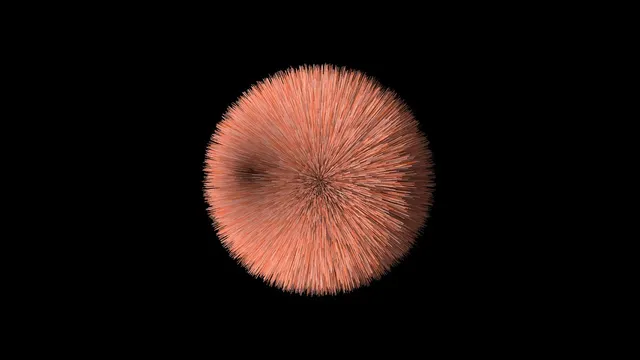
The core construction maps the surface of a sphere to sequences of four rotations (up, down, left, right) in a way that names points uniquely (except for poles, which require special handling). By partitioning the sphere into five regions tied to those naming rules—plus a center point—the rearrangement effectively turns one sphere into two identical spheres. The transcript emphasizes that this works because the pieces correspond to sets that can be reindexed and shifted using infinite structure; the “leftover” is not extra matter but a consequence of how the partition is defined.
Finally, the transcript asks whether such a process could happen in reality. The theoretical proof is valid within mathematics, but physical implementation would require cutting into infinitely complex pieces, which is impossible with finite resolution and time. Some researchers have explored links between Banach–Tarski–style “more-than-you-started-with” behavior and high-energy particle collisions, but the practical feasibility remains uncertain. The closing message is less about shock than about limits: common sense applies to what humans can measure, while mathematics can still produce consistent results that feel strange because the assumptions differ.
Cornell Notes
The Banach–Tarski paradox claims that a solid object can be cut into five pieces and rearranged into two exact copies of the original, with no stretching or loss of “density.” The transcript builds the idea by first correcting a chocolate-bar illusion: the apparent leftover comes from hidden changes in dimensions during the animation. It then develops the needed background on infinity—countable vs. uncountable sets, Cantor’s diagonal argument, and Hilbert’s Grand Hotel—showing how one-to-one correspondences can preserve “size” even after removing elements. A Hyperwebster-style analogy motivates how removing part of a structure can still leave enough information to represent the whole. The sphere construction partitions points using rotation sequences, handles poles separately, and yields two congruent spheres from one—mathematically sound but physically implausible because the pieces must be infinitely complex.
Why does the chocolate-bar “create extra chocolate” animation fail?
What’s the difference between countable and uncountable infinity, and why does it matter here?
How does Hilbert’s Grand Hotel show that “infinity minus one” can still be infinity?
What role does the Hyperwebster analogy play in the sphere construction?
How are points on the sphere named and partitioned to enable the five-piece rearrangement?
Why is the paradox unlikely to happen in the real world?
Review Questions
- What specific mechanism in the chocolate-bar animation accounts for the apparent “extra” piece?
- How do Cantor’s diagonal argument and Hilbert’s Grand Hotel each demonstrate different ways intuition about infinity can fail?
- In the sphere construction, why must poles be handled separately from the rest of the points?
Key Points
- 1
The “extra chocolate” effect in the animation is a visual trick: the final bar is smaller because the cut reduces each square’s effective height, and the animation hides that change during rearrangement.
- 2
Banach–Tarski depends on properties of infinite sets, especially the ability to create one-to-one correspondences after removing or reindexing elements.
- 3
Countable infinity (like integers) can be indexed in a way that supports “shift” arguments, while uncountable infinity (like real numbers in [0,1]) cannot be fully listed, as shown by Cantor’s diagonal argument.
- 4
Hilbert’s Grand Hotel illustrates why removing or adding finitely many elements to an infinite set doesn’t necessarily change its “size” in the one-to-one sense.
- 5
The Hyperwebster analogy shows how deleting a leading symbol from an infinite structured collection can still leave enough content to represent the whole collection.
- 6
The sphere proof partitions points using sequences of rotations and special treatment for poles, then rearranges pieces by relabeling rotation sequences to obtain two congruent spheres.
- 7
Physical realization is doubtful because the required five pieces are infinitely intricate, exceeding what finite cutting and measurement can produce.