The Best Life Advice You’ve Ever Heard is Probably Wrong
Based on Pursuit of Wonder's video on YouTube. If you like this content, support the original creators by watching, liking and subscribing to their content.
Chris’s trip shows that life advice often works as a persuasive rule within a worldview, but fails as a universal guide.
Briefing
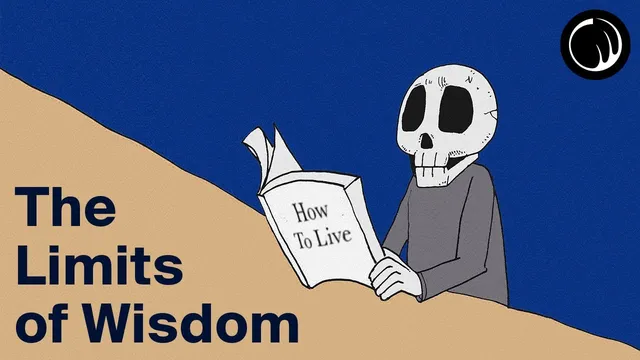
A man who goes looking for one perfect life philosophy ends up concluding that “best advice” is usually wrong because wisdom isn’t universal—it’s situational. After a breakup triggers a sudden, desperate disappearance, Chris travels through China, Greece, Romania, Austria, France, and Germany, repeatedly asking strangers for how to live. Each person delivers a crisp, compelling rule—avoid worldly pleasures, seize the day, balance now with the future, or accept that humans can never reconcile competing desires. The problem is that these answers contradict each other, and Chris gradually realizes that the contradictions aren’t a failure of listening; they’re the point.
Chris’s journey begins after his girlfriend leaves him with the line, “It’s impossible to be with someone who is never happy.” With work looming the next morning, he spirals into thoughts of “skipping to the end of the movie,” and his ordinary self collapses into a new life: one bag, one debit card, his passport, and no plan—just the urge to find what he’s missing. In China, an older woman tells him not to chase material success or momentary temptation, insisting that only the “eternal real” matters and that a good life requires hard, necessary work, letting go of the self, and building a strong legacy.
In Greece, a self-help writer in Athens offers the opposite tone: enjoy the moment, seize the day, don’t wait for an uncertain later, and don’t work too hard. In Paris, a modern intellectual at Café de Flore reframes the conflict as a balancing act—live in the now, but think ahead, and sustain present pleasures with the reminder that better “nows” are coming. In Germany, a philosopher delivers a darker synthesis: humans are trapped between finite and infinite, now and later, so wisdom is accepting lower expectations and living with pessimism.
After weeks of travel and conversations, Chris returns home with notebooks full of insights that each feel true on their own. Yet together they don’t add up to a single, general rule. His final conclusion is blunt: wisdom is the ability to know the difference—knowing the limits of aphorisms and clichés, recognizing that ideas can be true and false depending on when, where, and how they’re applied. He also rejects the idea that answers are the destination. Bad things happen; life is an incomplete puzzle. What remains is courage in ordinary living, meaning-making in everyday messiness, and a commitment to learning and listening without treating wisdom as a final product. The “best life advice” he sought turns out to be less a universal guide than a tool—useful sometimes, misleading other times—and the real work is repairing the life he has while continuing to stay open to others.
Cornell Notes
A breakup pushes Chris into an impulsive, no-plan trip across multiple countries to find “how to live.” He asks different people for life advice and receives sharply different rules: reject worldly pleasures and chase the eternal; seize the day and enjoy simple pleasures now; balance present enjoyment with future thinking; or accept that humans can’t reconcile now and later and must live with lower expectations. Each answer feels wise in isolation, but the set of them contradicts one another. Chris returns home concluding that wisdom isn’t a single general formula—it's knowing the limits of advice and how context determines whether a saying helps or harms. The goal isn’t certainty; it’s courageous, meaningful living while staying open to learning.
Why does Chris’s search for “the best life advice” collapse into contradictions?
What does the older woman’s advice in China emphasize, and how does it differ from later guidance?
How does the Athens conversation reframe the problem of time?
What “balance” argument does Chris hear in Paris, and why does it feel like a compromise?
What does the German philosopher claim about the possibility of reconciling now and later?
What is Chris’s final definition of wisdom, and how does it change his relationship to advice?
Review Questions
- Which specific pieces of advice Chris receives are most directly in conflict, and what context would make each one plausible?
- How does Chris’s final conclusion reinterpret the value of aphorisms and clichés?
- What does “wisdom as a means and rarely an end” imply for how someone should use life advice day to day?
Key Points
- 1
Chris’s trip shows that life advice often works as a persuasive rule within a worldview, but fails as a universal guide.
- 2
Contradictory counsel—restraint, urgency, balance, and resignation—can all feel “wise” when taken in isolation.
- 3
The breakup acts as the catalyst for a search, but the real turning point comes when Chris notices the pattern of contradictions across cultures.
- 4
Chris’s notebooks become a record of context-dependent truths rather than a collection of final answers.
- 5
Wisdom, in Chris’s conclusion, is knowing the limits of clichés and recognizing when an idea fits or misfits a situation.
- 6
Meaning comes from courageous ordinary living and continual learning, not from achieving certainty or a single master plan.