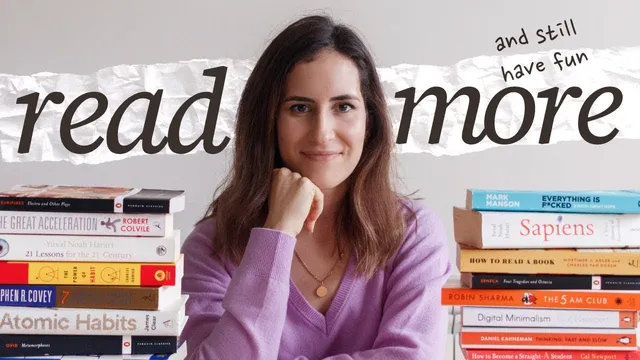
The Foolproof Way to Read More Books in 2024
Based on Mariana Vieira's video on YouTube. If you like this content, support the original creators by watching, liking and subscribing to their content.
Rotate genres regularly to keep the reading habit from becoming monotonous and to broaden interests.
Briefing
A practical reading strategy for 2024 centers on making reading easier to sustain: rotate genres, stop forcing books that don’t work, set goals that are attainable, and track progress in a way that keeps motivation alive. Instead of treating reading as a rigid checklist, the approach treats it like a habit you can design—one that adapts to mood, time, and taste.
Genre “hopping” is the first lever. Even readers with a preferred category benefit from switching regularly—such as alternating fiction, self-help, and classics in a repeating cycle. The method isn’t just about variety for variety’s sake; it’s also about using discovery tools. Recommendations can guide the next pick, but the process should still leave room for choosing by cover, following curiosity, or even using a random generator to break decision fatigue. One example: a random result pointed to biography, leading to a highly enjoyed read.
A second, more liberating tactic is abandoning books that aren’t resonating. The transcript describes a long-standing “completionist” mindset—pushing through to the end even when enjoyment fades—but reframes that as unnecessary. Once a book stops delivering narrative pleasure, character engagement, or meaningful learning, it’s presented as a clear signal to put it down. Struggling through an unenjoyable book doesn’t just waste time; it can drain energy and reduce the overall reading experience, especially if it delays starting a better fit.
Goal-setting comes next, with emphasis on lowering expectations to protect motivation. Instead of setting an ambitious monthly target, the advice favors re-evaluating goals and choosing numbers that feel realistic. A personal example illustrates the effect: planning to read only 12 books in 2023 (because of limited time as a new mom) resulted in reading 40. The point isn’t to aim low permanently, but to create a baseline that makes starting feel doable—then allow the year to exceed it.
The transcript also warns against rushing solely to hit a number. Reading for speed can shrink the pleasure of savoring each book. To keep the experience rewarding, it recommends tracking progress—through a notebook, reading journal, spreadsheet, or a Notion page—adding not only titles and authors but also personal notes and connections to other books. The “completed” column becomes a morale boost, like a small celebration.
Accountability is treated as helpful but not competitive. Goodreads annual challenges are highlighted as a community-driven way to stay engaged, with the reminder that pace varies and there’s no “too slow” when the goal is personal. Finally, the advice compares reading variety to exercise: some days call for lighter “yoga” reads (cozy mysteries or romance), while others need “high-intensity” material (dense classics or academic tones). Heavy books can be tackled by chunking—setting chapter or page milestones—and pairing them with easier reads via tandem reading.
The transcript closes with a sponsor pitch for Ground News, a news app that aggregates large volumes of articles, organizes coverage by story, and provides visual breakdowns of outlets’ bias, factuality, and ownership—positioned as a one-stop way to read news more objectively during a holiday sale.
Cornell Notes
The core strategy for reading more in 2024 is to design a sustainable habit rather than chase a rigid quota. Rotating genres (“genre hopping”) reduces boredom and decision fatigue, while using curiosity and even random selection can lead to unexpected favorites. When a book stops being enjoyable or useful, it’s better to abandon it than to force through and drain energy. Motivation improves when goals are realistic—lower expectations can still produce far more than planned, as shown by a 12-book target turning into 40. Tracking books in a journal or spreadsheet adds satisfaction, and Goodreads challenges provide community accountability without turning reading into a competition.
How does “genre hopping” help someone build a reading habit?
Why is abandoning a book framed as a positive move rather than a failure?
What’s the logic behind setting lower reading goals?
How can tracking books increase motivation beyond just counting pages or titles?
How should accountability work without turning reading into competition?
What does “balancing a reading diet” mean in practice?
Review Questions
- What are the specific signs that indicate it’s time to stop reading a book rather than push through to the end?
- How can lowering a reading goal increase the odds of exceeding it later in the year?
- What are three different ways to track reading progress, and what kinds of details should be added to make tracking more motivating?
Key Points
- 1
Rotate genres regularly to keep the reading habit from becoming monotonous and to broaden interests.
- 2
Use curiosity-based selection methods—like choosing by cover or using a random generator—to reduce decision fatigue.
- 3
Stop forcing books that don’t resonate; if enjoyment and value are missing, switching to a better fit improves the overall experience.
- 4
Set attainable reading goals to protect motivation; realistic targets can still lead to far higher totals.
- 5
Avoid rushing just to meet a number—savoring each book supports both enjoyment and consistency.
- 6
Track reading progress in a journal or system (notebook, spreadsheet, Notion) and include personal notes and connections.
- 7
Use community accountability (e.g., Goodreads challenges) for momentum, but treat reading goals as personal rather than competitive.