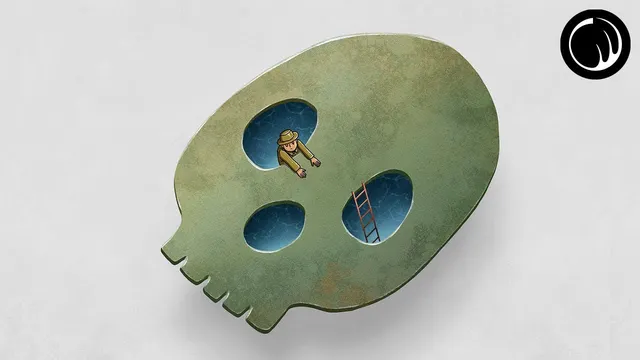
The Greatest Regret You’ll Ever Have
Based on Pursuit of Wonder's video on YouTube. If you like this content, support the original creators by watching, liking and subscribing to their content.
Time perception changes with age because each year becomes a smaller fraction of one’s lifetime, making later years feel faster.
Briefing
The central regret many people will face isn’t a single missed opportunity—it’s failing to fully inhabit the “whole image” of life while it’s happening. Time moves in a way that makes youth feel endless and later years feel compressed, and that distortion encourages people to rush, postpone, or mentally skip over ordinary moments. By the time the “shutter” closes, the person realizes the life they were living was also the only life they would ever get, and the moments they treated as background have become permanent memories they can’t revisit.
The transcript frames life as a continuous flash: when someone first awakens to the world, attention snaps into place and everything feels newly frameable—hair, smiles, positions, settings, people. But each second, day, and year steadily narrows the window. As age increases, the same amount of time becomes a smaller fraction of a lifetime, so years feel faster and the “bucket” of life fills while earlier qualities—innocence, openness, ease with fun—begin to submerge. Eventually, people look back more than they look forward, longing for how life used to feel. Nostalgia, however, is portrayed as both comforting and deceptive: it highlights the best parts while hiding the daily stresses, boredom, and worries that were also present. Even when people remember highlights, most moments are forgotten almost immediately, meaning the future self will likely not recall the very day or scene that currently feels heavy or important.
That leads to a practical psychological shift: growth isn’t only about what gets kept, but about how people let go. Some losses are unavoidable; others are choices—adapting, moving on, and releasing attachments that no longer serve. The transcript also emphasizes that the real loss is not learning from life’s highlights alone, but failing to notice and appreciate the small moments that make up the entire picture. Drawing on Sam Harris, it argues that what matters most is the quality of attention, not some grand, perfect transformation of life.
“Seize the day” is treated less like a slogan and more like a change in perception: treat each moment as the moment of your life, because every passing instant—whether trivial, exciting, sad, or joyful—is still the only life being lived. The transcript underscores this with the idea that everything becomes “a last time”: last conversations, last quiet moments, last drives, last breaths, last chances to feel certain kinds of air and presence. Youth can’t be regained, but wisdom can—recognizing earlier mistakes while still young enough to correct course. The takeaway is urgent but not frantic: if a certain life-feeling is desired, the time to get “in frame” is now, before the shutter closes and the picture is taken.
Cornell Notes
Life is described as a single, continuous “flash” that gets framed moment by moment until the shutter closes. As people age, time feels faster and earlier parts of life feel more distant, which can trigger nostalgia—but nostalgia selectively remembers the highlight reel and hides the stresses and boredom that also existed. The transcript argues that the key to avoiding the greatest regret is not chasing a different life later, but improving the quality of attention now and embracing the full image of daily moments. Growth involves learning what to let go of and adapting, while recognizing that every moment—ordinary or extraordinary—is part of the only life available.
Why does time feel slower when someone is young and faster later, and how does that affect regret?
What’s the “cruel deception” of nostalgia, and why does it matter for how people judge their past?
How does the transcript connect attention to the quality of a life, not just outcomes?
What does “growing up” mean in this account—letting go of what, and why?
Why does the transcript emphasize “last times,” and how does that change the meaning of ordinary moments?
What does “seize the day” mean here, and what specific shift is recommended?
Review Questions
- How does the transcript’s “fraction of your life” explanation for time perception support its argument about regret?
- What are the two ways nostalgia is described as both helpful and harmful, and how do those claims affect how someone should interpret their past?
- Which mechanisms does the transcript offer for avoiding the greatest regret: attention, letting go, or planning—and how are they connected?
Key Points
- 1
Time perception changes with age because each year becomes a smaller fraction of one’s lifetime, making later years feel faster.
- 2
Nostalgia can mislead by remembering highlight moments while forgetting stresses and boredom that were also part of life.
- 3
Most moments fade from memory quickly, so present worries may not matter as much as they feel in the moment.
- 4
Avoiding regret depends less on chasing a future life and more on improving the quality of attention to daily moments now.
- 5
“Growing up” is framed as learning what to let go of—sometimes by choice, sometimes by necessity—and adapting.
- 6
The transcript treats every moment as irreplaceable because each experience will eventually become a “last time.”
- 7
Getting “in frame” now is presented as the practical response: if a certain way of living is desired, the time is before the shutter closes.