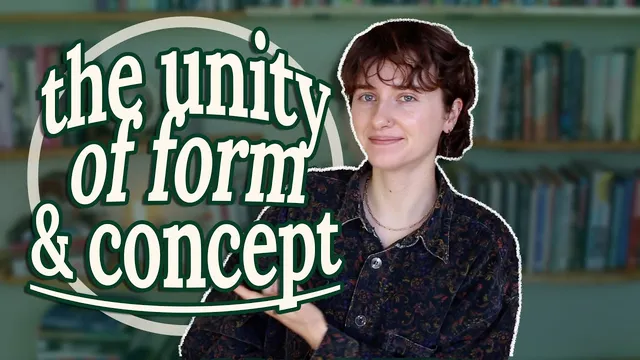
THE IMPORTANCE OF FORM IN FICTION | theory, elements & examples
Based on ShaelinWrites's video on YouTube. If you like this content, support the original creators by watching, liking and subscribing to their content.
Treat concept (intention) and form (language-based vehicle) as one system, not separate “what” and “how” tracks.
Briefing
Form and concept aren’t separate levers in fiction—they’re one system for turning intention into reader experience. The core claim is that “unity of form and concept” produces stronger, richer writing because every formal decision (point of view, tense, formatting, word choice, punctuation, structure) is simultaneously a way of saying what the work means. When form is treated as an afterthought—something decorative or merely technical—story elements can’t fully land. When form and concept are treated as interdependent, the whole piece reads as a cohesive, designed experience rather than a collection of parts.
The lecture begins by redefining key terms. “Concept” is the intention behind the writing: a theme, topic, emotion, commentary, character study, or other purpose. “Story” is what happens—the narrative content, often involving characters moving through space and time in a causal chain of events. “Form” is the vehicle that translates concept and story into language on the page. Crucially, form isn’t just the “how” that sits beside the “what.” The “how” can be part of the “what,” and the “what” can determine the “how.” That framing leads to the central mantra: form is concept; concept is structure; structure ripples through theme, character, point of view, and even word choice.
A diagram of fiction is used to challenge a common hierarchy that places story at the center and form off to the side. Instead, story, concept, and form are presented as equal and interlinked. The lecture argues that writers often focus on the visible ingredients—character, plot, theme—while underestimating how background choices shape meaning. A cooking analogy drives the point: readers don’t taste each ingredient separately; they experience the dish as a unified whole. If one element doesn’t belong or is poorly prepared, it disrupts the entire effect. Fiction works the same way: point of view, pacing, syntax, and formatting can make or break the unity.
To make the idea practical, the lecture lists common formal elements and shows how changing them changes the story. Point of view and tense can shift the story’s mode entirely (first-person past tense memory versus third-person present immediacy). Formatting can signal readers to relearn how to read, especially in experimental fiction. Word choice functions as “micro form,” where even a single synonym can alter tone, voice, and meaning. Spelling, grammar, and punctuation can be intentionally broken in pattern to reshape interpretation—an example is Bernardine Evaristo’s Girl, Woman, Other, where punctuation choices train readers into a new rhythm.
Structure is treated as macro form: not a single “Freytag’s pyramid” template, but a set of decisions about time, linearity, and reveal. Linear narration versus flashback or dispersed beginnings can completely change emphasis and tension.
The lecture then connects form to character development. Actions and dialogue matter, but form can also build voice, psychology, and context from the first sentence—through syntax, punctuation patterns, sentence structure, and point of view. Form can even recreate how a character experiences time or consciousness, shaping empathy for the reader. Two close readings illustrate this: Kelsey Lauder’s “insta,” built as a second-person, Instagram-feed-like sequence that becomes more internal and nonlinear over time; and Franny Choy’s poem “Turing test,” which uses an interview format, lack of capitalization, and slashes to create an interrogated, fragmented consciousness. The takeaway is that intentional formal choices—sometimes intuitive, sometimes discovered mid-draft—extract more nuance and complexity than treating form as mere packaging.
Cornell Notes
The lecture argues for “unity of form and concept”: the intention behind a piece of writing and the formal choices used to express it are inseparable. Concept is the purpose or intention (theme, emotion, commentary, character study), story is what happens, and form is the language-based vehicle that makes concept and story communicable. Form is described as the meeting point between writer and reader—without it, the work can’t be experienced. The practical implication is that point of view, tense, formatting, word choice, punctuation, and structure all function as meaning-making tools, not decoration. When form and concept align, character, theme, and reader experience deepen together rather than competing for attention.
How does the lecture redefine “concept,” “story,” and “form,” and why does that matter for experimental fiction?
What does “unity of form and concept” mean in practice, beyond a slogan?
How can point of view and tense function as meaning, not just narration style?
Why are formatting and punctuation treated as powerful tools in experimental work?
How do the examples “insta” and “Turing test” demonstrate form shaping reader experience?
What does the lecture suggest about how writers can make intentional form choices?
Review Questions
- Which formal elements listed in the lecture (e.g., tense, formatting, punctuation, structure) most directly affect the reader’s interpretation in your own writing—and how?
- How would you test the claim “form is concept” by revising a short passage using a different point of view or tense?
- What evidence from the “insta” or “Turing test” examples shows that formal structure can change time, psychology, or power dynamics?
Key Points
- 1
Treat concept (intention) and form (language-based vehicle) as one system, not separate “what” and “how” tracks.
- 2
Define story as “what happens,” but remember that form is what makes story and concept communicable to readers.
- 3
Avoid assuming story elements like character or plot automatically outweigh formal decisions; background choices can still reshape meaning.
- 4
Use point of view and tense as structural tools that change narrative mode, memory distance, immediacy, and reliability.
- 5
Treat formatting, punctuation, and word choice as meaning-making micro and macro form—especially in experimental fiction where conventions are intentionally disrupted.
- 6
Choose structure (including time and linearity) based on the effect you want, not only on culturally ingrained templates like Freytag’s pyramid.
- 7
Develop character by combining story actions with formal techniques that build voice, syntax patterns, and psychological access from the first sentence.