The Impossibility of Perpetual Motion Machines
Based on PBS Space Time's video on YouTube. If you like this content, support the original creators by watching, liking and subscribing to their content.
Perpetual motion proposals are sorted by which thermodynamic principle they break: energy conservation (first kind), entropy/second law (second kind), or the assumption that “no losses” can be perfect (third kind).
Briefing
Perpetual motion machines fail for a simple reason: every proposed design ultimately breaks a law of thermodynamics—or, at best, can only run down to stillness. The clearest split is between “first-kind” machines that violate energy conservation by producing more energy than they consume, and “second-kind” machines that try to extract usable work by reversing entropy without the required temperature or other gradients. Even the most ideal “third-kind” concept—systems that would keep moving forever without generating extra energy—runs into deeper limits: quantum mechanics ensures internal motion and vibration, while isolated systems still radiate energy and even celestial bodies lose energy through gravitational radiation.
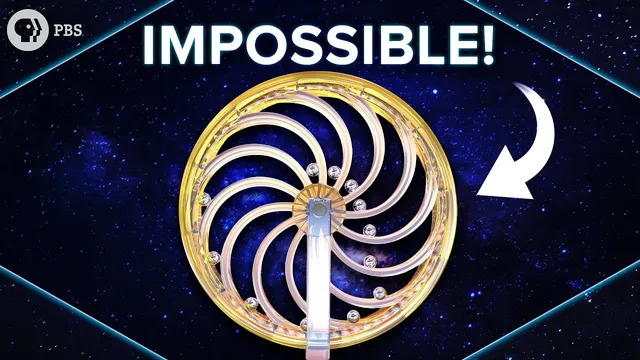
Historically, the dream of a self-running device has been around for centuries, long before thermodynamics was formalized. A 12th-century example, Bhāskara’s wheel, used mercury-filled tubes arranged so the wheel’s motion would supposedly create a continuous shift in weight. Over-balance wheel variants followed the same intuition: if the center of gravity shifts on one side, the wheel should keep turning. Magnet-based schemes—like a ball pulled up a ramp by a magnet before dropping through a hole—aimed to mimic the same cycle. Self-pumping waterwheels and windmills used similar “always driven” logic. None worked in practice because overlooked physics cancels the advantage: shifting masses outward also increases their separation, leaving the moment of inertia effectively unchanged; a magnet strong enough to lift the ball also interferes with the ball’s fall; and friction and other losses prevent the cycle from closing.
Once energy conservation became established in the 18th century, inventors didn’t abandon the idea—they shifted tactics. Second-kind proposals leaned on the notion that entropy could be “undone” to harvest energy from an already equilibrated environment. The Brownian ratchet illustrates why that’s not free. A latch that allows rotation only one way seems to let random gas particle impacts produce net work, but it only works when there’s a temperature difference. At equal temperature, the blocked direction becomes just as likely to be driven back, eliminating net extraction. That logic ties into Maxwell’s demon–style entropy-reversing thought experiments: without a temperature gradient, there’s no usable energy source.
The most important boundary is the Carnot cycle, described in the early 19th century as the maximum-efficiency engine operating between two temperature reservoirs. In principle, the cycle is reversible: run it backward and it transfers energy from cold to hot. But the energy accounting is exact—input and output balance—so it cannot generate net work from a single equilibrium state. That’s why “perpetual” in the thermodynamic sense is not about infinite runtime; it’s about whether net work can be extracted without paying the required thermodynamic cost.
Modern “over-unity” devices often claim energy out greater than energy in, but they face the same thermodynamic wall. Some attempt to invoke zero-point energy of the quantum vacuum, arguing it could be tapped as a universal energy reservoir. Yet vacuum energy is uniform—no gradient means no extractable work—and any method to create a gradient (such as via the Casimir effect) demands at least as much energy as it yields. The transcript then pivots to a community challenge: building a perpetual motion machine using negative mass. The winning ideas mostly adapt the Bhāskara-style “chasing apples” concept to a dynamo setup, with variations that use magnetic containment, gear teeth, or increasingly outlandish spacetime assumptions—fun thought experiments that still underscore the same thermodynamic reality: indefinite energy generation remains impossible.
Cornell Notes
Perpetual motion machines fail because every workable design runs into thermodynamic limits. “First-kind” machines violate energy conservation by producing more energy than they consume, while “second-kind” machines try to extract work by reversing entropy without the needed temperature gradient. The Brownian ratchet demonstrates the trap: it only yields net work when the gas chamber is at a lower temperature; at equal temperature, random motion cancels the advantage. The Carnot cycle shows the strongest possible “allowed” engine: it can be reversible, but the energy in-to-out ratio is exactly unity, so no net energy comes from a single equilibrium state. Even “third-kind” ideas that aim only to keep moving forever are blocked by quantum randomness, radiation losses, and (for celestial systems) gravitational radiation.
What distinguishes first-kind, second-kind, and third-kind perpetual motion machines?
Why do over-balance wheels and magnet “lift-and-drop” ideas fail even when the cycle seems symmetric?
How does the Brownian ratchet illustrate the second law in action?
What does the Carnot cycle prove about the possibility of perpetual motion?
Why can’t zero-point energy of the quantum vacuum power a perpetual motion device?
What was the negative-mass challenge, and what kinds of solutions did people propose?
Review Questions
- Which thermodynamic law is violated by first-kind versus second-kind perpetual motion machines, and what observable consequence follows from each violation?
- In what specific way does the Brownian ratchet depend on temperature, and why does equal temperature eliminate net work?
- Why does the Carnot cycle’s reversibility still prevent net energy extraction from a single equilibrium state?
Key Points
- 1
Perpetual motion proposals are sorted by which thermodynamic principle they break: energy conservation (first kind), entropy/second law (second kind), or the assumption that “no losses” can be perfect (third kind).
- 2
Over-balance wheels fail because outward mass shifts also change separation in a way that cancels the expected torque advantage.
- 3
Magnet-based lift-and-drop cycles fail when the same magnetic strength that lifts the object also blocks the intended release, and friction prevents a closed cycle.
- 4
The Brownian ratchet only produces net work when there’s a temperature difference; equal temperature restores symmetry and cancels extraction.
- 5
The Carnot cycle represents the maximum-efficiency reversible engine between two temperatures, but its ideal energy accounting yields no net gain (energy in equals energy out).
- 6
Quantum mechanics and radiation losses prevent truly lossless third-kind perpetual motion, even in idealized classical setups.
- 7
Zero-point energy can’t serve as a free energy source because it’s spatially uniform; creating usable gradients costs at least as much energy as the cycle yields.