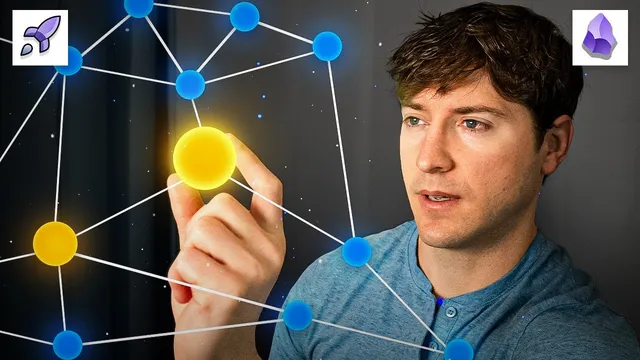
The Notetaking Method You Should Be Using (Notemaking 101)
Based on Linking Your Thinking with Nick Milo's video on YouTube. If you like this content, support the original creators by watching, liking and subscribing to their content.
Linked notes require strong notes first; note making is the step that turns raw inputs into usable insight.
Briefing
Linked notes only work if someone first creates good notes—and the biggest upgrade comes from shifting from “note-taking” to “note making.” Note making is framed as the moment where raw information turns into personal insight: it’s less about collecting highlights and more about actively generating meaning in the present, for future use, and for the people who benefit from clearer thinking.
The transcript traces how knowledge capture has evolved—from keeping thoughts “up here,” to paper, to Microsoft Word, to Evernote—often ending in a familiar trap: clipping articles and drowning in other people’s ideas without learning how to convert that digital chaos into “digital gold.” The proposed fix is a set of note-making practices that reliably transform scattered inputs into usable understanding.
A concrete walkthrough uses Obsidian and an “ideaverse” setup. A note about Carl Sagan demonstrates the method: instead of writing a summary in a conventional way, the writer applies the Noma method (Noma stands for note making) with a sequence of prompts that force the note to become personal. In the example, a short entry—34 words—includes four prompt-driven elements: a reminder of what the person evokes, how the person is similar and different to another influence, how the person expanded a specific interest (Cosmos for Sagan, flow for Mihai), and why that influence enriched the writer’s life. The result isn’t just organization; it’s presented as a way to surface the writer’s unique perspective.
The note then becomes interactive through a “people map” linked view. In that map, Carl Sagan appears in a “prominent people” section organized by birth years. A striking coincidence emerges: Mihai was born in the same year as Sagan, roughly five decades earlier than the note maker. That collision of data points triggers an “inner ideaverse” insight, leading to a new concept called the “five decade rule.” The transcript emphasizes that this idea emerged organically from having enough related material tightly packed in one place, then “marinating” until it surfaced in conversations and later got written out.
The takeaway is that note making helps people know themselves, not just manage information. By placing curiosity in a structured environment—where links, maps, and prompts encourage connections—ideas can emerge from collisions among concepts, people, and experiences. The method is positioned as a learnable skill with practice (“plenty of reps”) through a workshop, and it sets up the next lesson on “maps of content” to address “mental squeeze points” and further supercharge thinking.
Cornell Notes
The transcript argues that linked notes depend on having strong notes first, and that the highest value comes from “note making” rather than “note taking.” Using the Noma method, a short note about Carl Sagan is built through prompt-driven steps that make the entry personal—capturing what the person reminds the writer of, how influences are similar and different, and why they enriched life. A linked “people map” in Obsidian then surfaces an unexpected biographical overlap with Mihai, which sparks a new concept called the “five decade rule.” The core claim is that structured note making turns scattered inputs into self-revealing insights and can generate new ideas through collisions over time.
Why does the transcript insist that “note making” beats “note taking” for linked notes?
What is the Noma method doing in the Carl Sagan example?
How does the “people map” lead to a new idea rather than just better organization?
What is the “five decade rule,” and how did it emerge?
What does the transcript claim about why note makers “win”?
Review Questions
- How does the Noma method change the purpose of a note compared with conventional summarizing?
- Describe the chain of events that turns a linked “people map” coincidence into the “five decade rule.”
- What does “marinating” mean in the transcript’s account of how ideas emerge, and why is it important to the workflow?
Key Points
- 1
Linked notes require strong notes first; note making is the step that turns raw inputs into usable insight.
- 2
A major failure mode of digital knowledge systems is collecting highlights without learning how to convert them into personal understanding.
- 3
The Noma method uses prompt-driven structure to make notes reveal the note maker’s perspective, not just store information.
- 4
Linking notes into map views (like a people map) can surface unexpected relationships that trigger new ideas.
- 5
Idea emergence is portrayed as a process: collisions happen, patterns seed in the background, and insights surface later through writing and conversation.
- 6
Note making is framed as learnable through practice (“reps”) rather than treated as a one-time organizational task.
- 7
Maps of content are positioned as the next step for removing “mental squeeze points” and accelerating thinking.