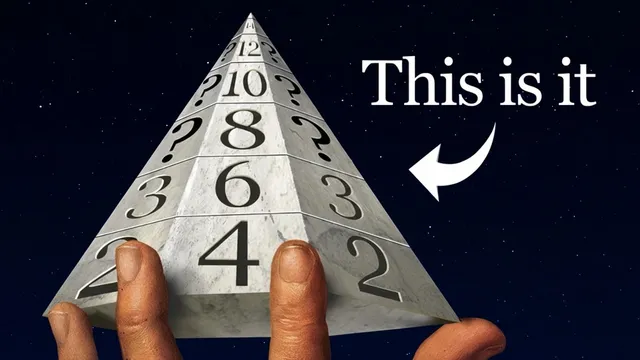
The Obviously True Theorem No One Can Prove
Based on Veritasium's video on YouTube. If you like this content, support the original creators by watching, liking and subscribing to their content.
Goldbach’s strong conjecture asks whether every even number greater than 2 is a sum of two primes, and it has resisted proof despite extensive verification.
Briefing
Goldbach’s conjecture—an “obviously true” claim that every even number greater than 2 can be written as the sum of two primes—has resisted proof for nearly 300 years, even as computers have verified it up to four quintillion. The central tension driving the story is that the conjecture behaves exactly as number theory predicts on average, yet the strongest version still demands a breakthrough technique rather than incremental tightening of estimates.
The narrative begins with Chen Jingrun, a young mathematician reading during air-raid sirens in 1954, fixated on Goldbach’s problem. His obsession traces back to a high-school lesson that framed the conjecture as the “pearl on the crown” of number theory. That personal thread matters because it mirrors the broader mathematical saga: centuries of partial progress, near-misses, and moments when the right idea arrives but the final step remains out of reach.
Goldbach’s original formulation was later split by Leonhard Euler into two related conjectures. The “strong” version targets even numbers as sums of two primes; the “weak” version targets odd numbers as sums of three primes. Proving the strong statement would automatically imply the weak one, but not vice versa—so the weak conjecture became the proving ground.
In 1900, David Hilbert elevated Goldbach’s conjecture into the spotlight by listing it among the 23 most important problems for the 20th century. From there, mathematicians shifted from merely checking representations to counting how many ways they exist. Hardy and Littlewood developed an estimate for the expected number of prime pairs (or prime triples) using the prime number theorem, concluding that the counts should grow with N. Yet their results remained estimates, not proofs—“only proof counts.”
The breakthrough path for the weak conjecture came through the circle method, invented by Hardy and Littlewood around 1917 and refined over decades. Instead of brute-force enumeration of prime combinations, the method uses complex analysis to convert counting into an integral whose main contribution comes from “major arcs,” with “minor arcs” treated as an error term. Under the generalized Riemann hypothesis, the main term eventually dominates the error term, implying that every sufficiently large odd number is a sum of three primes. Even without that assumption, Ivan Vinogradov proved the weak conjecture for all sufficiently large numbers, though he left the threshold unspecified.
That threshold shrank dramatically over time—still astronomically large, but eventually made concrete enough for Harald Helfgott. In 2013, Helfgott proved the weak Goldbach conjecture: every odd number greater than five is a sum of three primes. As a corollary, every even number greater than 2 is a sum of at most four primes. Chen Jingrun’s earlier work came closest to the strong form using sieve methods, showing that every sufficiently large even number is a prime plus either a prime or a semiprime.
The strong conjecture remains unresolved. Computers have found no counterexample up to four quintillion, and the observed “Goldbach’s comet” pattern—an increasing number of representations—matches heuristic expectations. But the proof still requires controlling the delicate structure of primes in a way that the circle method can’t deliver for the strong case, where the major arcs no longer dominate. The result is a rare mathematical limbo: overwhelming evidence, partial theorems, and a final step that still refuses to yield.
Cornell Notes
Goldbach’s conjecture claims that every even number greater than 2 can be written as the sum of two primes, a statement that is easy to test but hard to prove. Euler split the problem into a strong (two primes for even numbers) and a weak version (three primes for odd numbers), and proving the strong form would automatically prove the weak one. Hardy and Littlewood developed estimates using the prime number theorem, but estimates aren’t proofs; the circle method later provided a route to proving the weak conjecture by showing a “main term” eventually outweighs an “error term.” In 2013, Harald Helfgott proved the weak Goldbach conjecture, implying every even number greater than 2 is a sum of at most four primes. The strong conjecture still lacks a proof because, unlike the weak case, the method’s dominant contributions no longer come from the same parts of the analysis.
What exactly is Goldbach’s conjecture, and how did Euler reshape it into two related problems?
How does Hardy and Littlewood’s counting approach use the prime number theorem, and why does it still fall short?
What is the circle method, and why does it work better for the weak conjecture than for the strong one?
How did Vinogradov and later researchers reduce the “sufficiently large” threshold for the weak conjecture?
What did Helfgott prove in 2013, and what does it imply for even numbers?
Why do computers and heuristics strongly suggest Goldbach’s strong conjecture is true, yet proof remains elusive?
Review Questions
- How does Euler’s weak/strong split change what must be proved, and why does proving the strong conjecture automatically settle the weak one?
- What role do “major arcs” and “minor arcs” play in the circle method, and what changes in the strong Goldbach case?
- What does Helfgott’s proof establish, and how does it translate into a statement about sums of primes for even numbers?
Key Points
- 1
Goldbach’s strong conjecture asks whether every even number greater than 2 is a sum of two primes, and it has resisted proof despite extensive verification.
- 2
Euler’s reformulation produced a weak version (odd numbers as sums of three primes) and a strong version (even numbers as sums of two primes), with a one-way implication from strong to weak.
- 3
Hardy and Littlewood’s prime-number-theorem-based estimates predict that representations should become more common, but estimates cannot replace a proof.
- 4
The circle method proves the weak conjecture by converting counting into an integral and showing the main term eventually dominates the error term.
- 5
Vinogradov proved the weak conjecture without assuming the generalized Riemann hypothesis, but left an unspecified “sufficiently large” threshold.
- 6
Helfgott’s 2013 result proved the weak Goldbach conjecture for all odd numbers greater than five, implying every even number greater than 2 is a sum of at most four primes.
- 7
The strong conjecture remains open because the analytic dominance that makes the weak case work does not carry over to the strong case.