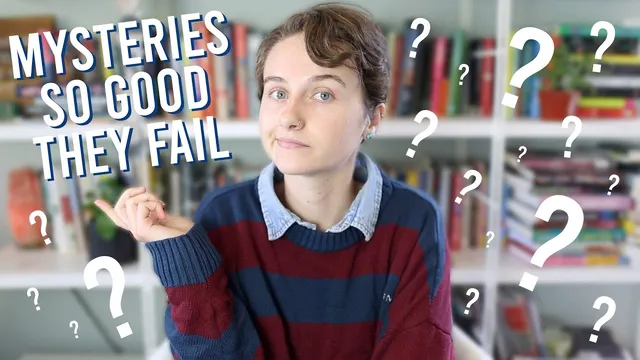
The Paradox of Mystery: When You Can't Outthink Your Own Writing
Based on ShaelinWrites's video on YouTube. If you like this content, support the original creators by watching, liking and subscribing to their content.
A mystery can become self-defeating when the question’s intrigue is stronger than any plausible payoff.
Briefing
A compelling mystery can become self-defeating: when the question is more captivating than any plausible solution, the eventual answer risks feeling like a letdown. That “paradox of mystery” shows up most when stories build intrigue around supernatural or open-ended systems with countless possible explanations—situations where writers can’t realistically outdo the premise’s own brilliance.
The transcript frames the problem as a mismatch between investment and payoff. In a tight whodunit, the answer space is limited, so a satisfying reveal is more achievable. But in fantasy, sci-fi, horror, and other genres where the mystery points to “the grander workings” behind reality, the range of possible answers is effectively infinite. The result is a high bar: the ending must be at least as interesting as the mystery itself, and often it can’t surpass the creative force that hooked audiences in the first place.
Two examples illustrate the pattern. Susanna Clarke’s Piranesi is praised for its worldbuilding and open-ended intrigue, but the eventual explanation is described as unable to match the premise’s imaginative power—so the resolution feels constrained by what the story promised. Netflix’s The Haunting of Bly Manor is also credited for strong writing and emotionally satisfying character arcs, yet the origin and nature of the haunting—centered on the Lady in the Lake—lands less effectively. In both cases, the mystery’s creativity raises expectations so high that the required “mind-blowing” solution becomes nearly impossible to deliver.
A workaround is offered: sometimes the most effective move is letting the mystery remain unanswered. The transcript points to Netflix’s A Series of Unfortunate Events as a case where unanswered questions can preserve long-term fascination. In the books, the “sugar bowl” mystery drives years of re-reading because the audience doesn’t get a definitive answer; the ongoing uncertainty becomes the thrill. The show, by contrast, answers more directly, and the narrator argues the payoff doesn’t beat the emotional investment built over time.
The discussion then zooms out to Lost, described as the “granddaddy” of the paradox. Lost is said to oscillate between overcoming and failing the problem. The hatch mystery is cited as a success: the reveal is satisfying because it’s not just an explanation of the hatch’s existence, but a new, stranger mechanism (a man living there who must press a button on a set schedule). The “numbers” arc is framed as a partial failure because the final explanation doesn’t fully account for why the numbers recur across contexts, leaving significance without a satisfying causal thread. The island’s ultimate meaning is treated as the biggest miss: the show’s final answer (the island as a “cork” holding back evil) is criticized for thematic mismatch with the series’ moral complexity, and for not tying together the sheer volume of loose ends accumulated over six seasons.
Overall, the transcript argues that mystery can either deepen a story—or hollow out its ending—depending on whether the resolution is capable of matching the intrigue that came before it. When it can’t, audiences feel “cheated,” and the best alternative may be to preserve some questions as part of the pleasure of storytelling.
Cornell Notes
The transcript introduces a “paradox of mystery”: when a mystery is so compelling that no answer can match its intrigue, the eventual resolution risks feeling unsatisfying. This tends to happen in supernatural or highly open-ended stories where the explanation space is effectively limitless, raising the bar for any payoff. Examples include Piranesi and The Haunting of Bly Manor, where the mysteries are praised but the explanations don’t fully land. A Series of Unfortunate Events is used to argue that leaving some questions unanswered can preserve long-term fascination, because the mystery itself becomes the reward. Lost is treated as a mixed case—some reveals (like the hatch) outthink the setup, while others (like the numbers and the island’s final meaning) don’t fully connect or match the show’s accumulated expectations.
What is the “paradox of mystery,” and why does it make endings harder to satisfy?
Why does the transcript claim whodunits are less likely to trigger the paradox than open-ended supernatural mysteries?
How does Piranesi illustrate the paradox?
What role does “leaving mysteries unanswered” play in A Series of Unfortunate Events?
Which Lost mysteries are presented as successes or failures, and what’s the reasoning?
Review Questions
- Pick one example from the transcript (Piranesi, The Haunting of Bly Manor, A Series of Unfortunate Events, or Lost). What specific feature of the mystery makes the ending hard to satisfy?
- What conditions make “letting a mystery go unanswered” more effective than resolving it? Use the sugar bowl example to justify your answer.
- In Lost, why does the hatch reveal avoid the paradox while the numbers reveal doesn’t? Identify the difference in how each explanation connects to the setup.
Key Points
- 1
A mystery can become self-defeating when the question’s intrigue is stronger than any plausible payoff.
- 2
Open-ended supernatural mysteries raise the difficulty of satisfying conclusions because the explanation space is effectively limitless.
- 3
A satisfying answer often needs to be at least as interesting as the mystery itself, not merely “correct.”
- 4
Leaving some mysteries unanswered can preserve engagement when the uncertainty becomes part of the reward.
- 5
Lost demonstrates that some reveals can outthink the setup (the hatch), while others fail to fully connect significance to cause (the numbers).
- 6
The island’s final explanation in Lost is criticized for thematic mismatch and for not integrating the show’s accumulated loose ends.