The REAL Reason Asteroids Aren't Planets
Based on minutephysics's video on YouTube. If you like this content, support the original creators by watching, liking and subscribing to their content.
Asteroids were historically treated as planets for practical reasons, with many objects grouped under labels like “minor planets” or “numbered planets.”
Briefing
Asteroids stopped being called planets not because astronomers ran out of patience with a growing catalog, but because a key physical insight showed they are fundamentally different objects. For much of the 19th and early 20th centuries, newly discovered bodies between Mars and Jupiter were still treated as “planets” in practice—often grouped under labels like “minor planets,” “planetoids,” or “numbered planets” simply because there were so many to track. The idea that “too many” objects must mean they aren’t planets doesn’t hold up scientifically; the discovery of thousands of exoplanets later proved that sheer quantity alone isn’t a reason to change definitions.
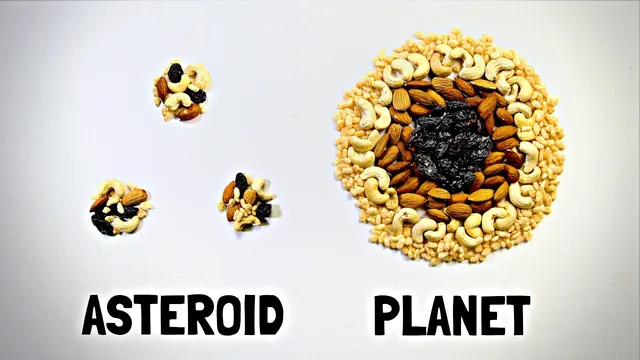
The terminology shift came much later—around 1953—when the usage of “small” and “minor” planets dropped sharply in scientific papers. That timing lines up with a major change in understanding: asteroids aren’t miniature versions of fully formed planets. Instead, they are fragments produced by collisions and disintegration of already formed planets (or protoplanets). This matters because planet formation involves gravitational potential energy that partially melts interiors. As a result, heavy elements sink toward the core while lighter materials rise, sorting matter into layers.
If asteroids formed the way planets do—just at smaller scale—each would be a mixed bundle of materials and would likely be too small to generate enough energy to sort into distinct layers. But if asteroids are collision debris, each asteroid would largely preserve material from a single layer of a differentiated parent body. That prediction matched what astronomers found: asteroids are classified into groups based on composition, consistent with them being broken pieces from different parts of differentiated worlds.
Only a handful of large bodies in the asteroid belt appear to have formed more like standalone planets rather than as fragments. The transcript names Ceres, Vesta, Pallas, and possibly Hygia as candidates for this “formed on their own” category. Even so, the broader taxonomic logic favored keeping the established label “planets” for the intact worlds and splitting off the fragment population as a distinct class. In principle, the naming could have gone the other way—keeping “planet” for asteroids and inventing a new term for the remaining bodies—but the existing hierarchy already treated asteroids as a subcategory of planets, making the split cleaner.
So the real demotion was a quality-based distinction: asteroids are physically different from planets, not merely smaller or more numerous. The closing message ties this scientific diversity to Earth’s uniqueness—then pivots to conservation, noting sponsorship by Planet Wild and describing monthly funded restoration missions for oceans, forests, and life on Earth.
Cornell Notes
Asteroids were long treated as planets because early discoveries between Mars and Jupiter were simply added to the planetary list, often under “minor planets” or “numbered planets.” The decisive change came around 1953, when scientific language shifted sharply. The driver wasn’t a bureaucratic vote or fear of a long list; it was evidence that asteroids are collision fragments from differentiated protoplanets, not miniature planets. Planet formation sorts materials into layers through gravitational energy, while fragment asteroids tend to preserve material from specific layers, matching their compositional groupings. Only a few large belt objects—Ceres, Vesta, Pallas, and possibly Hygia—may have formed more like standalone planets, which reinforces that “quality” matters more than “quantity.”
Why wasn’t the “too many objects” argument enough to remove asteroids from planet status?
What changed around 1953 that caused “small/minor planets” terminology to drop?
How does planet formation explain why planets should be compositionally layered?
Why would collision fragments (asteroids) differ from smaller planets in composition?
Which asteroid-belt objects might have formed more like planets than fragments?
Why does the transcript say the taxonomic split made sense the way it did?
Review Questions
- What physical evidence supports the idea that asteroids are collision fragments rather than miniature planets?
- How does gravitational potential energy during planet formation lead to layered interiors, and why does that matter for interpreting asteroid composition?
- Why does the transcript treat “quality” (origin and structure) as more important than “quantity” (number of objects) when defining planets?
Key Points
- 1
Asteroids were historically treated as planets for practical reasons, with many objects grouped under labels like “minor planets” or “numbered planets.”
- 2
The major terminology shift around 1953 aligns with a scientific breakthrough about asteroid origins, not with a fear of large catalogs or a formal vote.
- 3
Planet formation involves gravitational potential energy that melts interiors and differentiates matter into layers.
- 4
Asteroids are better explained as collision fragments that preserve material from specific layers of differentiated parent bodies.
- 5
Asteroid composition-based groupings support the fragment model, undermining the idea that asteroids are simply smaller planets.
- 6
Only a small number of large belt objects—Ceres, Vesta, Pallas, and possibly Hygia—may have formed more like standalone planets than fragments.
- 7
Taxonomy favored splitting asteroids off from “planets” because asteroids had already been treated as a subcategory, making the classification change cleaner.