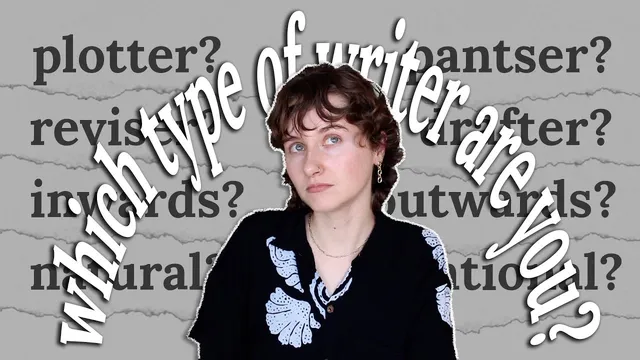
the types of writers + how to find your perfect process! ☑️ WRITING PROCESS QUIZ
Based on ShaelinWrites's video on YouTube. If you like this content, support the original creators by watching, liking and subscribing to their content.
Treat writing process as a set of flexible spectrums rather than a fixed personality label.
Briefing
Writing process isn’t a single identity—it's a set of tendencies that shift by project. The core takeaway is that writers can be mapped across multiple “either/or” spectrums (often with a middle ground), and the goal isn’t to box anyone in. Instead, the framework is meant to help writers recognize what they naturally do, then choose tools deliberately when a different approach would serve the story better.
The first spectrum is linear versus nonlinear: linear writers draft from beginning to end, while nonlinear writers write out of order, jumping to scenes as they come. A second spectrum—horizontal versus vertical—describes not the order of scenes, but how depth is built. “Horizontal” (start-to-end) writing develops themes, characters, and meaning as the story progresses, reaching full discovery by the end. “Vertical” (top-to-bottom) writing moves in layers across drafts, adding character depth in one pass, theme in another, and so on. The creator places herself in the middle: she writes through the story while also relying on multiple revisions to layer meaning.
Another key distinction is inward versus outward writing, which focuses on where ideas originate. Outward writers start with small details and expand outward—one cultural or character detail can trigger the structure of an entire world or the logic of a plot. Inward writers begin with a larger conceptual shape and then fill in the tiny specifics. This distinction also overlaps with a common debate in writing communities, but the framework treats it as a separate lens.
The most familiar pair—pancing versus plotters (discovery writing versus outlining)—boils down to how much planning happens before the first draft. Pancers write without a predetermined sequence of events, even if they have scene ideas; plotters outline most or all major events in advance. The transcript pushes back on extreme takes that claim one approach is impossible or that the categories are straw men. Even when writers “discover” in the first draft, revision still requires planning, so the real question is simply whether the story’s order is set before drafting begins.
The framework then reframes “output versus inspiration” (corrected mid-video): it’s not about where story ideas come from, but what triggers motivation. Some writers need inspiration to create; others feel inspired only after they start producing—notes, research, brainstorming, or drafting. The creator describes herself as output-driven: ideas go dormant until active work begins, and momentum returns once she sits down and writes.
Next comes intentional versus natural idea generation: intentional writers produce ideas on purpose, while natural writers let ideas arrive during everyday life. The transcript also contrasts drafters versus revisers—whether the heavy lifting happens in drafting (slow, detailed drafts) or in revision (fast first drafts, often multiple passes, sometimes “zero drafting”). Finally, function versus effect writers prioritize different decision-making. Function writers optimize for cohesion, unity, theme, and character purpose; effect writers optimize for what readers feel moment to moment. The message is that both function and effect exist in every choice, but one tends to be more conscious.
Taken together, the “writing personality profiles” are presented as flexible tools: writers can lean strongly to one side in some categories, sit in the middle in others, and change over time or by project—without treating any label as permanent.
Cornell Notes
The transcript lays out a set of “writing personality” spectrums to help writers understand how they naturally build stories and make decisions. Instead of treating any label as a fixed identity, it frames each category as a sliding scale that can vary by project. Key pairs include linear vs nonlinear (draft order), horizontal vs vertical (how depth is developed across drafts), inward vs outward (where ideas begin), and pancing vs plotters (how much event-sequencing is planned before the first draft). It also distinguishes output vs inspiration (what creates motivation), intentional vs natural (how ideas arrive), drafters vs revisers (where the main work happens), and function vs effect (whether choices prioritize theme/structure or reader emotion).
How do linear vs nonlinear writers differ in the way they draft a story?
What does horizontal vs vertical writing mean if it isn’t about scene order?
How does inward vs outward writing describe idea generation?
What’s the practical difference between pancing (discovery writing) and plotting (outlining)?
What does “output vs inspiration” actually refer to?
How do function vs effect writers differ in decision-making?
Review Questions
- Which spectrum best matches your drafting habits: linear vs nonlinear, or horizontal vs vertical—and why?
- When you get stuck, do you tend to wait for inspiration or do you start producing (notes/research/drafting) to regain momentum?
- Do your revision decisions focus more on theme/structure (function) or on reader emotion and pacing (effect)?
Key Points
- 1
Treat writing process as a set of flexible spectrums rather than a fixed personality label.
- 2
Use linear vs nonlinear to diagnose whether you draft in final story order or jump around to scenes.
- 3
Use horizontal vs vertical to distinguish whether depth is built continuously across chapters or layered through multiple revision passes.
- 4
Use inward vs outward to identify whether ideas start from tiny details that expand or from a big conceptual shape that gets filled in.
- 5
Define pancing vs plotters by first-draft planning: whether event order is predetermined before drafting begins.
- 6
Reframe motivation as output vs inspiration: some writers need to start producing to unlock ideas and drive.
- 7
Choose between drafters vs revisers by where the “real work” happens—slow detailed drafting or fast drafting followed by heavy revision.