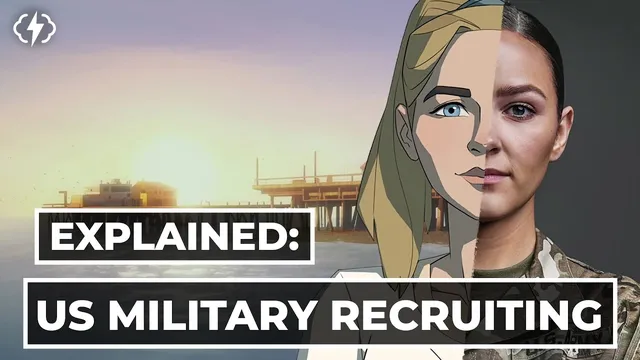
The US Military's Shady Recruitment Practices
Based on Second Thought's video on YouTube. If you like this content, support the original creators by watching, liking and subscribing to their content.
The transcript claims U.S. military recruiting increasingly targets young people through entertainment platforms, especially Twitch, where underage audiences may be exposed to recruiter messaging.
Briefing
The U.S. military’s recruiting push relies on targeted, data-driven tactics that funnel young people—especially minors, the poor, and politically vulnerable Gen Z—into service, while marketing campaigns rebrand war-making as inclusive, patriotic self-improvement. The core claim is that recruitment quotas are met through a mix of platform manipulation, surveillance, and emotional messaging that often clashes with what recruits later experience.
A major pillar of the strategy is exploiting attention economies where young viewers already spend hours. On Twitch, the U.S. Army and Navy launched official channels and used game-streaming culture to reach a demographic described as young and male, with large numbers of concurrent viewers and long viewing sessions. The transcript highlights that many users can be underage (accounts can be created at 13), creating a captive audience for recruiters playing games like Call of Duty and Fortnite. It also points to controversy over moderation and transparency: esports moderators allegedly banned users who asked about war crimes, and the Army is said to have used a fraudulent Xbox giveaway link that redirected to a recruitment information form. The result, according to the account, is a recruitment pipeline that operates inside entertainment spaces while keeping the pitch partially hidden.
Beyond gaming platforms, the recruiting apparatus is portrayed as actively hunting economic vulnerability. A program dubbed “Focus 22” is described as selecting 22 cities with large Black and Latino populations, with recruiters stationed in schools and public areas to maximize contact with young people. The transcript also alleges that some cities allowed military-installed “march to success” software on public computers—presented as study assistance but used to collect data so recruiters can track users. It further cites “Jammers,” a Joint Advertising Market Research study, as a large database covering over 30 million Americans aged 16 to 25, described as having been classified as top secret until 2005.
A third prong is messaging that borrows inclusive language and modern aesthetics to soften the military’s image. The Army’s “The Calling” ad series is presented as animated, youth-oriented propaganda that uses diverse narratives and “genuine” enlisted-soldier stories. The transcript argues that these ads strategically frame enlistment as personal growth, community belonging, and patriotic duty—often leaning on emotionally loaded events like 9/11—while omitting or downplaying the consequences of U.S. wars and past policies affecting LGBTQ service members.
The most visible backlash, the transcript says, came when one ad featuring a soldier tied to missile defense systems was met with heavy negative reaction online. The explanation offered is not that inclusivity is inherently unpopular, but that Gen Z—described as anti-war and skeptical of institutions—can recognize recruitment as propaganda. The overall conclusion is that the military’s recruiting model depends on secrecy, coercive targeting, and rebranding, and that public awareness is the main defense against becoming “cannon fodder” for future conflicts.
The transcript closes by urging viewers to seek truthful information about what enlistment entails and to support a society that doesn’t channel the poor and impressionable into an imperial war machine.
Cornell Notes
The transcript argues that U.S. military recruiting is increasingly predatory and data-driven, using youth-focused platforms, targeted outreach in economically vulnerable communities, and inclusive rebranding to meet enlistment quotas. It highlights Twitch recruitment efforts aimed at young viewers, including allegations of underage targeting, deceptive links, and moderation practices that discourage certain questions. It also describes “Focus 22” city targeting and software/data collection on public computers, alongside “Jammers,” a large database covering Americans aged 16–25. Finally, it critiques animated, “woke” recruitment ads as propaganda that Gen Z rejects once it recognizes the gap between marketing and real-world war consequences. The stakes, per the transcript, are whether young people are being funneled into future conflicts without informed consent.
How does Twitch function as a recruiting channel in the transcript’s account?
What are the alleged tactics used to target young people in poverty or limited opportunity?
Why does the transcript treat inclusive recruitment ads as a problem rather than a harmless marketing shift?
What does the transcript say about online backlash to a specific Army ad?
What broader pattern ties the Twitch, city-targeting, and ad campaigns together?
Review Questions
- Which recruiting channel in the transcript is most dependent on youth attention and parasocial relationships, and what specific allegations are attached to it?
- How do “Focus 22,” “march to success,” and “Jammers” function together in the transcript’s explanation of data-driven targeting?
- What does the transcript claim is the key reason Gen Z rejects the Army’s animated, inclusive recruitment ads?
Key Points
- 1
The transcript claims U.S. military recruiting increasingly targets young people through entertainment platforms, especially Twitch, where underage audiences may be exposed to recruiter messaging.
- 2
It alleges that Army and Navy Twitch efforts blur the line between entertainment and recruitment, including claims about moderation and deceptive promotional links.
- 3
It describes “Focus 22” as a city-based targeting strategy aimed at young people in economically precarious communities, with recruiters stationed in schools and public spaces.
- 4
It alleges that military-installed “march to success” software on public computers collects user data for recruiter tracking.
- 5
It cites “Jammers” as a large database covering over 30 million Americans aged 16–25 and describes it as having been classified as top secret until 2005.
- 6
It argues that animated, inclusive recruitment ads use patriotic symbolism and emotionally framed narratives to make enlistment seem like personal growth while downplaying war consequences.
- 7
It concludes that Gen Z skepticism—shaped by online access to information about war and past policies—helps explain why some recruitment ads fail online.