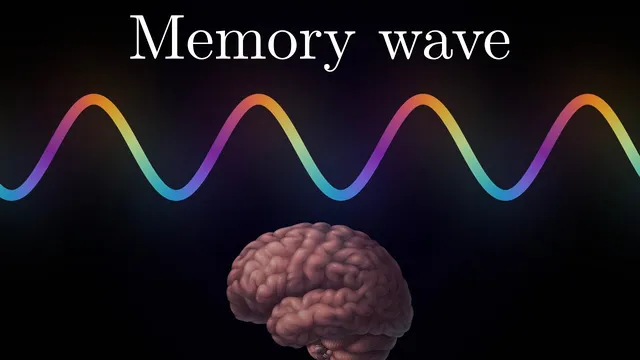
Theta rhythm: A Memory Clock
Based on Artem Kirsanov's video on YouTube. If you like this content, support the original creators by watching, liking and subscribing to their content.
Theta rhythm is a 4–12 Hz hippocampal oscillation that acts as a timing reference for memory-related computations.
Briefing
Theta rhythm is a hippocampal “memory clock” that coordinates when groups of neurons fire so the brain can bind experience into unified episodes and then replay them in the right temporal order. The rhythm shows up most reliably during locomotion and exploration—when animals are actively navigating, searching, and encoding new spatial and contextual information—while it fades during stillness and grooming. That state dependence matters because episodic memory depends on both linking multiple sensory and social components and arranging them into sequences rather than isolated snapshots.
At the circuit level, theta is an oscillation in the 4–12 Hz range localized to the hippocampus. It’s measured by placing an electrode inside the hippocampus and recording voltage relative to extracellular space and a ground electrode, often on the skull. The signal reflects the summed electrical currents produced by large populations of neurons firing synchronously—more like hearing the overall roar of a stadium than distinguishing individual voices. In intact brains, theta is driven by the medial septum, which contains pacemaker neurons that discharge rhythmically at 4–12 times per second. These neurons rely on hyperpolarization-activated channels that allow ions to enter the cell at regular intervals, producing a heartbeat-like timing mechanism. Their projections to the hippocampus synchronize network activity so hippocampal firing waxes and wanes in step with the septum.
Evidence also points to intrinsic generation: after cutting medial septum inputs, theta can still emerge in the hippocampus under certain conditions. That suggests the hippocampus has enough internal circuitry to run an internal oscillator, likely through interactions between excitatory and inhibitory neurons in a negative feedback loop. Even so, the prevailing view is that the medial septum typically sets the dominant beat, while intrinsic hippocampal dynamics can sustain theta when conditions allow.
Functionally, theta is presented as the computational scaffold for two linked problems in memory. First, it helps bind modalities into a single integrated representation—combining location signals, sensory cues, emotional and social context—so separate “neuronal fingerprints” become one episode. Place cells illustrate the idea: individual pyramidal neurons fire when an animal occupies a preferred location, and hippocampus can also encode non-spatial variables such as sound frequency and, in humans, people identities. Second, theta organizes those bound representations into a temporal sequence. Without a sequencing mechanism, episodic memory would resemble a freeze frame; with theta, it can unfold like a movie.
The timing role becomes concrete through phase coding and phase procession. As an animal traverses a place field, spikes occur at progressively earlier phases of theta. Peak firing aligns with a specific theta phase (around 180 degrees), while neurons representing locations just left fire earlier and neurons representing locations about to be entered fire later. Across theta cycles, the phase relationship preserves the order of place fields along the trajectory, effectively packing past, present, and near-future information into each cycle. These “theta sequences” are then proposed as building blocks that can be stitched into longer memories during planning and retrieval.
In short, theta rhythm acts as an internal temporal reference frame: it coordinates spike timing for binding and then uses oscillation phase to keep sequential order intact—turning navigation and experience into retrievable episodic structure.
Cornell Notes
Theta rhythm is a 4–12 Hz oscillation localized to the hippocampus that functions as a timing reference for memory. It is strongest during locomotion and exploration, when animals encode spatial and contextual information, and it supports both binding multiple experience components and sequencing them into coherent episodes. Theta is driven by pacemaker neurons in the medial septum, though the hippocampus can generate theta intrinsically under some conditions. A key mechanism is phase coding: as an animal moves through a place field, spikes shift to earlier theta phases (phase procession), preserving the order of locations along a path. By coordinating when neuronal assemblies fire, theta helps memories unfold in the correct temporal order rather than as jumbled snapshots.
How is theta rhythm generated in the intact brain, and what does it mean that it’s “localized” to the hippocampus?
Why does the theta signal measured with an electrode reflect population activity rather than single neurons?
What evidence suggests the hippocampus can generate theta without the medial septum?
What is the central computational role of theta in memory formation and retrieval?
How do phase coding and phase procession turn theta into an ordered memory signal?
Why does theta appear during locomotion and exploratory behaviors?
Review Questions
- What circuit elements are proposed to generate theta rhythm, and how do medial septum inputs differ from intrinsic hippocampal generation?
- Describe phase procession in place cells and explain how it preserves the order of locations along a trajectory.
- How does theta support both binding of modalities and sequencing of episodic memories?
Key Points
- 1
Theta rhythm is a 4–12 Hz hippocampal oscillation that acts as a timing reference for memory-related computations.
- 2
Theta is most prominent during locomotion and exploration, aligning with periods when spatial navigation and memory encoding are actively required.
- 3
In intact brains, medial septum pacemaker neurons synchronize hippocampal activity; hyperpolarization-activated channels help produce their rhythmic firing.
- 4
Even when medial septum inputs are cut, theta can still emerge in the hippocampus under some conditions, pointing to intrinsic rhythmic circuitry driven by excitatory–inhibitory feedback.
- 5
Theta coordinates spike timing through oscillation phase, enabling phase coding and phase procession in place cells.
- 6
By linking modality-specific neuronal assemblies and ordering them over time, theta helps episodic memories unfold as sequences rather than static snapshots.