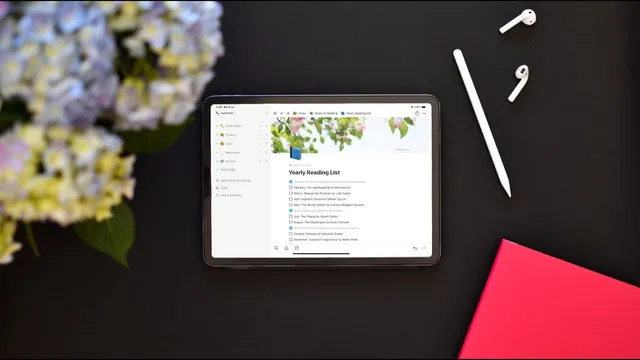
this productivity system changed everything // how to build a second brain
Based on Mariana Vieira's video on YouTube. If you like this content, support the original creators by watching, liking and subscribing to their content.
Build an external, centralized “second brain” so saved information can be retrieved and acted on later, not just stored.
Briefing
“Second brain” thinking reframes productivity as a memory-and-organization problem: instead of trying to store everything in your head, build an external, centralized digital repository that turns scattered information into usable knowledge. With so much learning now arriving through courses, webinars, podcasts, YouTube, memos, and random online finds, the core challenge becomes retrieval—if valuable material isn’t saved and structured, it can’t be acted on later. A well-built system creates an ongoing record of lessons and discoveries, making it easier to extract actionable insights for new situations.
The method highlighted centers on Thiago Forte’s “second brain” approach, summarized through two key steps: code and para. “Code” stands for Collect, Organize, Distill, and Express. Collect means capturing daily “snippets” of information using whatever tools fit the workflow—note-taking apps, web clippers, task managers, or properly formatted documents. Organize then applies the PARA framework, which sorts information into four buckets: Projects, Areas, Resources, and Archive. Projects are time-bound series of tasks tied to a goal (such as developing a plan, attending a course, writing a report, or planning a party). Areas are ongoing responsibilities you maintain over time (health, finances, travel, work, school). Resources hold reference material for topics of ongoing interest (videography, gardening, architecture, surfing). Archive stores inactive items from the other categories so the system stays clean and navigable.
After organizing comes Distill: progressively summarizing what you’ve collected and deleting what no longer matters. This step is framed as essential once the repository grows—without distillation, the system becomes hard to search and harder to trust. Finally, Express pushes knowledge outward. Sharing learned material—either as raw notes or more structured outputs—prevents hoarding and turns stored information into something that can influence future work and learning.
A practical emphasis runs through the framework: projects and areas should be maintained with clear responsibility and attention. The transcript also stresses that areas require continuous upkeep, which can be demanding but helps keep information relevant and supports new projects. For implementation, one workflow example uses Notion as a single workspace with four main folders aligned to PARA, plus project pages that link to relevant resources and area pages. The system also limits complexity by keeping PARA nesting no deeper than four levels, described as a hierarchy of applications, stacks, notebooks, and notes.
Overall, the takeaway is less about a magical tool and more about a repeatable structure: centralize information, separate actionable from non-actionable material, distill to reduce noise, and express to make learning productive. In a world of constant information intake, that structure is positioned as the difference between accumulating data and building knowledge you can actually use.
Cornell Notes
The “second brain” approach treats productivity as an information-management system rather than a memory trick. It relies on an external, centralized repository that captures what people learn and then organizes it so the material can be retrieved and acted on later. The framework uses CODE—Collect, Organize, Distill, Express—where PARA is the organizing engine: Projects (time-bound goals), Areas (ongoing responsibilities), Resources (topic references), and Archive (inactive items). Distilling means summarizing and deleting irrelevant content as the library grows. Expressing means sharing what’s learned so knowledge doesn’t become hoarded data. This matters because scattered saves turn into forgotten insights, while structured storage turns information overload into actionable learning.
Why does “second brain” thinking focus on retrieval and action, not just saving information?
How does CODE (Collect, Organize, Distill, Express) change the way someone processes information?
What’s the difference between Projects and Areas in PARA?
What belongs in Resources versus Archive?
Why does the system recommend limiting PARA nesting depth?
How can a tool like Notion be used to implement PARA in practice?
Review Questions
- How would you decide whether a goal should be treated as a Project or an Area under PARA?
- What specific actions correspond to Distill and Express, and why are they necessary after Collect and Organize?
- If your repository becomes hard to navigate, which step in CODE should you revisit first and what would you change?
Key Points
- 1
Build an external, centralized “second brain” so saved information can be retrieved and acted on later, not just stored.
- 2
Use CODE—Collect, Organize, Distill, Express—to turn incoming information into usable knowledge.
- 3
Apply PARA to sort everything into Projects (time-bound goals), Areas (ongoing responsibilities), Resources (topic references), and Archive (inactive items).
- 4
Distill by progressively summarizing and deleting irrelevant content to prevent the system from becoming unsearchable noise.
- 5
Make outputs part of the workflow: sharing what’s learned (raw or structured) prevents hoarding and reinforces learning.
- 6
Keep PARA structure manageable by limiting nesting to four levels deep to maintain adaptability without complexity creep.
- 7
Implement the system in a tool you can consistently use (the transcript uses Notion as an example) with clear linking between projects, areas, and resources.