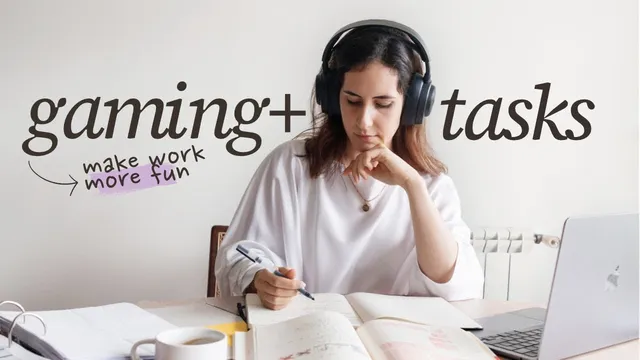
Turning Tasks into Challenges: Gamifying Productivity
Based on Mariana Vieira's video on YouTube. If you like this content, support the original creators by watching, liking and subscribing to their content.
Gamification supports sustainable productivity when it boosts intrinsic motivation and well-being rather than pushing high-stakes competition.
Briefing
Gamifying productivity works best when it’s designed to boost intrinsic motivation and well-being—not when it turns daily life into a high-stakes competition. By borrowing mechanics from games—clear challenges, a sense of achievement, and reward—people can make routine tasks feel more engaging. The core mechanism is psychological: enjoyable challenges can trigger dopamine, reinforcing the feeling of reward and making it easier to stay motivated long enough to finish what matters.
A key framework behind this approach is Self-Determination Theory, which emphasizes autonomy, competence, and relatedness as drivers of sustainable motivation. Holistic gamification aligns with those needs by encouraging self-directed progress (autonomy), skill-building through manageable challenges (competence), and a community mindset that reduces isolation (relatedness). In workplace settings, research cited in the transcript links well-designed gamification to improved motivation when it supports those psychological needs rather than pushing people into burnout.
Turning mundane chores into “challenges” starts with redefining goals. Instead of vague outcomes like “finish the project” or “clean the house,” each task should connect back to personal values and long-term aspirations. When someone can see how a task supports professional growth, helps others, or strengthens a meaningful life direction, the work stops feeling like a chore and starts feeling like a step in a larger story.
Self-care also becomes part of the scoring system. Points shouldn’t only reward task completion; they should also recognize behaviors that protect energy and focus—like a 10-minute break, mindfulness, or a walk. The transcript frames this as treating yourself like a “VIP player,” so recovery isn’t an afterthought but a legitimate part of the productivity journey.
Progress tracking should expand beyond a single progress bar. A “Wheel of Life” style visualization can help people celebrate achievements across work, personal growth, relationships, health, and self-care, reinforcing that success is multi-dimensional. Completing a project is only one piece of building the life someone wants.
The approach also rejects rigid time control and zero-sum thinking. Time management should be flexible, with realistic time frames, buffers, and room for energy fluctuations. Collaboration replaces competition: shared goals with colleagues or friends can create community and mutual support, turning “wins” into collective momentum.
Finally, the transcript recommends using apps that embody these principles. Atica lets users create a character, build skills, and earn points for finishing tasks. Forest uses a focus timer inspired by Pomodoro-style work sessions, growing trees as users complete focused blocks—turning concentration into a visible, rewarding process.
Overall, the message is that productivity becomes more sustainable when it’s treated as a balanced game of growth: connect tasks to values, reward recovery, track progress across life areas, collaborate, and design time to work with energy rather than against it.
Cornell Notes
Holistic gamification can make everyday productivity feel motivating and sustainable by using game-like rewards and challenges without turning life into a burnout-driven contest. The approach relies on intrinsic motivation and Self-Determination Theory—autonomy, competence, and relatedness—so people feel ownership of goals, build skills through manageable progress, and stay connected to others. Tasks become more engaging when they’re linked to personal values and long-term aspirations rather than treated as isolated chores. The scoring system should also include self-care actions (breaks, mindfulness, walks), and progress tracking should span multiple life areas using tools like a Wheel of Life. Collaboration and flexible time management further reduce stress and reinforce a balanced rhythm.
Why does gamifying productivity focus on intrinsic motivation instead of external pressure?
How does Self-Determination Theory shape the “holistic” version of gamification?
What’s the practical method for turning a mundane task into a meaningful challenge?
Why should self-care earn points in a productivity system?
What does “progress tracking” look like when success isn’t just task completion?
Which apps were recommended to operationalize these gamification ideas?
Review Questions
- How would you redesign a typical to-do list item so it connects to autonomy, competence, and relatedness?
- What are two ways to incorporate self-care into a points or progress system without undermining productivity?
- How could a Wheel of Life-style tracker change the way you define “success” compared with a single project checklist?
Key Points
- 1
Gamification supports sustainable productivity when it boosts intrinsic motivation and well-being rather than pushing high-stakes competition.
- 2
Dopamine-linked reward can make tasks feel more pleasurable, helping people stay engaged long enough to complete them.
- 3
Self-Determination Theory—autonomy, competence, and relatedness—provides a blueprint for designing motivating, non-burnout systems.
- 4
Connect each task to personal values and long-term aspirations to transform chores into meaningful challenges.
- 5
Reward self-care behaviors (breaks, mindfulness, walks) so recovery becomes part of the productivity loop.
- 6
Track progress across multiple life areas (e.g., Wheel of Life) instead of treating project completion as the only measure of success.
- 7
Use flexible time management and collaboration to reduce stress and replace zero-sum thinking with shared momentum.