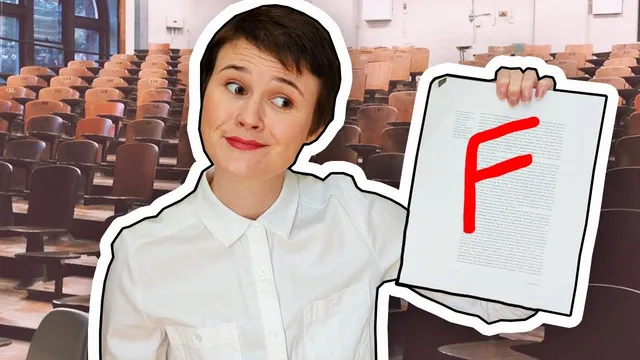
Ungrading: when and how I don't grade
Based on morganeua's video on YouTube. If you like this content, support the original creators by watching, liking and subscribing to their content.
Grades can become a proxy for intelligence and self-worth, which shifts students from learning to performance.
Briefing
Grades don’t just measure learning—they often reshape it, pushing students toward performance, fear, and selective studying while making feedback harder to absorb. A PhD candidate in Theatre and Performance Studies argues that the most damaging effect isn’t merely that grades are imperfect, but that they become the main currency of self-worth and motivation. Students may stop reading “for pleasure,” avoid challenging tasks, and treat assignments as hurdles to a number rather than opportunities to improve. The result is a cycle where learners chase marks, forget material after tests, and ask for “how to get a better grade next time” instead of requesting deeper feedback or chances to revise.
To respond, the video points to the progressive education movement known as ungrading (also described as de-grading or going gradeless). Rather than insisting grades must disappear overnight, ungrading begins with questioning grades’ “apparent centrality” in schooling. Susan Blum’s framing is used to emphasize that the goal is not to prescribe one replacement system, but to reduce the harm grades cause—through a spectrum of strategies. Those range from small changes (rephrasing feedback, increasing transparency) to larger structural shifts (self-assessment, pass/fail, mastery-based progression, or fully removing grades).
Four core problems with grading are highlighted, each paired with practical alternatives. First, grades can be vague or even meaningless: a score like “72” may reflect an instructor’s intuition, past marking patterns, or unclear criteria, and it can vary depending on what different graders value—especially when multiple teaching assistants are involved. Proposed fixes include making assessment targets explicit in advance, co-creating rubrics with students, and even letting students influence weighting (for example, choosing whether content or style matters more). Another approach is reducing the granularity of scoring by using many smaller assignments with a shorter scale (e.g., 2–4 points) so students worry less about tiny differences.
Second, grades can intensify fear of failure because they turn mistakes into judgments about the self. Research cited from Susan Harter suggests that when children believe an activity is graded, they choose less challenging tasks and show more anxiety. Strategies offered include mastery-style models with multiple attempts (and selective grading), “grading-free zones” where students can fail without punishment, and contract grading—though the latter raises concerns about turning learning into a checklist.
Third, grades can promote competition by defining ability relative to peers, especially when curves are used. The video suggests resisting grade curves where possible, using peer assessment or self-assessment to shift power dynamics, and grading improvement over time (repeating the same assignment across a year so students see growth rather than ranking).
Fourth, grades can block students from using feedback. Ruth Butler’s experiment is cited: students who received comments without grades showed the highest interest and performance. To mimic that effect even when grades are required, the video recommends grade-free periods, withholding grades until the end of a course, collaborative grading, or self-grading with explanation and follow-up meetings when disagreements arise. The overall takeaway is pragmatic: education systems may not be able to eliminate grades immediately, but they can start by redesigning assessment so learning, risk-taking, and feedback uptake matter more than the number attached to work.
Cornell Notes
The central claim is that grades often distort learning by tying self-worth to performance, increasing fear of failure, encouraging competition, and reducing how much students actually use feedback. The ungrading movement responds by questioning grades’ “centrality” rather than treating them as an unchangeable fact of schooling. Strategies range from small adjustments—like clearer criteria, student-influenced rubrics, and co-created weighting—to larger redesigns such as mastery models, grading-free zones, pass/fail, and self- or peer assessment. Research cited (including Susan Harter and Ruth Butler) supports the idea that removing grades from feedback can raise interest and performance, while grading can increase anxiety and challenge-avoidance. The practical goal is to communicate evaluation while keeping students focused on growth and learning.
Why does the transcript treat grades as more than a measurement tool?
What does “ungrading” mean in this framework, and what does it not require?
How does the transcript address the problem that grades can be vague or inconsistent?
What strategies are offered to reduce fear of failure created by summative grading?
How does the transcript propose reducing competition driven by peer-referenced grading?
What does the transcript say about feedback, and how does it use research to justify grade-free approaches?
Review Questions
- Which specific mechanisms link grades to reduced intrinsic motivation and selective studying in the transcript’s account?
- For each of the four grading concerns (vagueness, fear of failure, competition, feedback avoidance), what is one concrete ungrading strategy offered?
- How do peer assessment and self-assessment differ in the transcript’s explanation of power dynamics and incentives?
Key Points
- 1
Grades can become a proxy for intelligence and self-worth, which shifts students from learning to performance.
- 2
Ungrading is framed as questioning grades’ central role and reducing their harm, not necessarily eliminating grades immediately.
- 3
Grades can be vague or inconsistent when criteria are unclear or when multiple graders (e.g., teaching assistants) apply different standards.
- 4
Summative grading can increase fear of failure and challenge-avoidant behavior; multiple attempts, mastery models, and grading-free practice can counter this.
- 5
Peer-referenced grading and curves can intensify competition; peer assessment, self-assessment, and improvement-based evaluation can reduce it.
- 6
When feedback is paired with grades, students may ignore it; comment-only approaches and grade-free periods can improve feedback uptake.
- 7
Collaborative or self-grading can preserve evaluation while giving students more agency—especially when disagreements trigger follow-up meetings.