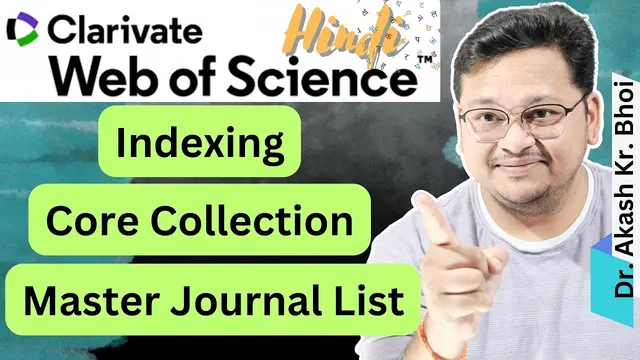
Web of Science Core Collection || Web of Science Master Journal List - Search || Hindi || 2023
Based on eSupport for Research's video on YouTube. If you like this content, support the original creators by watching, liking and subscribing to their content.
Verify a journal’s Web of Science indexing status using the Web of Science Master Journal List before relying on any impact-factor numbers shown elsewhere.
Briefing
Web of Science Core Collection indexing can directly affect whether a journal’s articles generate an official impact factor—and that makes cross-checking essential before submitting papers. The core warning is that journals may display impact-factor numbers on their own sites, but those figures can be misleading unless the journal’s indexing status inside Web of Science (and its related index categories) is verified. A practical workflow is offered: confirm the journal’s presence in the Web of Science Master Journal List, then cross-check the journal’s details using its session number and exact title, and finally review the journal’s profile for indexing, publisher information, and impact-factor-related indicators.
The transcript breaks down how Web of Science Core Collection is organized through multiple indexing databases and categories—such as Science Citation Index Expanded (SCIE), Social Sciences Citation Index (SSCI), and Emerging Sources Citation Index (ESCI)—and how other content types (like book items, conference proceedings, and related records) may also be included. A key update is tied to June 2023: after that point, additional categories and index coverage were expected to change, meaning journals that previously only received impact-factor treatment under narrower rules could start showing impact-factor metrics across more index pathways. The guidance is to treat June 2023 as a potential cutoff for impact-factor visibility and to check indexing status for any submission timeline.
To avoid wasting effort on “fake” or incorrectly presented journals, the transcript recommends using the Web of Science Master Journal List search (free search is mentioned) to validate whether a journal is truly indexed. The method includes searching by journal title, matching the correct record using the journal’s session number and title, and then confirming the journal’s indexing body and subject categories. Once confirmed, the journal’s Web of Science “View Profile” page becomes the evidence base: it lists publisher website, publication frequency, current issue/year details, indexing coverage, and impact-factor-related indicators (including a numeric value and year-to-year movement). The transcript also stresses that indexing requirements can vary by institution and retirement/eligibility rules, so the journal’s inclusion in the right Web of Science categories matters for institutional compliance.
Beyond indexing verification, the transcript shows how to use the journal profile to support research planning. It suggests searching within the journal for topic-relevant papers, then using filters to narrow results by document type and time period (for example, focusing on 2022–2023). A “related records” or “similar articles” feature is highlighted as a way to expand a literature review by following connected papers. The overall message is procedural: verify indexing status first, then use Web of Science tools to confirm relevance, review timelines, and build a targeted reading list—so submissions and literature work align with journals that are actually indexed and recognized.
Cornell Notes
Web of Science Core Collection indexing can determine whether a journal’s articles generate recognized impact-factor metrics, so journal selection should start with verification—not with claims made on a journal’s own website. The transcript recommends checking the journal in the Web of Science Master Journal List, then cross-matching the correct record using the journal title and session number. After confirmation, the Web of Science “View Profile” page provides evidence such as indexing coverage, publisher details, publication frequency, and impact-factor-related indicators (including year-to-year values). It also advises using journal search and filters to find topic-relevant papers and to build a literature review using similar/related records, while paying attention to time windows like 2022–2023.
Why can a journal’s displayed impact factor be unreliable unless indexing is verified?
What June 2023 change matters for impact-factor visibility?
What is the recommended step-by-step method to cross-check a journal in Web of Science?
What information on a journal’s Web of Science profile helps decide whether it fits a research submission?
How can Web of Science tools inside a journal profile support literature review and relevance checks?
Review Questions
- What specific evidence on the Web of Science journal profile should be checked before trusting an impact-factor claim?
- How does the transcript’s June 2023 update change the way researchers should think about impact-factor availability?
- Describe how you would use journal search keywords and filters to confirm that a journal publishes work relevant to your topic.
Key Points
- 1
Verify a journal’s Web of Science indexing status using the Web of Science Master Journal List before relying on any impact-factor numbers shown elsewhere.
- 2
Use exact journal title matching and cross-check with the session number to avoid selecting the wrong journal record.
- 3
Treat June 2023 as a potential turning point for impact-factor visibility due to changes in index-category inclusion rules.
- 4
Use the journal “View Profile” page to confirm indexing bodies/categories, publisher and publication frequency, and impact-factor-related indicators.
- 5
Use in-journal search and filters (document type and time window) to confirm topic relevance and support a targeted literature review.
- 6
Leverage related records or similar-article features to expand reading lists beyond one journal entry.
- 7
Align journal selection with institutional eligibility rules, since indexing requirements can vary by university or program criteria.