Which Note App Are YOU? Discover Your Perfect Digital Home!
Based on Tiago Forte's video on YouTube. If you like this content, support the original creators by watching, liking and subscribing to their content.
Start with personal goals and note-taking needs before comparing apps.
Briefing
Choosing a digital notes app isn’t mainly about features or brand loyalty—it’s about matching the tool to how a person thinks, creates, and retrieves information. Tiago Forte lays out a three-part decision framework: clarify personal goals and note-taking needs, check whether the app’s culture and community fit one’s working style, and then select the app whose feature set best supports the specific work that matters most. Get those three factors aligned, and the notes system becomes a “second brain” rather than another source of stress.
To make that match easier, Forte introduces three note-taking archetypes—architect, gardener, and librarian—that map to distinct motivations. The architect craves structure and customization, aiming for a clear system that organizes life with a systems mindset. The gardener is driven by exploration and creativity, looking to cultivate new ideas, cross-pollinate concepts, and make spontaneous connections without necessarily building a rigid plan. The librarian prioritizes collecting useful information, retrieving it when needed, combining old and new insights, and often sharing learnings; this archetype tends to be project-oriented, using research to support specific learning obsessions.
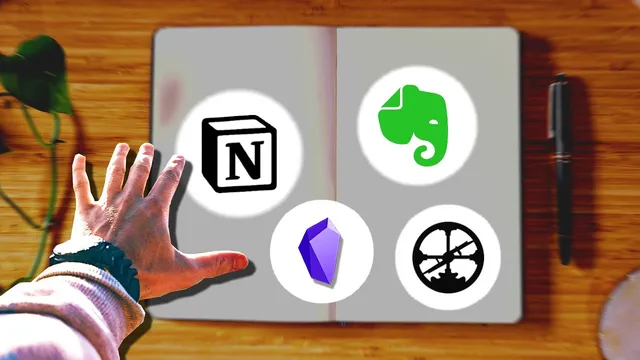
Each archetype pairs with commonly used apps. For architects, Notion stands out as a platform for building personal dashboards, “just-in-time” indexes, and dynamically updated, tagged information. For gardeners, Rome Research and Obsidian are highlighted as tools that help create evolving maps of knowledge—connecting disparate ideas in ways that can surface insights the user didn’t anticipate. For librarians, Evernote is positioned as a dependable collection hub that started the modern note-taking wave and has specialized in capturing information from many sources, with strong cross-device accessibility.
Forte also adds a fourth, more universal archetype: the student. This group often defaults to short-term goals—tests, essays, classes—and values ease of use, quick capture, and flexible organization across many life areas. Going too deep can be a liability when time and attention are limited. For the student archetype, he recommends simpler, less “opinionated” apps such as Apple Notes, Google Keep, Notability, and Simplenote, emphasizing practical note-taking features over complex systems.
The practical takeaway is that note-taking is personal and heavily intuition-driven. Instead of trying to force a “best” app onto everyone, Forte suggests identifying which archetype feels most like you—then narrowing the search to the apps most associated with that style. He notes that the four major apps discussed (Notion, Rome Research, Obsidian, Evernote) account for roughly 75% of students in his program, underscoring that strong communities exist around each approach. The next steps in the series promise comparisons of usage trends and feature differences, but the core message remains: the right notes app is the one that fits your mind and your priorities, not the one with the most bells and whistles.
Cornell Notes
The choice of a digital notes app should start with personal goals, then check whether the app’s culture and community match one’s working style, and finally select the tool whose features enable the specific work that matters most. Forte frames note-taking preferences through three archetypes: architects want structure and customization (Notion), gardeners want exploratory connections and creative surprise (Rome Research, Obsidian), and librarians want collecting, retrieving, and studying useful information (Evernote). A fourth archetype—students—is the most common default when time is limited; students prioritize quick, easy capture and flexible organization, making simpler apps like Apple Notes, Google Keep, Notability, and Simplenote a better fit. Matching tool to temperament reduces stress and makes a “second brain” usable over time.
How does Forte recommend deciding on a notes app beyond comparing features?
What distinguishes the architect, gardener, and librarian archetypes in note-taking?
Which apps are associated with each archetype, and why?
Why does Forte introduce a “student” archetype, and what apps fit it?
What practical method does Forte suggest for narrowing down the right app?
Review Questions
- Which of the three archetypes (architect, gardener, librarian) best matches your note-taking motivation, and what app features would you expect to prioritize?
- How would you apply Forte’s three-step decision framework if you’re switching notes apps because of stress or worry?
- Why might a “student” approach be preferable to a more complex system for someone with limited time?
Key Points
- 1
Start with personal goals and note-taking needs before comparing apps.
- 2
Evaluate whether an app’s company and user community match your working style.
- 3
Choose the app whose features directly support the work you actually do, not the most complex setup.
- 4
Use archetypes—architect, gardener, librarian—to map note-taking preferences to likely app fits.
- 5
Notion aligns with structured, customizable organization needs.
- 6
Rome Research and Obsidian align with exploratory, connection-driven knowledge building.
- 7
If time is limited and goals are short-term, simpler “student” apps like Apple Notes, Google Keep, Notability, and Simplenote may reduce friction.