Why Building a Second Brain Isn't Enough Anymore: Life Update
Based on Tiago Forte's video on YouTube. If you like this content, support the original creators by watching, liking and subscribing to their content.
Mexico’s slower pace and lower punctuality pressure required months of habit change, even after the logic was understood.
Briefing
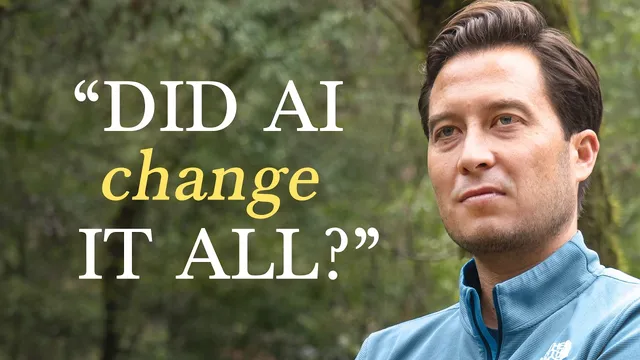
A year in Mexico has reshaped daily life and long-term planning—then AI pushed those lessons into a bigger question: how to stay intentional when uncertainty is rising. The core thread is that “second brain” thinking still matters, but it can’t stop at personal note-taking. AI is accelerating knowledge work and, more importantly, increasing the need for repeatable decision-making routines like annual reviews.
On the personal side, the biggest change is pace. In Mexico’s smaller-town setting, schedules loosen and people don’t panic when plans slip. Even after recognizing intellectually that “nothing happens on time,” the habit of rushing—especially around kids and social commitments—takes months to unlearn. The contrast sharpens during a return to the U.S., where delays trigger visible stress and convenience culture reduces eye contact and neighborly interaction.
Warmth and community become the second major theme. In the town of roughly 100,000–150,000 people outside Mexico City, relationships form quickly through everyday rituals: store owners greet newcomers like neighbors, people nod and say hi at school, and conversations linger. The family’s social life becomes unusually active—stronger in three months than in four years in Long Beach. The school is singled out as the key “community engine,” especially in a post-pandemic environment where many families arrive around the same time and are actively seeking social circles. That makes friend-making more replicable than in places where networks are already closed, such as Mexico City.
Language learning is another concrete outcome of immersion. With two young kids—ages four and two—Tiago Forte describes rapid Spanish acquisition through nine months of immersion (after travel reduced total time on-site). The children speak full sentences, and their accents are already strong, with the expectation that the remaining American accent will fade. The parents’ own Spanish improves moderately, but their daily reality limits exposure: most adult conversation remains in English with work, friends, and family.
Looking ahead, the “golden window” frames the family’s next move. Childhood is treated as a limited period—roughly the first decade—when kids want constant attention and mimic their parents. That urgency drives a plan to spend more years in Mexico (he suggests four to five) and then repeat the immersion model in Brazil to preserve Brazilian heritage. The main worry is not language or culture, but access to U.S. family ties—grandparents, cousins, aunts, and uncles—so the family is considering how often to return or whether to shift back later, potentially around high school.
Business updates connect these personal principles to AI and planning. A new traditionally published book project is nearing completion, with publication targeted for late 2026. The annual review is positioned as a cornerstone of intentional living—especially as AI and other technologies raise uncertainty. Planning, he argues, remains indispensable even when the future is unclear; the annual review functions as a strategic protocol for decisions, identity shifts, and realizations.
The largest business development is “Second Brain Enterprise,” a B2B AI education course launched in Mexico. It grew from a quick collaboration with Canadian serial entrepreneur Hayden, selling out two cohorts of 50 business leaders each within weeks. Results include an NPS of 75 and a 0% refund rate. The program’s unexpected insight: deep AI adoption requires a process-first company. AI can help document and systematize tacit knowledge, but the transformation depends on turning operations into documented, followed processes. AI doesn’t replace pre-AI knowledge management principles; it accelerates them. The brand focus shifts from labor-intensive personal systems to an AI-accelerated “second brain” at the company level.
Finally, a personal note on ambition follows a psilocybin-assisted therapy session. Ambition hasn’t disappeared, but its fuel has changed: heavy lifts and deep work no longer feel sustainable or worth the trade-offs. Success is increasingly framed as orchestration—using relationships, assets, and reputation to unlock value with less brute-force effort. The overall message ties together: community, language immersion, and AI-enabled planning all serve the same goal—staying deliberate as life speeds up and uncertainty grows.
Cornell Notes
The year in Mexico reshaped daily habits—slower pace, more warmth, and faster community-building—while also sharpening long-term planning around kids’ “golden window.” Immersion drove rapid Spanish gains for two young children, and the family is now considering a multi-country plan (Mexico, then Brazil) to preserve both sides of their heritage. In business, AI is accelerating “second brain” practices rather than making them obsolete, but deep adoption depends on process-first companies. That insight underpins “Second Brain Enterprise,” a B2B AI education program that sold out cohorts quickly and reported strong satisfaction metrics. Across both personal and professional life, the annual review is framed as a repeatable strategy for making decisions amid rising uncertainty.
Why does the “golden window” idea change how the family plans where to live?
What specific conditions made community formation in Mexico unusually fast?
How did immersion affect the kids’ Spanish, and what limited the parents’ progress?
What is the central lesson behind “Second Brain Enterprise” for adopting AI in companies?
How does AI change “second brain” ideas without making them obsolete?
What role does the annual review play when uncertainty is rising?
Review Questions
- What evidence does the transcript give that community-building is easier in some environments than others, and what role does the school play?
- Why does “process-first” become a prerequisite for deep AI transformation in small businesses?
- How does the annual review function as a planning tool when the future is uncertain?
Key Points
- 1
Mexico’s slower pace and lower punctuality pressure required months of habit change, even after the logic was understood.
- 2
Warmth and trust in small-town Mexico accelerated social integration, with the school acting as the main community network.
- 3
Spanish immersion produced rapid, sentence-level fluency and strong accents for the kids, while the parents’ progress lagged due to limited Spanish exposure in work and adult social life.
- 4
The “golden window” concept is driving a multi-year, multi-country immersion plan (Mexico first, then Brazil) to preserve both cultural heritages.
- 5
Deep AI adoption in companies depends on documented, followed processes rather than tacit founder knowledge; AI can help extract and stress-test those processes.
- 6
The annual review is presented as a repeatable planning protocol that remains valuable even as AI increases uncertainty.
- 7
Ambition is reframed after psilocybin-assisted therapy: heavy lifts and deep work feel less sustainable, shifting the focus toward orchestration through relationships and assets.