Why Do We Get Bored?
Based on Vsauce's video on YouTube. If you like this content, support the original creators by watching, liking and subscribing to their content.
Boredom is framed as a protective emotional signal that discourages mental stagnation and encourages seeking new stimulation.
Briefing
Boredom isn’t just an annoying pause between distractions—it’s a built-in mental signal that pushes people toward new stimulation and, in some cases, toward creativity and self-reflection. While boredom feels trivial compared with pain or illness, it emerges when attention drops and the mind turns inward, and that inward shift can be uncomfortable yet useful. The core claim is that boredom functions like a protective emotion: it discourages stagnation and nudges the brain to seek something more engaging, rather than letting life become monotonous and mentally unhealthy.
Brain imaging and psychological research point to boredom as more than “doing nothing.” When people report being bored, brain activity doesn’t simply shut down; it changes. Magnetic resonance imaging studies described in the transcript show increased activity in regions tied to autobiographical memory, imagining others’ perspectives, and generating hypothetical scenarios. That internal simulation matters because boredom often occurs when the outside world isn’t demanding enough—leaving space for the mind to rehearse possibilities, notice overlooked details, and evaluate what’s missing.
The transcript also frames boredom as historically persistent, citing evidence as far back as ancient Pompeii. Philosophers and writers treat it as revealing something about human capacity. Arthur Schopenhauer is quoted arguing that if life had inherent positive value, boredom wouldn’t exist. Giacomo Leopardi goes further, calling boredom “sublime” because it reflects the human spirit’s boundless needs not being met by the universe’s offerings.
To make boredom measurable, the transcript references the Boredom Proneness Scale (BPS), which estimates how easily someone becomes bored—roughly with average scores between 81 and 117. Higher self-awareness is linked with lower boredom proneness, while biology may also play a role. People with fewer dopamine receptors may require more stimulation to stay engaged, meaning chronic boredom can be a symptom rather than a personality flaw. The transcript connects persistent boredom with risk factors for serious outcomes, including depression, anxiety, substance abuse, and poor functioning, citing claims from organizations such as the National Center on drug abuse and addiction and reporting from Beth Israel Medical Center.
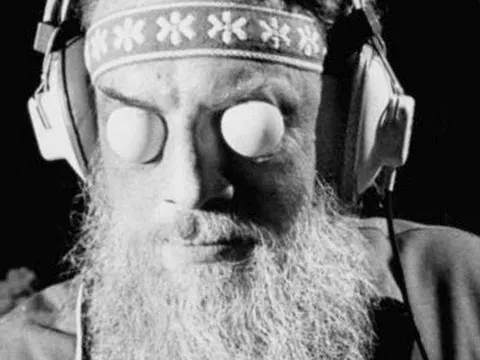
A key warning follows: too little stimulation can degrade brain systems needed for plasticity. The transcript cites research suggesting monotony undermines dopamine and attentional networks, and it argues that variety supports neurogenesis—new brain cells—and helps maintain existing ones. When stimulation drops far enough, the brain may generate its own input, leading to hallucinations. Examples include the ganzfeld effect (random noise plus unchanging visual fields) and sensory deprivation setups, which can produce hallucinations and anxiety.
The transcript then escalates from everyday boredom to extreme deprivation. It recounts the case of Genie, a child isolated for years with minimal sensory input and no language development, and it describes solitary confinement as a punishment that can resemble the same trajectory—starting with boredom and potentially worsening mental state. Finally, it reframes boredom through Robert Plutchik’s wheel of emotions, placing boredom as a light form of disgust. Disgust protects by steering people away from toxic things; boredom protects by steering them away from mental stagnation. The takeaway is practical: when boredom hits, it may be a healthy pressure to seek fresh experiences—so give yourself room to feel it, then use it as a cue to change course.
Cornell Notes
Boredom is presented as a functional emotion, not a meaningless nuisance. Imaging and psychological evidence suggest boredom shifts attention inward, increasing activity tied to memory, imagining others, and generating hypothetical scenarios—processes that can support creativity and self-understanding. Researchers measure boredom proneness with the Boredom Proneness Scale (BPS), and biology may influence it; fewer dopamine receptors can make people need more stimulation. Chronic boredom can correlate with serious risks such as depression, anxiety, and substance abuse, especially when stimulation stays low for long periods. The transcript concludes that boredom can be protective: it nudges people toward new stimulation and helps prevent mental stagnation, making it an adaptive signal when it’s not ignored.
Why does boredom feel uncomfortable if it’s potentially useful?
What evidence is cited that boredom changes brain activity rather than simply “turning the brain off”?
How is boredom measured, and what factors are linked to higher boredom proneness?
Why does the transcript connect boredom with serious mental and behavioral risks?
What happens when the brain is deprived of stimulation for long periods?
How does Plutchik’s emotion model reinterpret boredom?
Review Questions
- How does the transcript distinguish everyday boredom from a potential sign of deeper problems?
- What role does dopamine play in the explanation of chronic boredom?
- According to the Plutchik-based framing, what is boredom’s protective function, and how is it similar to disgust?
Key Points
- 1
Boredom is framed as a protective emotional signal that discourages mental stagnation and encourages seeking new stimulation.
- 2
Neuroimaging findings described in the transcript suggest boredom increases activity in brain regions tied to memory, perspective-taking, and imagining hypothetical events.
- 3
Boredom proneness can be measured with the Boredom Proneness Scale (BPS), where average scores are reported between 81 and 117.
- 4
Biology may contribute: fewer dopamine receptors are linked to needing more stimulation, making chronic boredom potentially symptomatic.
- 5
Prolonged low stimulation is associated with risks to mental health and functioning, including links to depression, anxiety, and substance abuse.
- 6
When stimulation drops far enough, the brain may generate its own input, producing hallucinations in settings like the ganzfeld effect and sensory deprivation.
- 7
In Plutchik’s emotion framework, boredom is treated as a mild form of disgust—an adaptive warning that nudges people toward healthier, more engaging conditions.