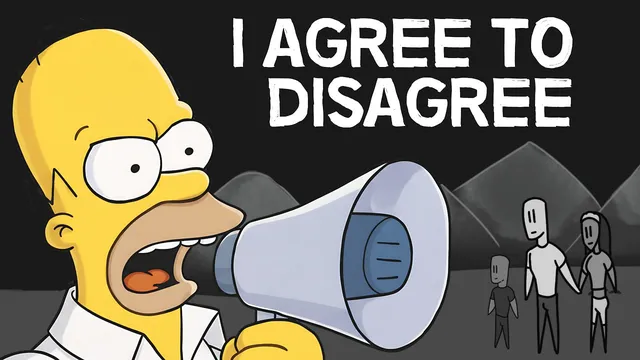
Why Dumb People Feel So Smart | The Dunning–Kruger Effect
Based on Einzelgänger's video on YouTube. If you like this content, support the original creators by watching, liking and subscribing to their content.
The Dunning–Kruger effect helps explain why low-competence people can sound highly certain: they lack the insight to recognize their own incompetence.
Briefing
Confidence often outruns competence: people with little real understanding can sound certain, recruit others with the same gaps, and lock in beliefs that later prove wrong—especially on high-stakes issues like health, politics, and the economy. The core mechanism is the Dunning–Kruger effect, where low-ability individuals overestimate their competence because they lack the insight needed to recognize their incompetence. By contrast, true experts tend to doubt themselves more because they understand how complex the subject is and how much they still don’t know.
A personal crypto crash illustrates how this dynamic plays out in everyday life. In 2017, the narrator poured savings into Bitcoin, Ethereum, and altcoins after consuming lots of YouTube commentary, yet still couldn’t clearly explain blockchain or justify why it was “the greatest thing since sliced bread.” Despite minimal technical understanding, conversations with similarly uninformed friends used jargon and slogans—terms like HODL and “buy the dip”—that created the feeling of expertise. The 2018 crash became a “wake-up call,” revealing the gap between confident talk and actual knowledge. The story is framed as “Mount Stupid”: peak confidence with minimal knowledge, followed by the humiliation of falling.
The danger grows when confident ignorance persists rather than being corrected. Soccer talk in the Netherlands—where millions of people act like coaches during major tournaments—is portrayed as mostly harmless. But when the same certainty attaches to medicine, climate, culture and religion, politics, or economic policy, oversimplified explanations can turn dark. The video argues that confident delivery itself is persuasive. Psychological research is invoked to describe a “confidence heuristic,” where people trust confident speakers more than uncertain ones. That means misinformation can feel credible when it’s delivered decisively, while accurate information can be discounted if it comes with uncertainty.
Confidence also feeds on a human preference for closure. Arie Kruglanski’s “Need for Cognitive Closure” is used to explain why quick, definitive answers beat messy nuance. Confident speakers further bolster credibility by using impressive jargon—word choices that sound authoritative even when they don’t add real understanding.
But rhetoric isn’t the only driver. Confirmation bias helps explain why people cling to beliefs that match what they already want to be true. In U.S. politics, the same events can be framed as lies or as victories depending on the outlet, pushing audiences toward preferred narratives. When challenged, people often cherry-pick supporting evidence and dismiss counterarguments—sometimes rejecting statistics from trusted sources or calling academic research “indoctrination” while urging viewers to “do their own research.”
Online, these tendencies can harden into echo chambers, where repeated claims go unchallenged and communities stay stuck on Mount Stupid. The video closes by shifting the focus from ignorance itself to metacognition: the ability to recognize the limits of one’s understanding. Ignorance is normal, but the real risk is not seeing it—leading to confident beliefs that can become hateful or divisive, with potentially catastrophic consequences. The takeaway is captured by Twain: trouble comes not from what people don’t know, but from what they’re sure of that isn’t so.
Cornell Notes
The Dunning–Kruger effect describes how people with low competence often overestimate their abilities because they can’t detect their own incompetence. That confidence becomes persuasive through a “confidence heuristic,” where audiences trust certainty more than accuracy, and through a “need for cognitive closure,” where people prefer quick, definitive answers over ambiguity. Confirmation bias then helps people keep beliefs that fit their preferences, cherry-picking evidence and dismissing challenges. In online echo chambers, these forces can reinforce each other, keeping groups stuck at “Mount Stupid” (high confidence, low knowledge). The video argues the key safeguard is metacognition—recognizing the limits of one’s understanding—because unrecognized ignorance can harden into harmful, divisive certainty.
What is the Dunning–Kruger effect, and why does it produce confident ignorance?
How does the crypto crash example illustrate the mechanism?
Why can confident misinformation spread even when it’s wrong?
How do confirmation bias and political media dynamics reinforce belief?
What does the video identify as the real antidote to confident ignorance?
Review Questions
- How does the Dunning–Kruger effect differ from simply being wrong?
- Which psychological factors make confident claims more persuasive than accurate but uncertain ones?
- What practical behaviors would demonstrate metacognition in high-stakes topics like health or politics?
Key Points
- 1
The Dunning–Kruger effect helps explain why low-competence people can sound highly certain: they lack the insight to recognize their own incompetence.
- 2
“Mount Stupid” describes the combination of peak confidence and minimal knowledge, and it can persist when beliefs aren’t updated after new evidence.
- 3
Confident delivery can outperform factual quality because people often trust certainty more than uncertainty, a dynamic described as a confidence heuristic.
- 4
A need for cognitive closure makes quick, definitive explanations attractive, especially when they reduce complex issues into digestible narratives.
- 5
Confirmation bias encourages cherry-picking supportive information and dismissing counterevidence, making it harder for people to revise beliefs.
- 6
Echo chambers can lock groups into repeated claims, preventing correction and keeping communities stuck at high confidence with low understanding.
- 7
Metacognition—the ability to recognize the limits of one’s understanding—is presented as the key safeguard against harmful, delusional certainty.