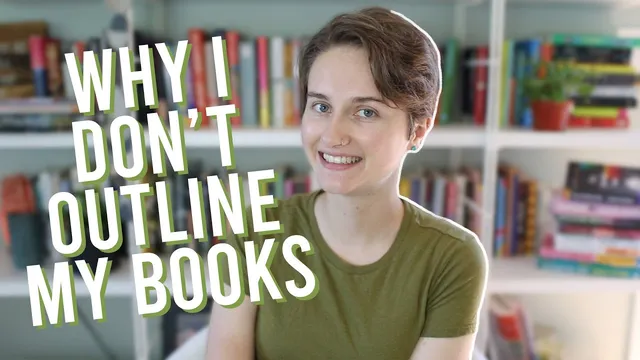
Why I Discovery Write | 9 Ways It's Made My Writing Better!
Based on ShaelinWrites's video on YouTube. If you like this content, support the original creators by watching, liking and subscribing to their content.
Discovery writing can act as a real-time diagnostic system: when the story misaligns, drafting gets harder, making problem areas easier to identify.
Briefing
Discovery writing—writing without a detailed outline—has helped ShaelinWrites produce stronger drafts by making problems and character shifts easier to detect during drafting, not by “hoping for the best” and then doing heavy damage control later. The core claim is that the common belief that discovery-written books are inherently worse (and require more editing) doesn’t hold up for her. Instead, she argues that the drafting process itself becomes a diagnostic tool: when something in the story is misaligned, writing suddenly gets harder, which makes the exact problem areas easier to pinpoint.
Her experience traces a back-and-forth between methods. She began writing novels at 13 using discovery writing, then moved into outlining for a period—partly because outlining felt like a way to plan and move faster. Later, she returned to discovery writing and says the shift unlocked a set of practical benefits she could observe across two discovery-written novels over roughly three years. She also frames herself as a “planner” in the middle—sometimes sketching loose chapter plans—but mostly preferring to explore the story as it develops.
One of her biggest advantages is what she calls “self-diagnosing” storytelling. When outlining, she could “paint by numbers” and keep going even when stakes, conflict, or motivation were off, because the next events were already laid out. With discovery writing, she says she hits a wall when the story stops working—writing grinds to a halt—so the draft reveals misalignment in real time. That same process, she adds, improves character work. Outlining, she found, often led to characters drifting away from the motivations she had planned, creating a constant mismatch between who characters became on the page and what the plot required. Discovery writing, by contrast, lets the plot move according to the character’s current wants and logic.
She also argues that discovery writing gives more usable information at each turning point. Because she has already written the earlier chapters, she reaches later plot points with a deeper understanding of what came before, which she believes supports cohesion. Editing is another area where she feels less friction: without a fixed outline, changes don’t feel like they shatter a prebuilt structure. She describes scene writing as richer too—more “experiencing” than “remembering”—and says outlining previously pushed her toward thin, underwritten scenes and sometimes redundant material that didn’t truly serve the story.
Beyond craft mechanics, she ties the method to psychology and immersion. Discovery writing boosts confidence because it reduces self-punishment: with outlines, she felt pressured to hit aggressive word-count goals and keep rushing to the next planned scene, which burned her out. Discovery writing, she says, makes drafting more immersive and intuitive, helps her place information more naturally (instead of awkward info-dumping), and mirrors how life unfolds moment by moment—participating in the story rather than observing it from a distance.
Her conclusion rejects outlining elitism and discovery-writing fatalism. She insists both approaches require skill and can produce great books; the best method is the one that feels natural and fun enough to sustain strong drafting. For her, discovery writing has led to better work because it keeps curiosity driving the process and makes the story reveal what it needs while she writes.
Cornell Notes
ShaelinWrites argues that discovery writing (writing without a detailed outline) can produce better drafts because the act of drafting reveals story problems immediately. When she outlined, she could keep writing even after stakes, conflict, or motivations stopped lining up; discovery writing made those issues show up as “grinding halt” moments. She also credits discovery writing with stronger character work, since characters evolve during drafting and the plot can follow their real motivations instead of forcing them into preplanned beats. She further claims it improves scene richness, reduces redundant content, and makes edits and information placement feel more natural. Overall, she frames the choice as personal fit: the best method is the one that keeps writing immersive and enjoyable.
Why does discovery writing make story problems easier to spot for her?
How does discovery writing change her approach to character work?
What does she mean by having “more information” at each plot point?
Why does she find editing easier while drafting as a discovery writer?
What changes in her scenes when she discovery writes versus outlines?
How does discovery writing affect her confidence and drafting motivation?
Review Questions
- When does she say outlining can mask story problems, and what replaces that feedback loop in discovery writing?
- How does her description of character evolution explain the difference between “forcing” plot beats and letting plot follow character motivations?
- Which specific craft outcomes does she attribute to discovery writing (scenes, redundancy, info placement, editing), and which outcomes does she attribute to mindset (confidence, immersion, burnout)?
Key Points
- 1
Discovery writing can act as a real-time diagnostic system: when the story misaligns, drafting gets harder, making problem areas easier to identify.
- 2
Outlining may hide structural issues because preplanned next beats let writers continue even when stakes, conflict, or motivations stop working.
- 3
Discovery writing can strengthen character work by letting plot follow characters’ evolving motivations instead of forcing characters to match an earlier plan.
- 4
Writing earlier chapters before planning later ones can increase “information” at plot points, supporting cohesion.
- 5
Editing may feel less disruptive without a fixed outline, because changes don’t feel like they shatter a predetermined structure.
- 6
Discovery writing can improve scene richness by encouraging “experiencing” scenes rather than “remembering” them from a distance.
- 7
The best method is the one that fits the writer’s natural process and keeps drafting enjoyable, not the one that wins an outlining-versus-discovery debate.