Why Indifference is Power | Priceless Benefits of Being Indifferent
Based on Einzelgänger's video on YouTube. If you like this content, support the original creators by watching, liking and subscribing to their content.
Indifference can function as independence by refusing to let status, approval, or disapproval dictate behavior.
Briefing
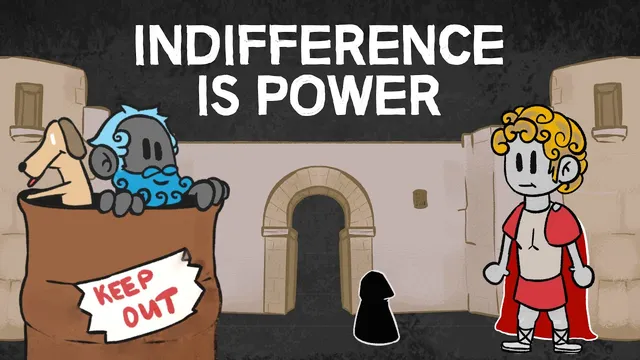
Indifference is framed as a practical power: by refusing to let status, outcomes, or uncontrollable events dictate inner life, people gain freedom, steadier emotions, and clearer decision-making. The opening story of Diogenes and Alexander the Great sets the tone. When Alexander asks what Diogenes wants, the Cynic replies, “stand a little out of my sun,” refusing to treat royal power as something that deserves deference. The point isn’t rudeness for its own sake; it’s independence. Diogenes’ indifference to Alexander’s wealth and rank keeps his authenticity intact—no approval is sought, no disapproval feared—so Alexander’s power cannot reach him.
From there, the transcript argues that indifference is often misunderstood as coldness or lack of empathy, but it can function as a versatile tool. The first benefit is freedom and authenticity. Social life rewards conformity, and people often fear rejection or ridicule when they deviate. Yet thinkers like Arthur Schopenhauer and the Stoics are invoked to challenge the weight people place on others’ opinions. Ralph Waldo Emerson’s “Self-Reliance” is quoted to capture the ideal: even amid crowds, a “great man” keeps the “independence of solitude.” Indifference, in this sense, means selectively detaching from social conventions so a person can pursue dreams and live in a way that matches their values—without fully abandoning society.
The second benefit is emotional resilience, grounded in Stoicism and illustrated through Epictetus. A man fears imprisonment or banishment, but Epictetus’ school of thought draws a sharp line between what’s controllable and what isn’t. External events may happen, but the inner response—attitude—remains a choice. Treating uncontrollable events as neither inherently good nor bad drains the emotional fuel that otherwise produces panic and collapse. The transcript also clarifies that Stoic indifference isn’t moral indifference: some things are beneficial (healthy food, money), others harmful (sickness, illegal activity). The goal is equanimity that doesn’t depend on external outcomes.
Next comes better performance. A Chinese archer’s hands shake in competition, and the failure is traced to attachment to winning and the prize money needed for her family. The transcript contrasts present-focused skill with future-focused anxiety: when people fear losing, effort becomes pressured and performance deteriorates. Indifference to outcomes—shifting attention to process and practice—reduces distress and helps people stay present.
The fourth benefit is affordable contentment, tied to Taoist and Epicurean ideas. Xu You’s refusal of power is presented as a desire for simple, quiet life; Epicurus is quoted for preferring reduced desires over increased riches. Contentment, the transcript suggests, is easier when desires are limited; a bottomless pit of wanting makes satisfaction nearly impossible.
Finally, indifference supports rational and objective decisions. Emotional states and biases can distort judgment, leading people to choose based on desire, group loyalty, or preconceived notions rather than facts. Indifference—understood as detachment from emotional bias—helps decision-makers consider all information. A manager example shows how bias toward a particular employee can override merit, while an indifferent approach favors qualifications.
Across all five benefits, indifference is presented as paradoxical: it looks empty, yet it enables people to let go of what doesn’t matter so what does matter can stand out—through steadier emotions, calmer action, and clearer judgment.
Cornell Notes
Indifference is presented as a deliberate skill that protects inner freedom. Using stories and Stoic, Taoist, and Epicurean ideas, the transcript argues that detaching from uncontrollable events, social approval, and specific outcomes reduces anxiety and preserves authenticity. This indifference supports emotional resilience (choosing attitude over circumstances), improves performance (focusing on process rather than prizes), and makes contentment more affordable (lowering desires). It also helps people make more rational decisions by limiting the distortions of bias and emotion. The overall claim: indifference isn’t emptiness—it’s a practical way to stop external forces from steering thoughts and actions.
How does the Diogenes-Alexander story define indifference as “power” rather than coldness?
What does Stoicism mean by indifference to events, and what remains under personal control?
Why does attachment to outcomes harm performance in the archer example?
How do Taoist and Epicurean ideas connect indifference to contentment?
How does indifference improve decision-making in the manager promotion scenario?
Review Questions
- Which parts of life does Stoicism treat as controllable versus uncontrollable, and how does that distinction change emotional reactions?
- In what ways does outcome attachment shift attention away from “the act,” and why does that matter for performance?
- How do reduced desires (Taoist/Epicurean framing) make contentment more sustainable than increasing wealth or power?
Key Points
- 1
Indifference can function as independence by refusing to let status, approval, or disapproval dictate behavior.
- 2
Stoic indifference targets attitude toward uncontrollable events, not a refusal to care about what’s beneficial or harmful.
- 3
Detaching from specific outcomes reduces anxiety and helps people stay present, which can improve performance.
- 4
Contentment becomes more attainable when desires are limited rather than expanded through wealth, power, or status.
- 5
Indifference supports rational decisions by reducing the influence of emotional states and personal or group bias.
- 6
A practical test of indifference is whether external forces can reliably change one’s inner steadiness and decision criteria.