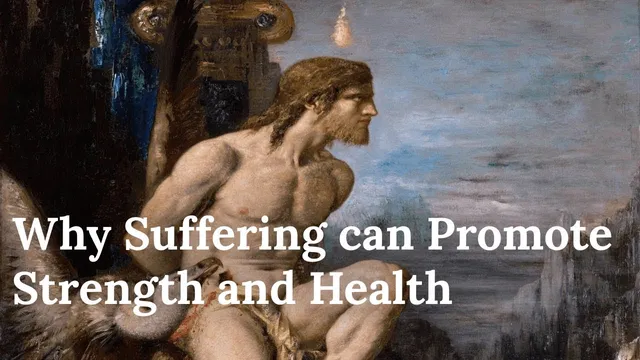
Why Suffering can Promote Strength and Health
Based on Academy of Ideas's video on YouTube. If you like this content, support the original creators by watching, liking and subscribing to their content.
Suffering is inevitable, but its outcome depends on whether it is endured and processed or avoided through distraction and numbing.
Briefing
Suffering is inevitable, but how people meet it determines whether it becomes a force for growth or a slide into despair. The central claim is that hardship can generate strength and health when it is faced directly and used as a source of learning, realism, empathy, and even a deeper capacity for joy—rather than being avoided through comfort, distraction, or numbing.
The argument begins by treating suffering not as a rare accident but as a constant of human life, tied to illness, injury, failure, loss, and rejection. Pain isolates and feels like an evil in the moment, yet thinkers such as Friedrich Nietzsche and Hermann Hesse are invoked to frame suffering as “the right kind” of experience—one that can separate, refine, and ultimately empower. Nietzsche’s line that profound suffering can “make noble” and “separate” sets up the video’s core contrast: suffering can either destroy a person or lift them toward a fulfilling life.
To explain why suffering can build strength, the discussion turns to an analogy from Iain McGilchrist’s work, using the Biosphere 2 project. Trees in the enclosed environment repeatedly failed to mature before falling over. The later realization: trees need wind to grow strong. Exposure to wind produces “stress wood,” strengthening the tree’s integrity and root system. The same logic is applied to human development: sheltered lives can produce vulnerability and frailty, while adversity functions as a necessary stressor for healthy growth.
The value of suffering is then expanded beyond growth-by-hardship into benefits intrinsic to the experience. Suffering teaches by exposing errors and forcing change. It also deepens empathy, since understanding others’ hardship requires some encounter with one’s own. A more specific psychological claim follows: depression—when not too severe—has been associated with greater realism, with evidence suggesting that being depressed can increase “in touch” awareness of one’s role in outcomes.
Yet the discussion also confronts why so many people are harmed by suffering. The proposed culprit is modern comfort. With survival made easier, pain hidden away in hospitals and morgues, and constant access to pleasure and distraction, people become untrained in the “art of suffering.” When suffering arrives, many flee it—turning to drugs, alcohol, screens, or psychotropic medication to numb pain. The argument insists that suffering’s benefits only accrue when people endure it and face it head-on.
Finally, the video draws a boundary: suffering is not something to wallow in indefinitely. Chronic suffering is described as pathological and damaging. Proper suffering should create tension that propels development, like the tension in a bow that powers an arrow or the tension in a lyre that produces melody.
To address “great suffering,” Nietzsche is offered as a case study. He endured rejection, lack of recognition, and chronic ailments that left him spending long stretches in bed in “real torment.” Still, he claimed that suffering propelled him toward philosophical heights and a transformed relationship to joy—returning “newborn” from abysses, with a more delicate taste for happiness and a subtler capacity to enjoy life.
Cornell Notes
Suffering is unavoidable, but it can strengthen rather than ruin a person when it is faced directly and used for development. The discussion links hardship to growth through a tree-and-wind analogy from Biosphere 2: stress produces “stress wood,” which builds integrity, and shelter can leave organisms vulnerable. Suffering also functions as a teacher—revealing errors, prompting change, and supporting empathy—while moderate depression is cited as sometimes increasing realism. Modern comfort is blamed for making many people unpracticed in enduring pain, leading to avoidance through distraction, alcohol, drugs, or psychotropic numbing. The argument distinguishes productive tension from chronic, pathological suffering and points to Nietzsche’s life as an example of enduring even “monstrous suffering” while emerging with deeper wisdom and a renewed capacity for joy.
Why does the wind-and-trees analogy matter to the argument about human suffering?
What “intrinsic” benefits does suffering provide beyond forcing personal growth?
How does the argument connect suffering to empathy and realism specifically?
Why does suffering often lead to despair instead of strength?
What distinction is made between productive suffering and harmful suffering?
How is Nietzsche used to address the question of “great suffering”?
Review Questions
- What does the Biosphere 2 “stress wood” example suggest about why adversity can strengthen rather than weaken?
- List at least three ways suffering is described as beneficial (e.g., teaching, empathy, realism, joy).
- According to the argument, what role does modern comfort play in turning suffering into chronic despair?
Key Points
- 1
Suffering is inevitable, but its outcome depends on whether it is endured and processed or avoided through distraction and numbing.
- 2
Adversity is framed as a necessary stressor for healthy development, illustrated by Biosphere 2 trees needing wind to build “stress wood.”
- 3
Suffering is described as a teacher that exposes errors and forces change, not just a painful side effect of misfortune.
- 4
Empathy is treated as experience-based: understanding others’ hardship is linked to having suffered oneself.
- 5
Moderate depression is cited as sometimes increasing realism, with evidence suggesting depressed people can be more “in touch” with reality.
- 6
Modern comfort is blamed for making people unpracticed in suffering, increasing the likelihood of fleeing pain via alcohol, drugs, screens, or psychotropic medication.
- 7
Chronic suffering is considered pathological, while “productive” suffering should create tension that propels growth rather than trapping a person in despair.