Why Vulnerability is Power | Priceless Benefits of Being Vulnerable
Based on Einzelgänger's video on YouTube. If you like this content, support the original creators by watching, liking and subscribing to their content.
Vulnerability is presented as courage: it enables self-growth and genuine connection by replacing performance with honest engagement.
Briefing
Vulnerability is framed as a form of courage that unlocks self-growth and real connection—because it forces people to stop performing strength and start engaging with what’s actually true. The core claim is blunt: hiding weaknesses may protect reputation in the short term, but it also blocks learning, intimacy, and improvement. When people refuse to be vulnerable, they keep the “walls” of their carefully built personas intact, which makes it harder to acknowledge shortcomings, ask for help, or risk failure long enough to get better.
The transcript anchors the argument in a historical example: Bertie, later King George VI, faced public speaking demands despite a crippling stammer. His improvement depended on accepting his condition and placing himself in situations where he could be judged—working with his spouse and speech therapist Lionel Logue until he could deliver a powerful wartime address. That story is used to illustrate a broader principle: strength that’s based on concealment is fragile, while growth often requires exposure.
From there, the discussion turns to why vulnerability feels dangerous. Social stigma treats weakness as a liability, especially for men, who are expected to be strong, unemotional, and fearless. Showing vulnerability can trigger loss of respect, fear of being seen as “not a real man,” or even rejection from partners. The transcript also points to a subtler cost: maintaining facades becomes a kind of ongoing deception—“appearing strong when weak”—that drains energy and prevents authentic relationships. Online dating advice like “Never show weakness” and “Always maintain frame” is criticized for encouraging fear-based performance rather than genuine selfhood.
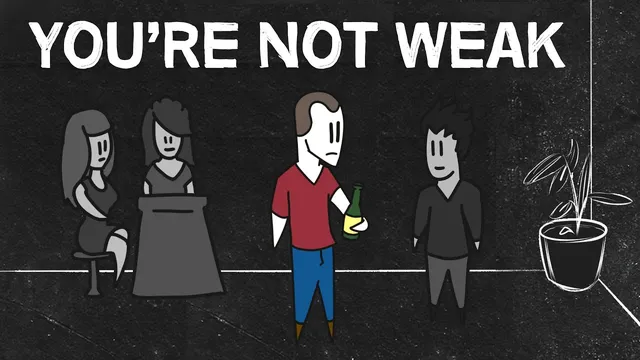
The argument then challenges the payoff of approval-seeking. Deception may win admiration, but it can also steal the conditions that actually support happiness: health, time, meaningful bonds, and self-respect. Arthur Schopenhauer is quoted to emphasize that a person’s real life “in his own skin” matters far more than other people’s opinions. The transcript uses a “cool kids’ table” analogy to show how conformity can come with constant scrutiny, restricted self-expression, and dependence on group approval—while dropping the facade may cost status but opens the door to relationships built on who someone truly is.
Brené Brown’s ideas are introduced to connect vulnerability directly to purpose and courage: owning vulnerability clarifies purpose, while protecting against it signals fear and disconnection. The transcript adds a practical angle—vulnerability is necessary for learning. Becoming competent requires being willing to look foolish, fail, be laughed at, or be rejected. Confidence grows through repeated exposure to the “arena,” whether that’s socializing after pandemic anxiety, confronting trauma with a mental health professional, or stepping into difficult conversations.
Finally, the transcript offers tools for practicing vulnerability: self-acceptance with compassion instead of shame, indifference toward judgment, and embracing uncertainty—accepting that bold moves carry risks because outcomes depend on forces beyond control. The closing question presses the tradeoff: if vulnerability can hurt, but also enables growth and life experiences, refusing it may be the bigger loss.
Cornell Notes
The transcript argues that vulnerability is not weakness but courage—an essential ingredient for self-growth and genuine connection. People often hide weaknesses to protect status and avoid judgment, yet that “strong when weak” performance becomes deception that blocks learning, intimacy, and improvement. Historical and psychological examples (King George VI’s speech therapy journey, Arthur Schopenhauer’s critique of approval-chasing, and Brené Brown’s link between vulnerability and courage) support the idea that real progress requires stepping into situations where failure and rejection are possible. Confidence and healing come from repeated exposure to the “arena,” paired with practical tools like self-acceptance, indifference to opinions, and embracing uncertainty.
Why does the transcript treat vulnerability as a prerequisite for growth rather than a personal flaw?
What social forces make vulnerability feel risky, and how does that shape behavior?
How does the approval-seeking mindset undermine genuine connection?
What does “the arena” mean, and why does it increase confidence?
What practical tools are proposed to make vulnerability manageable?
Review Questions
- What kinds of “deception” does the transcript say people practice when they avoid vulnerability, and what are the costs of that deception?
- How does the transcript connect vulnerability to learning and competence (not just emotions or relationships)?
- Which of the proposed tools—self-acceptance, indifference, or embracing uncertainty—seems most difficult to apply, and why?
Key Points
- 1
Vulnerability is presented as courage: it enables self-growth and genuine connection by replacing performance with honest engagement.
- 2
Avoiding vulnerability often means maintaining personas that protect reputation but block learning, intimacy, and improvement.
- 3
King George VI’s stammer is used to show that progress can require accepting a condition and repeatedly placing oneself in public, judgeable situations.
- 4
Social stigma around weakness—especially expectations placed on men—drives fear-based facades and encourages approval-seeking rather than authenticity.
- 5
Approval-chasing can trade away the real drivers of happiness, making life more constrained by scrutiny and group rules.
- 6
Confidence and healing grow through exposure to the “arena,” including skill-building, difficult conversations, and trauma work with professionals.
- 7
Practicing vulnerability is supported by self-acceptance, indifference to judgment, and embracing uncertainty about outcomes.