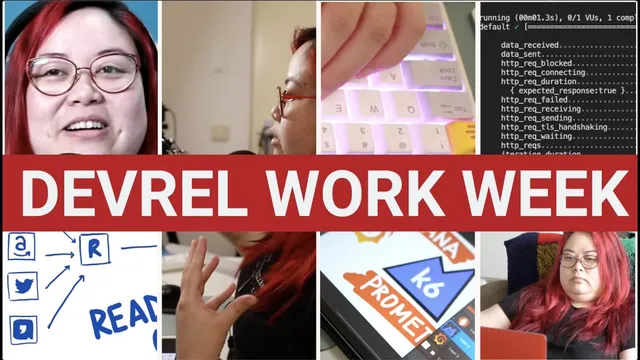
Work Week in the Life of a Developer Advocate/ Performance Testing Advocate (k6 and Grafana Labs)
Based on Nicole van der Hoeven's video on YouTube. If you like this content, support the original creators by watching, liking and subscribing to their content.
Developer advocacy at Grafana Labs’ k6 team is organized into three pillars: content, community, and product feedback.
Briefing
A developer advocate at Grafana Labs’ k6 team spends a typical week juggling three jobs at once: creating practical learning materials for developers and performance testers, participating in community discussions as an active user, and feeding real-world customer pain points back into product decisions. The role matters because it turns performance testing from a niche craft into something teams can adopt confidently—through hands-on guidance, not sales pitches.
The week begins with preparation and live participation. After waking up, the advocate shifts quickly into operational work: getting up to speed on the current state and limitations of a k6 plugin so they can speak credibly on upcoming sessions. They then join a weekly live stream (“office hours”), including a conversation with Pawel Suwala, the CTO at k6. The day also includes coordination with community members—such as testing how to use the Clubhouse app with a good microphone—and a customer demo booked through the k6 customer success team. The pattern is consistent: show up, answer questions, and translate practical experience into guidance people can use immediately.
Content production runs in parallel with community and product work. On Saturday, the advocate handles post-publication tasks for the prior week’s office hours: creating thumbnails, transcription, and playlist tagging so viewers can find relevant topics without hunting through a long catalog. They also map out the content calendar and reflect on what worked. Sunday and the following days bring writing and planning: responding to Grafana Labs team member profile requests, drafting talking points for an audio-only Racket.com group, and writing a blog post unrelated to performance testing—about note-taking for Dungeons and Dragons.
Midweek shifts toward editing and preparation for upcoming talks. Editing days focus on reducing interruptions—blocking time to avoid Slack and email noise—then exporting and uploading videos to YouTube and sending them for colleague review. Planning also includes two major upcoming presentations: one for TestCon Europe and another webinar in September tied to Grafana Labs and k6.
The role’s “developer advocacy” framework shows up clearly in how work is categorized. Content includes workshops, documentation, blog posts, and videos that teach how to run load tests and how k6 works. Community means joining the same groups as users and participating in discussions from an insider’s perspective—because developer advocates are target users who use the product, not outsiders trying to sell it. Product work happens through feedback loops: collecting criticism and pain points from k6 users (and sometimes users of other load testing tools) and bringing that input into k6 product cycles as a subject-matter expert.
By the end of the week, the advocate’s goal is not just to explain what developer advocacy is, but to show the day-to-day mechanics—live support, content pipelines, customer conversations, and product feedback—behind a job that stays interdisciplinary and changes constantly.
Cornell Notes
A developer advocate at Grafana Labs’ k6 team uses real performance testing experience to help developers and testers adopt k6. The work clusters into three pillars: content (tutorials, workshops, docs, videos), community (active participation in user groups rather than sales), and product (feeding user pain points into k6 product cycles). The week’s schedule shows rapid context switching between live office hours, customer demos, community events on Clubhouse and Racket.com, and heavy content operations like editing, transcription, thumbnails, and playlist tagging. Time is also protected for deep work by blocking Slack and email to avoid interruptions during filming and editing. The impact is practical: turning load testing guidance into usable workflows and shaping product priorities based on what users actually struggle with.
What three pillars define developer advocacy in this role, and how do they differ from marketing?
How does the advocate balance live engagement with production work?
What does “product feedback” look like in practice for k6 advocacy?
Why does the advocate block Slack and email during editing and filming?
What kinds of content operations appear in the weekly workflow?
How do community events extend beyond performance testing?
Review Questions
- How do the content, community, and product pillars reinforce each other in a developer advocate’s weekly workflow?
- Which specific tasks in the schedule support discoverability and learning (e.g., thumbnails, transcription, playlist tagging), and why do they matter?
- What strategies does the advocate use to reduce interruptions during filming and editing, and how does that affect output quality?
Key Points
- 1
Developer advocacy at Grafana Labs’ k6 team is organized into three pillars: content, community, and product feedback.
- 2
Content work focuses on teaching k6 through practical assets like workshops, documentation, blog posts, and videos.
- 3
Community work prioritizes participation as a target user—answering questions and joining discussions rather than pushing sales.
- 4
Product work turns user criticism and pain points into actionable input for k6 product cycles.
- 5
Live advocacy includes showing up for weekly office hours and joining customer success demos to address real testing needs.
- 6
Deep work is protected by blocking Slack and notifications during filming and editing to avoid interruptions and re-takes.
- 7
The weekly rhythm blends live support, publishing pipelines, and early planning for upcoming events like TestCon Europe and a September webinar.