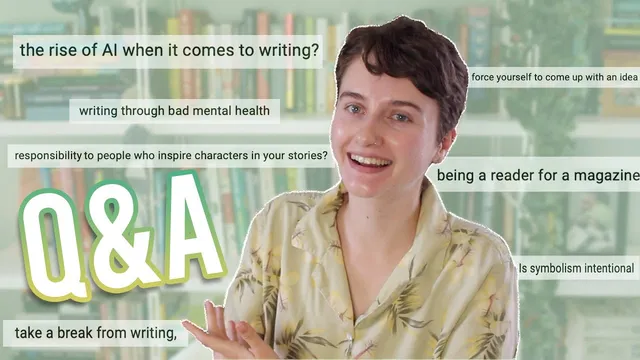
Writing Q&A🌻thoughts on AI, writing & mental health, theme & intention
Based on ShaelinWrites's video on YouTube. If you like this content, support the original creators by watching, liking and subscribing to their content.
Start writing before feeling “good enough,” because skill comes from practice rather than prerequisite confidence.
Briefing
Aspiring writers don’t need to be “good enough” before they start—practice is what builds skill, and the real antidote to embarrassment is writing privately enough that mistakes can stay fun. The advice centers on beginning with joy rather than performance: draft without pressure to publish, don’t chase numbers for self-worth, and make content (including a writing-focused YouTube channel) that feels genuinely enjoyable instead of copying what others are doing. Boundaries matter too. If growth brings requests or attention, it’s easier to handle when the line between personal life and online life is clear from the start—especially after sharing too much can create real-world risks.
On craft, the discussion pushes back against “purple prose” (overly flowery, forced language) and argues that style improves when writers stop trying to manufacture a voice and instead write in their natural rhythm. When sentences become too complex, metaphors too elaborate, or word choice gets obscured, editing becomes the corrective tool: simplify structure, swap in more precise words, and restructure lines so the image lands harder. The emphasis is on drafting first, then polishing—letting the first draft be messy while the revision phase does the precision work.
A major thread is mental health and the purpose of writing. Writers can experience slumps from burnout, pandemic-era stress, or life circumstances, and the guidance is to treat writing as a tool rather than a requirement. If writing helps process grief or regulates stress, it can be healing; if it drains energy or worsens mental health, the priority shifts to the person, not the page. The recommendation is to experiment gently with how (and how much) to write—sometimes journaling or lighter engagement is enough—then stop when it stops helping.
The Q&A also tackles AI with a firm stance: using AI to generate work intended for publication is viewed as incompatible with the craft of writing. The concern isn’t only originality but emotional depth—an argument that current AI can’t replicate what a human writer uniquely brings. That belief extends to protecting ideas: sharing early concepts may invite theft or AI-assisted appropriation, so writers may need to be more careful about what they post before drafting.
Finally, questions about symbolism and theme reject classroom-style “every detail must stand for X” analysis. Symbolism can be intentional at some level, but it often emerges naturally through what carries weight in the story. Instead of treating theme as a universal message the author must preach, theme is framed as what the story reveals about a specific character—something that grows out of the character’s journey rather than a pre-planned lesson. Even when ideas are forced—like meeting a class deadline—the outcome can still be meaningful, especially if the forced concept is built from intuitive threads and then refined through drafting and revision.
Overall, the guidance ties together a single philosophy: start early, write in a way that protects your wellbeing and boundaries, revise for clarity and impact, and keep creating because the individual mind behind the story is irreplaceable—whether the pressure comes from perfectionism, grief, or AI noise.
Cornell Notes
The advice argues that writers should begin before they feel “ready,” because practice—not prerequisite talent—builds competence. It recommends protecting joy and self-worth: write for enjoyment, avoid tying identity to views or publishing pressure, and set boundaries between personal life and public content. Craft guidance focuses on avoiding forced “purple prose” by writing in a natural voice first, then using line editing to simplify sentences, sharpen word choice, and make images land. Mental health is treated as the priority: writing can help process grief or regulate stress, but it should be scaled back or stopped if it becomes harmful. On symbolism and theme, meaning is described as emerging from story weight and character perspective rather than from rigid, pre-assigned “this object equals that idea.”
Why does “good enough to start” get treated as a trap for writers?
How should a writer balance natural style with avoiding “purple prose”?
What does “boundaries” mean in the context of growing as a writer on YouTube or social media?
How should writers respond when grief or severe mental health struggles drain their ability to write?
What’s the stance on AI for writing and publishing?
How does the transcript redefine symbolism and theme compared with typical school assignments?
Review Questions
- What specific behaviors help a beginner writer reduce embarrassment while still building skill through practice?
- In what ways does the transcript separate drafting from revision when it comes to style and “purple prose”?
- How does the transcript decide when writing should be stopped or reduced during grief or mental health struggles?
Key Points
- 1
Start writing before feeling “good enough,” because skill comes from practice rather than prerequisite confidence.
- 2
Protect joy and self-worth by writing for enjoyment, avoiding pressure to publish, and not investing identity in view counts.
- 3
Set clear boundaries between personal life and online presence early, since some details can’t be safely “unshared” later.
- 4
Write in a natural voice first, then use line editing to fix over-complexity and sharpen word choice so images land with impact.
- 5
Treat writing as a mental-health tool: use it when it helps process grief or regulate stress, and stop or scale back when it drains you.
- 6
Maintain a firm stance on AI for published work if you believe craft and emotional depth require human authorship.
- 7
Let symbolism and theme emerge from character and story weight rather than forcing rigid, classroom-style “object equals meaning” interpretations.