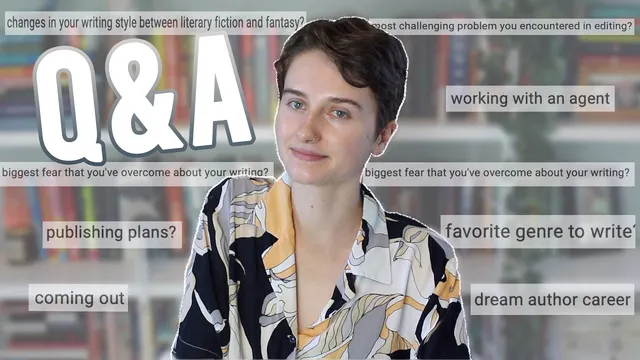
Writing Q&A 💬 writing "bad" queer characters, being on submission, writing litfic vs fantasy, etc.
Based on ShaelinWrites's video on YouTube. If you like this content, support the original creators by watching, liking and subscribing to their content.
Editing “Honey Vinegar” required maintaining two-way causality between a physical plot and a parallel folkloric narrative that both cause and reflect real-world events.
Briefing
Editing “Honey Vinegar” forced a careful juggling act: the story runs on two interlocked tracks—a tangible, physical plot unfolding in a town and a parallel folkloric interpretation that “brews” alongside it. Each narrative doesn’t just mirror the other; events in the folk tale cause events in real life, and real-life developments also feed back into the folktale. That two-way causality made the editing process especially intricate, with chain-of-events logic needing to stay consistent at many points.
Beyond that central craft challenge, the publishing journey described here is built on selective, time-respecting feedback cycles. There’s no fixed number of critique rounds; instead, critique partners’ availability and the stage of the manuscript shape the process. With “Honey Vinegar,” the manuscript moved through multiple peer workshops before reaching an excellent editor-critique partner late in the drafting stage (around draft seven). That partner flagged issues, but they were framed as fixable problems. After implementing those changes, the author felt confident enough to move forward rather than seeking additional “thumbs up” validation.
Genre decisions follow a similar logic: ideas arrive first, and the genre follows. The author doesn’t feel drawn to branching into sci-fi or other categories in a deliberate way, partly because reading habits don’t center those genres and partly because the creative spark tends to dictate form. Most projects are also described as genre blends, with a strong emphasis on literary fiction and fantasy-adjacent work rather than mystery, thriller, romance, or similar categories.
Naturalistic imagery—especially moonlight—emerges as a signature strength. Feedback from an agent highlighted how frequently the moon appears, to the point of suggesting the author could “teach a whole class” on describing it. Character descriptions and the way light and shadow shape scenes are also singled out as recurring pleasures in the writing process.
The most emotionally charged discussion centers on queer representation and the fear of “bad” characters. The author rejects the idea that queer characters must be morally pure to count as valid representation, calling that standard both unrealistic and “sanitized.” Instead, she argues that marginalized people have messy, uncomfortable aspects worth exploring, and that “bad representation” isn’t simply “a bad person”—it’s often a false dichotomy that pits moral purity against authenticity. Still, the author admits to worrying more in some cases than others, especially when a character’s harmful choices are tightly interlinked with their queerness.
On submission and publishing, the author reports being on submission for “Honey Vinegar” and preparing for a second round. The first round produced rejections that sounded like near-acceptances: editors either loved the work but weren’t the right fit, or loved it but cited tiny issues—often framed by the current time constraints of editors. The plan now is to implement changes and send the revised manuscript to more editors.
Overall, the thread ties craft, identity, and career logistics together: intricate causality in revision, disciplined critique relationships, genre driven by ideas, and representation grounded in lived messiness rather than performative moral correctness.
Cornell Notes
The author describes editing “Honey Vinegar” as a complex causality problem: two parallel narratives—real-world events and a town’s folkloric interpretation—cause each other in both directions. Critique feedback isn’t treated as a fixed number of rounds; it depends on availability, timing, and how far the manuscript has progressed, with “Honey Vinegar” reaching an editor-critique partner late (around draft seven) after earlier workshops. In genre and style, she says ideas determine genre, and she leans into literary fiction and fantasy blends, with naturalistic imagery (especially moonlight), light/shadow, and character description as recurring strengths. A major theme is queer representation: she worries about “bad” queer characters but rejects the demand that queer characters must be morally pure to be valid, arguing that messy, unsightly realities are part of authentic representation.
What made editing “Honey Vinegar” unusually difficult?
How does the author decide when to stop revising and send work to critique partners?
Why doesn’t she prioritize writing genres she doesn’t read much?
What recurring imagery and description skills does she credit as her strengths?
How does she respond to pressure for queer characters to be morally “good”?
What does “on submission” look like for her right now?
Review Questions
- What is the two-way causality mechanism in “Honey Vinegar,” and why does it complicate editing?
- How does the author justify rejecting morally “pure” standards for queer representation?
- What factors determine when she sends manuscripts to critique partners and when she stops revising?
Key Points
- 1
Editing “Honey Vinegar” required maintaining two-way causality between a physical plot and a parallel folkloric narrative that both cause and reflect real-world events.
- 2
Critique cycles don’t follow a fixed number; manuscript stage, critique-partner availability, and respect for others’ time shape how feedback is used.
- 3
Genre choice is driven by the initial idea rather than a deliberate plan to branch into specific genres she doesn’t read.
- 4
Naturalistic imagery—especially moonlight—functions as a recognizable stylistic strength, reinforced by agent feedback about the frequency and craft of those descriptions.
- 5
The author argues against “good representation” standards that demand moral purity, insisting that messy, flawed queer characters can still be powerful and valid representation.
- 6
On submission for “Honey Vinegar,” the first round’s rejections were often tied to fit or tiny issues, with limited editor time cited as a factor; the plan now is a second submission round after edits.
- 7
Career expectations after university shifted mainly through the loss of community and workshop/discussion networks rather than the ability to write outside academia.