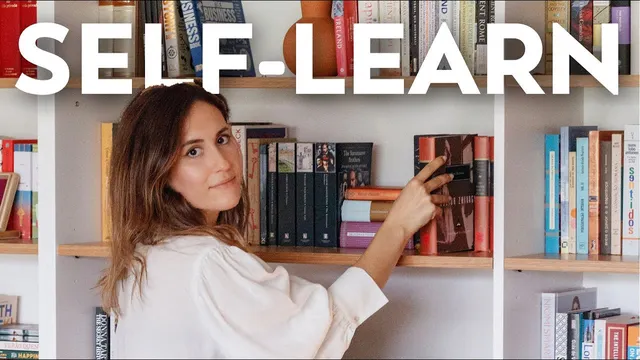
You Don’t Need School to Learn — My 8-Step Process
Based on Mariana Vieira's video on YouTube. If you like this content, support the original creators by watching, liking and subscribing to their content.
Treat lifelong learning as a structured, iterative process—not a one-time return to school—by setting goals and revising plans as you learn how long topics take.
Briefing
A lifelong learning mindset doesn’t require a return to school—it requires a deliberate system for setting goals, building knowledge habits, and turning curiosity into repeatable practice. The core message is that learning can continue after graduation if people treat it like a “choose your own adventure,” constantly questioning, adapting, and evolving instead of waiting for a syllabus, grades, or classroom structure.
The process starts with clear learning goals, but the emphasis is on iteration rather than rigid planning. Learners should identify skills tied to interests, career ambitions, or personal growth, then break those targets into smaller milestones with a concrete plan that includes resources (books, online courses) and timelines. Because self-study lacks a teacher’s built-in pacing, the plan often needs revisiting once reality sets in—learning timelines are frequently longer or shorter than expected, and adjustments are part of making the system work.
Reading is positioned as a foundational habit, not a one-off task. The guidance is to diversify sources—books, articles, and online materials—and actively seek work that challenges assumptions or introduces new fields. That includes avoiding the trap of adopting a single author’s viewpoint; the goal is to form independent opinions by comparing perspectives and following personal instincts.
Technology then becomes a force multiplier for self-directed study. With online courses, podcasts, and videos, learners can access an “ocean” of educational material, while note-taking and organization tools help build a structured knowledge base. The transcript also stresses time management and study routines, arguing that digital tools can make self-learning more sustainable and less overwhelming.
Mentorship and community fill a gap that self-study can create: without classmates or institutional networks, learners must seek guidance and opportunities themselves. The advice includes finding mentors with relevant expertise and joining online communities to exchange resources, ask questions, and discover opportunities beyond a computer screen. For those who prefer more formal learning, workshops, seminars, conferences, and webinars offer expert instruction plus networking with people who share the same interests.
Courses are recommended when structure and accountability matter. Online or in-person classes provide progression, assessments, and quizzes that reinforce weak areas and consolidate understanding. But theory alone isn’t enough; practical projects and real-world applications are treated as essential for deeper comprehension—whether that means building a website to demonstrate coding skills or writing a long research paper for a history topic.
Finally, reflection and tracking keep the learning loop alive. Keeping a learning journal helps capture insights, identify improvement areas, and refine future plans. The transcript also highlights interactive, hands-on learning platforms as a way to avoid passive textbook cramming—citing Brilliant’s data analysis course as an example of guided, exercise-by-exercise learning, with a free 30-day trial and a discount for early subscribers via brilliant.org/Mariana.
Overall, the 8-step approach frames self-learning as an ongoing practice: set goals, read widely, use technology and structure, seek people, apply knowledge, and reflect—so learning keeps moving long after school ends.
Cornell Notes
The transcript argues that lifelong learning is achievable without returning to school by using a structured, repeatable self-study system. It begins with defining clear learning goals, breaking them into milestones, and planning resources and timelines—then revising the plan as real learning speeds become clear. Strong habits like diversified reading and independent thinking help learners build a personal perspective rather than copying one author’s views. Technology, mentorship, communities, and workshops add guidance and accountability that formal education often provides. The process ends with hands-on projects, regular reflection (including a learning journal), and interactive learning to turn knowledge into applied skill.
How should someone set up self-learning goals so they don’t stall later?
Why does diversified reading matter for learning on your own?
What role do technology and note-taking tools play in self-directed study?
How can self-learners replace the networking and guidance that school usually provides?
Why are courses and assessments useful even for independent learners?
What makes learning “stick” according to the transcript?
Review Questions
- What are the key steps for turning a broad interest into a self-study plan with milestones and timelines?
- How does the transcript suggest learners avoid adopting a single viewpoint when reading?
- Which combination of tools and practices (technology, mentors, communities, projects, reflection) most directly addresses the weaknesses of learning without a classroom?
Key Points
- 1
Treat lifelong learning as a structured, iterative process—not a one-time return to school—by setting goals and revising plans as you learn how long topics take.
- 2
Break each learning goal into smaller milestones and map resources (books, online courses) to a realistic timeline.
- 3
Build a reading habit that spans diverse sources and challenges assumptions, while actively forming independent opinions rather than copying one author’s perspective.
- 4
Use technology to access learning content and to organize notes, references, and study materials into a usable knowledge base.
- 5
Replace school-based networking by seeking mentors, joining subject communities, and attending workshops or webinars when helpful.
- 6
Use courses for progression and accountability, but reinforce learning through assessments and targeted revisiting of weak areas.
- 7
Make learning durable with hands-on projects and regular reflection via a learning journal to guide future improvements.