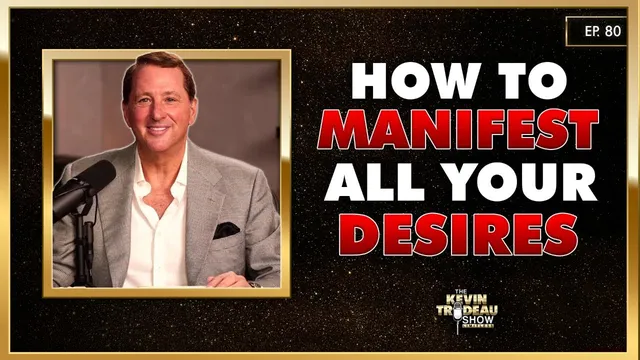
Your Wish Is Your Command: How To Manifest Your Desires | Ep. 80
Based on The Kevin Trudeau Show: Limitless's video on YouTube. If you like this content, support the original creators by watching, liking and subscribing to their content.
Trudeau claims manifesting requires a specific, step-by-step method rather than generic self-help advice, because most popular frameworks lack key components.
Briefing
The core claim is that “manifesting” works only when people follow a specific, step-by-step method tied to the right mindset and frequency—not when they rely on generic advice from popular self-help books and seminars. Kevin Trudeau frames his “Your Wish Is Your Command” program as the missing “algorithm,” arguing that most manifesting content produces at best modest results because it’s built from rehashed ideas rather than from proven, repeatable outcomes.
Trudeau positions himself as a case study in results: he says he generated more than $5 billion in business before creating his manifesting materials, and he links that success to techniques he learned through a secretive “Brotherhood” network of wealthy and influential members. He describes the Brotherhood as teaching methods to “manipulate energy and matter” using the mind, and he claims those methods led to both large-scale business wins and personal outcomes. He offers a vivid early example: finding a 1967 Firebird convertible with 1,500 original miles for $1,500 after noticing a classified ad that seemed implausibly cheap. He recounts inspecting the car in a dusty, cobweb-covered garage and learning the owner had preserved it on blocks after her son was drafted into the Vietnam War and never returned.
From there, he argues that manifesting can create not just one-off surprises but ongoing financial systems. He says he wanted “residual income” and imagined becoming a “trust fund kid,” then credits his mind-based techniques with landing royalty streams from direct-response advertising work. He highlights the Ginsu knife as a turning point: he claims he helped write an ad for the product and that the campaign became a major success, later expanding into other ad and direct-mail efforts that paid royalties for years. He then describes a more targeted manifestation goal: requesting a weekly minimum check of $100,000 for life, and claims that within a week he met people in New York who pushed him toward home-study and infomercial distribution for his memory-training business.
A major through-line is distrust of mainstream manifesting instruction. Trudeau criticizes popular titles and frameworks—such as Think and Grow Rich, the Law of Success, and the Law of Attraction—saying they lack the “missing” pieces and that most readers fail to become “mega successful.” He claims a large share of manifesting authors earn money by selling courses rather than by building wealth first. He also argues that success depends on two practical filters: choosing the right mentor (someone who has faced adversity and has what the student wants) and being “teachable” enough to accept change.
He then lays out two “first concepts” from the program: (1) who to listen to, and (2) how coachable someone is, including a “teachability index” and a balance between attitude and technique. He adds a brain-and-frequency explanation, claiming the brain emits and receives frequencies and that aligning intention with the right “band” can influence physical reality through changes in circumstances and people. He also emphasizes “dream building” (physically engaging with desired items or experiences beyond comfort) and tracking progress with specific graphing methods.
Finally, he markets the “Your Wish Is Your Command” audio package as a copyrighted, step-by-step system recorded from a seminar for members of his Global Information Network, insisting it was pulled from free distribution after unauthorized uploads. He says the program is being offered free for viewers who enter a promo code (“YWI YC”) and provide contact details, and he includes a QR-code call to action. The message ends with a prediction that more people will see financial gains in the coming year, especially those already engaged in personal development.
Cornell Notes
“Your Wish Is Your Command” argues that manifesting succeeds only when people follow a specific method tied to mindset, teachability, and frequency-like alignment—not when they copy generic advice from popular books and seminars. Trudeau claims his own results came after learning mind-based techniques through a “Brotherhood,” and he uses stories like finding a preserved 1967 Firebird convertible and building royalty income from direct-response advertising. He insists most manifesting authors sell information without having achieved the outcomes they promise, which he says helps explain why most readers don’t reach major success. Two early “gates” are emphasized: listen to the right person (someone who has what you want and has faced adversity) and be coachable enough to accept change. He also adds practical elements such as “dream building,” progress tracking with graphs, and an explanation of the brain as a frequency transmitter/receiver.
Why does Trudeau say most manifesting books fail to produce “mega” results?
What does “who do you listen to” mean in the program’s logic?
How does “teachability” function as a second gate to success?
What practical steps does Trudeau say strengthen manifestation beyond mindset?
How does the program connect intention to physical outcomes?
What real-world examples does Trudeau use to illustrate the method’s effect?
Review Questions
- What two early “gates” does Trudeau say determine whether manifesting techniques will work, and how do they interact?
- How does Trudeau justify skepticism toward mainstream manifesting authors, and what evidence does he claim supports his critique?
- Which practical behaviors (beyond mindset) does Trudeau recommend for “dream building” and progress tracking, and why does he say they matter?
Key Points
- 1
Trudeau claims manifesting requires a specific, step-by-step method rather than generic self-help advice, because most popular frameworks lack key components.
- 2
He argues mentor selection is critical: listeners should follow someone who has what they want, has faced adversity, and can demonstrate real outcomes.
- 3
He frames “teachability” as a measurable willingness to learn and accept change; without it, even correct techniques won’t work.
- 4
He emphasizes a balance where attitude dominates technique (roughly 90% attitude to 10% technique), claiming mindset alignment determines results.
- 5
He connects manifestation to a frequency model, describing the brain as emitting and receiving frequencies that can influence physical reality through changes in circumstances and people.
- 6
He recommends practical reinforcement through “dream building” (physically engaging with desired experiences) and progress tracking using graphs with specific ratios.
- 7
He markets “Your Wish Is Your Command” as copyrighted, step-by-step audio content distributed through his Global Information Network, after earlier unauthorized free uploads.