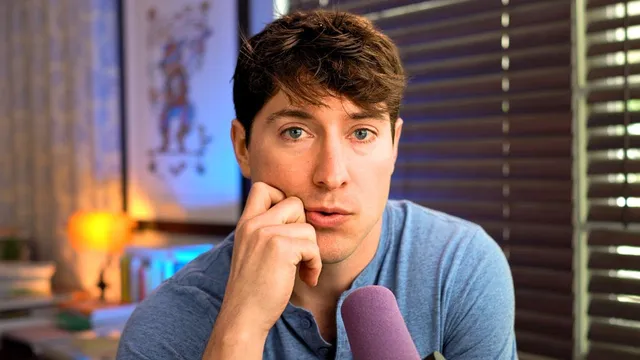
YouTube Burnout Is Real!
Based on Linking Your Thinking with Nick Milo's video on YouTube. If you like this content, support the original creators by watching, liking and subscribing to their content.
Milo frames burnout as a structural time-allocation problem between high-intensity “backstage” delivery and inconsistent “front-stage” communication.
Briefing
YouTube burnout isn’t just a personal failure—it’s a predictable outcome of how creators split time between “backstage” delivery and “front-stage” communication. After years of running month-long cohorts and building products around personal knowledge management (especially Obsidian note-linking), Nick Milo says the team repeatedly chose high-intensity, behind-the-scenes work that served a limited audience at a time, while leaving the broader YouTube audience with sporadic updates. The result was a growing mismatch: lots of value created, not enough value shared consistently, and a steady slide toward exhaustion.
Milo’s path into creation was accidental. He worked his way up in television editing, including on Better Call Saul, while also co-founding Pink Gloves Boxing. Around 2013 he moved to New York City and shifted into post-production work, eventually editing major projects like Breaking Bad the movie and the final season of Better Call Saul. During the pandemic, extra time at home pushed a hobby into a system: editing TV shows while spending free hours in Obsidian, exploring knowledge management and the idea of linking notes into “maps of content.” He described these linked note hubs as an organic “digital garden,” where structure emerges through connections rather than folders alone.
That hobby became a business. Milo shared a free starter kit of linked notes, then ran an experimental six-week cohort with 11 early participants who joined on trust. The second cohort in October 2020 aimed for 12 paying customers and landed 55. YouTube helped seed demand: a beginner Obsidian series shot in September 2020 has since drawn over 2 million views. Cohorts scaled quickly—by 2021, one reached 110, and the program now averages 200 to 300 participants per month-long cohort, with multiple cohorts each year.
But scaling delivery created a new problem. Cohorts are intense and require a “backstage” focus—campaigning, live sessions, and product work—while YouTube becomes secondary. Milo says the channel drifted into repurposed interviews and niche video essays that didn’t consistently land with viewers, even though the team was busy building “amazing experiences” that generated “aha moments.” Over time, that imbalance contributed to burnout: constant catch-up pressure, unanswered emails, missed posts, and a cycle of caffeine, afternoon crashes, reduced sleep, anxiety, and “lightweight” video consumption that temporarily relieves stress while worsening the backlog.
The proposed fix is less about doing more and more about recalibrating time and intention. Milo emphasizes a need to “zoom out” with dedicated pauses—retreats, life audits, and recovery time—so creators don’t get trapped in repeating patterns. He also argues that creators should move more time “front of stage,” communicating what genuinely excites them instead of shoehorning audiences into the next product. Even when services remain, YouTube should become a steadier, more vulnerable space focused on curiosity, connection, and meaning—learning, relationships, psychology, and even analogies between connective tissue in bodies and mycelium networks in forests. The goal is sustainability: show up consistently without perfectionism, and build a channel that leaves viewers feeling more curious and connected rather than overwhelmed or sold to.
Cornell Notes
Nick Milo describes burnout as a structural problem in creator life: time gets consumed by high-intensity “backstage” delivery (cohorts, workshops, products), while “front-stage” communication on YouTube becomes sporadic. His own journey—from TV editor to accidental creator—led to success with Obsidian-based knowledge management, including “maps of content” and a free starter kit that reached hundreds of thousands of downloads. Cohorts scaled from 11 early participants to 200–300 per month-long run, but the team’s attention narrowed, leaving the broader audience with less of what Milo personally finds valuable to share. Burnout deepened through a vicious cycle of catch-up pressure, caffeine, sleep loss, anxiety, and avoidance via easy consumption. The remedy centers on intentional pauses, zooming out, and shifting more time to front-stage sharing from the heart—less perfectionism, more consistent curiosity and connection.
What does Milo mean by “backstage” versus “front-stage,” and why does that split matter for burnout?
How did Milo’s note-linking hobby turn into a scalable creator business?
Why did YouTube content quality and audience interest diverge from what the team was excited to make?
What burnout cycle does Milo describe, step by step?
What specific scheduling and recovery changes does Milo mention to manage burnout?
What does Milo say should change about how creators use YouTube going forward?
Review Questions
- How did Milo’s cohort growth (from 11 to 200–300 participants) change the time allocation between content creation and delivery?
- Which elements of Milo’s burnout spiral involve sleep, caffeine, anxiety, and avoidance—and how do they reinforce each other?
- What front-stage communication approach does Milo propose as an alternative to promoting products through cohort-driven updates?
Key Points
- 1
Milo frames burnout as a structural time-allocation problem between high-intensity “backstage” delivery and inconsistent “front-stage” communication.
- 2
Success in Obsidian-based knowledge management and “maps of content” scaled quickly through cohorts seeded by YouTube demand.
- 3
Running multiple month-long cohorts can shrink the time available for creating the kind of YouTube content that the creator personally values.
- 4
A described burnout cycle includes catch-up pressure, increased caffeine, afternoon crashes, sleep loss, anxiety, reduced impulse control, and avoidance via easy consumption.
- 5
Recovery requires intentional pauses and “zooming out,” not just pushing through with more output.
- 6
Milo’s proposed YouTube shift emphasizes sharing what excites him from the heart, reducing perfectionism, and avoiding constant product shoehorning.
- 7
Sustainability is treated as an ongoing design problem—planning must prevent “more” from quietly recreating the same burnout conditions.