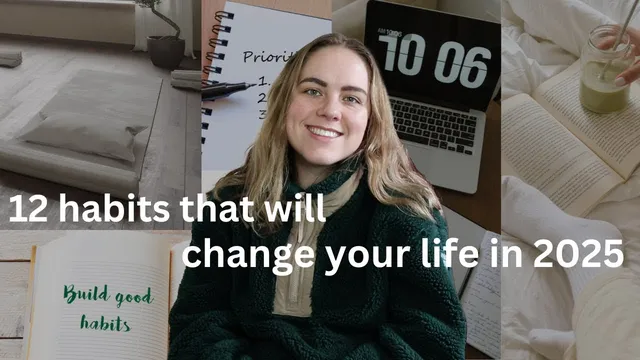
12 Simple Daily Habits That Changed My Life
Based on Ciara Feely's video on YouTube. If you like this content, support the original creators by watching, liking and subscribing to their content.
Choose habits that match the person you want to become, not just goals you want to achieve.
Briefing
Small, repeatable routines can reshape identity—especially when they’re built into existing daily moments. The central throughline is that “life change” doesn’t require a total overhaul; it comes from choosing habits that match the person someone wants to become, then anchoring those habits to the day already in motion.
A key framework is “habit stacking,” drawn from Atomic Habits: instead of trying to add a new behavior at an arbitrary time, the new habit gets attached to an existing trigger. The most natural openings, she says, are the gaps that already exist in a morning routine—after breakfast and brushing teeth, for example. From there, daily journaling becomes the flagship habit. She describes doing three A4 pages of freehand journaling (in the style associated with The Artist’s Way) for about 20–30 minutes each morning. The payoff isn’t just productivity; it changes how she starts the day. Emptying her head helps keep tasks from slipping away, reduces mental clutter, and creates space for ideas—product concepts, creative thoughts, and other forms of growth. The habit also replaces a past pattern of waking early to work before a 9:00 a.m. lecture; with journaling in place, she no longer feels like she has to be that person.
Several other habits reinforce the same identity shift: making time for what matters, then practicing it consistently. She argues that adults often abandon hobbies due to perceived lack of time, but reorganizing schedules to protect creative practice—piano, improv, acting work—improves confidence and community. In her case, cycling became a main mode of transport in late September/early October 2024, aligning with a dream of attending acting school and commuting by bike. The routine lowered stress, improved fitness, and built resilience through difficult rides in bad weather, which in turn strengthened self-esteem.
In the darker Irish months, she credits morning light with improving sleep and daytime energy. She also adds practical “tidiness” systems: a 10-minute tidy twice daily to prevent clutter from compounding, plus a simple rule—“don’t put it down, put it away”—to stop mess from accumulating across the week. Yoga is another anchor habit, helping her process emotions through breath-focused movement, improving mobility and posture, and offering anxiety relief via meditation-like calm.
More unconventional practices appear too. She describes starting cacao ceremonies in early 2024 and using cacao more regularly, noting mood effects tied to serotonin and dopamine while urging medical caution. She pairs that with reading before bed—aiming for 30–60 minutes—to reduce screen-driven restlessness and support creativity and sleep.
Finally, she turns to systems for mental load and money. Using the Getting Things Done method, she maintains a master task list and updates it weekly so her mind trusts the system; when she stops, mental reminders spike and stress rises. She also recommends choosing one daily priority (or top three in a Notion template) and doing it first, then limiting information intake by turning off most phone notifications and reducing email checks to protect “peace.” Tracking finances—without necessarily strict budgeting—helps her observe weekly spending patterns and cut back on stress-driven purchases like eating out and treats. The overall message is consistent: protect time, attach habits to existing routines, and repeat what supports the person someone wants to become.
Cornell Notes
The core idea is that identity-level change comes from simple daily habits chosen to match the person someone wants to become, then “stacked” onto existing routines. Habit stacking (from Atomic Habits) means attaching a new behavior to a reliable trigger—like adding journaling after breakfast and brushing teeth. Daily journaling (three A4 pages, 20–30 minutes) helps clear mental clutter, keep tasks from slipping, and generate creative ideas. Other habits reinforce the same theme: protect time for hobbies, use morning light to improve sleep in dark months, practice yoga for emotional release and calm, and read before bed to reduce screen-driven restlessness. Systems like Getting Things Done, one daily priority, reduced notifications, and weekly finance tracking lower stress by keeping the mind and money more predictable.
How does habit stacking change the odds that a new habit sticks?
Why does daily journaling matter beyond writing practice?
What role do hobbies play in building confidence and community?
How did cycling function as an identity habit, not just exercise?
Which systems reduce stress by preventing mental overload?
How does restricting information intake protect “peace”?
Review Questions
- Which existing routine could you use as a trigger to stack one new habit onto your day?
- What would “emptying your head” look like for you—what practice could replace or complement three A4 pages of morning journaling?
- How would you set up a weekly review and daily check-in so a task system (like Getting Things Done) actually reduces mental reminders rather than adding friction?
Key Points
- 1
Choose habits that match the person you want to become, not just goals you want to achieve.
- 2
Use habit stacking by attaching new behaviors to existing routines with predictable “gaps.”
- 3
Make daily journaling a consistent morning practice to reduce mental clutter and generate ideas.
- 4
Protect time for hobbies and creative work to build confidence, connection, and emotional balance.
- 5
Improve sleep and daytime energy in dark seasons with morning light exposure.
- 6
Reduce household stress with simple tidiness rules like a 10-minute tidy and “don’t put it down, put it away.”
- 7
Lower stress by using systems for tasks (Getting Things Done), one daily priority, limited notifications, and weekly finance tracking.