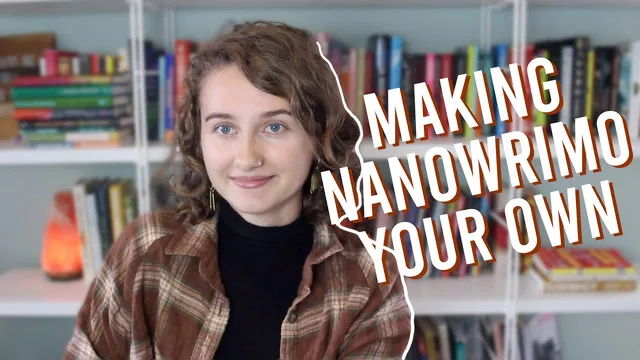
5 NaNoWriMo Alternatives!
Based on ShaelinWrites's video on YouTube. If you like this content, support the original creators by watching, liking and subscribing to their content.
Nanowrimo’s main value can be preserved by keeping the month-long challenge while changing the rules to fit the writer’s life and project.
Briefing
Nanowrimo’s 50,000-word-in-a-month structure doesn’t have to be the only way to get the benefits of the annual writing push—especially the community momentum that keeps many writers coming back each November. Jaylen frames the core idea as “make it work for you”: keep the spirit of a time-boxed challenge and the shared energy, but swap the rules when the standard framework doesn’t fit a writer’s current project, schedule, or creative rhythm.
The first alternative is the simplest: write every day in November without any word-count target. The goal is just consistency—whether the output is a single sentence or several thousand words—so the challenge becomes less about passing a measurable threshold and more about staying in motion. That matters because the strict success/failure math of 50,000 words can be motivating for some writers while discouraging or unsustainable for others. For writers who don’t naturally write daily, this “no number, just daily writing” approach aims to recreate the same forward momentum without forcing overwork.
Next comes a project-friendly adaptation for writers working on short fiction: write a short story each week. Instead of trying to generate a novel-length draft, the month yields about four short-story drafts—roughly a quarter of a collection—while still delivering the satisfaction of finishing discrete pieces. The plan can flex: if one week needs a break, a writer can swap in three longer stories and one shorter one (around a thousand words) to keep progress moving.
For poets, the alternative is “poem a day,” treated as an intentionally adjustable practice. Energy levels can dictate length and intensity: some days might produce a brief exercise, while inspired days can support longer poems. The payoff isn’t word totals; it’s habit-building. For beginners, consistent daily drafting is positioned as a fast way to find footing in poetry, and for longer-form goals, the month can produce a chapbook draft (about 30 poems).
A fourth option scales Nanowrimo down by fractions—half or quarter Nanowrimo—so the word goal feels realistic. The math is straightforward: half of 50,000 is 25,000 (about 833 words per day), and a quarter is about 12,500 (around 420 words per day). The point is to keep the familiar structure of a word-count challenge while lowering the barrier to entry.
Finally, there’s “edit rhino,” a direct swap from drafting to revision. Since Nanowrimo is designed for first drafts, it can feel misaligned when a writer is already in editing mode. The workaround is to set an editing goal for the month—pages per day or total pages divided across 30 days—so the same time-boxed discipline applies even when creativity isn’t the limiting factor. Editing, Jaylen notes, can be more straightforward than drafting because the words already exist; the challenge becomes building a steady revision habit.
The takeaway is pragmatic: Nanowrimo is a community event and a motivational container, not a universal rulebook. If the constraints don’t serve a writer’s life or project, modifying the challenge is presented as the whole point—participate in a way that’s sustainable, useful, and actually enjoyable.
Cornell Notes
Nanowrimo’s standard 50,000-word target isn’t the only path to its main benefits: community energy and a month-long push that keeps writers moving forward. Jaylen proposes five alternatives that preserve the time-boxed challenge while changing the rules to match different projects and creative habits. Options include writing every day with no word goal, writing one short story per week, writing a poem a day, scaling the word count to half or a quarter, and switching the challenge from drafting to editing. These adaptations matter because they reduce the “pass/fail” pressure that can make the original format inaccessible, while still creating momentum and consistency.
How can a writer keep Nanowrimo’s momentum without using the 50,000-word target?
What’s a practical Nanowrimo alternative for someone working on a short story collection?
How does “poem a day” adapt to different energy levels and goals?
What does “half” or “quarter” Nanowrimo look like in numbers, and why do it?
How can Nanowrimo be adapted for writers who are editing rather than drafting?
Review Questions
- Which Nanowrimo alternative best matches your current writing project (drafting, short fiction, poetry, or editing), and what would your daily/weekly target be?
- What trade-off does removing the word-count goal solve, and what new challenge might it create for accountability?
- If you chose half or quarter Nanowrimo, how would you plan your daily word count to stay consistent through the month?
Key Points
- 1
Nanowrimo’s main value can be preserved by keeping the month-long challenge while changing the rules to fit the writer’s life and project.
- 2
A “write every day” version removes pass/fail pressure by allowing any daily output, from one sentence to thousands of words.
- 3
Short fiction writers can adapt the challenge by producing one short story per week, yielding about four drafts in a month.
- 4
Poetry-focused writers can use “poem a day,” adjusting length based on energy and building a consistent practice habit.
- 5
Word-count goals can be scaled down to half (25,000) or quarter (12,500) to make the challenge more realistic.
- 6
Writers in revision mode can switch from drafting to editing by setting pages-per-day targets across 30 days.
- 7
Modifying the challenge is framed as the point: participation should be sustainable, useful, and enjoyable rather than strictly rule-bound.