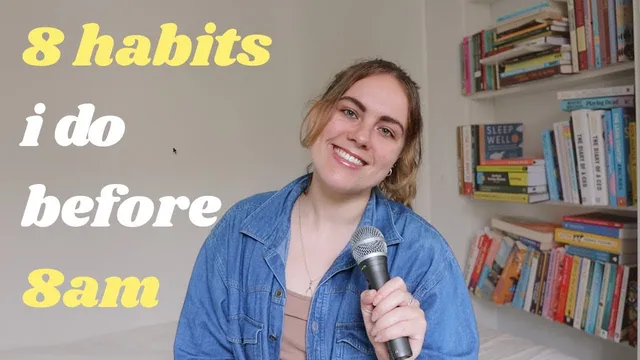
8 EASY morning habits to be productive all day
Based on Ciara Feely's video on YouTube. If you like this content, support the original creators by watching, liking and subscribing to their content.
Treat the first hour as restoration and “incubation,” not a time to force intense workouts that can cause later crashes.
Briefing
The core message is that the first hour should function less like a “go-go-go” workout and more like an incubation period: restore energy, sharpen focus, and prevent later-day crashes. Instead of stacking intense morning routines (ice baths, runs, gym sessions), Ciara Feely frames mornings as a time to build clarity and creativity so the rest of the day runs on momentum rather than stress.
Her routine is built around small, mostly five-minute habits, with one longer practice that can be compressed if needed. The day starts by removing distractions: she puts her phone away to avoid morning scrolling and the ruminating that can follow messages—especially stressful work notifications. She also avoids looking things up during journaling by keeping her phone in a separate room, protecting the flow of ideas.
Hydration comes next. She drinks about a pint of water right away, sometimes with an immunity-focused multivitamin, and often ends up drinking two pints in the morning. The payoff is practical: if she drinks early, she’s less likely to hit dehydration symptoms later (headaches, irritability, reduced ability to work).
For creativity and focus, she adds a cup of ceremonial-grade cacao with coconut milk, a little maple syrup, and optional spices. She credits it with helping her think more clearly and unlocking creative ideas—especially when paired with journaling—and notes it can also act as a mood booster. She repeatedly flags safety: people on head or heart medication, or those who are pregnant, should consult a doctor due to contraindications.
Gratitude is folded into the cacao moment. She closes her eyes, expresses thanks for the cacao, then mentally names two or three additional things she’s grateful for, leaning on evidence that gratitude improves mood—because better mood makes productivity easier.
The longest habit is morning pages from The Artist’s Way: three pages of stream-of-consciousness writing, typically 20–30 minutes, but she suggests a five-minute timer version if time is tight. She uses the pages to offload anxiety, frustration, and to-do lists, and to surface content and business ideas. She also adds a short “devotional” layer by reading sticky-note affirmations and “rules of the road” from her Artist’s Way notebook.
Planning follows. She argues that without structure, decision fatigue and task paralysis can cause hours to vanish into stress. Using a Creators Friend planner, she chooses a daily layout that fits the day (to-do heavy, schedule heavy, or lighter home tasks), then blocks time for priorities.
Movement and light round out the routine. She treats yoga as spiritual maintenance for body and mind—at minimum five minutes of breath work (pranayama) or mobility, with longer sessions when possible. She then gets sunlight to support circadian rhythm and reduce the risk of an afternoon energy crash, especially in winter. If she can’t get outside, she uses a light device.
Finally, she stacks small wins and readiness: a short achievable housework task (5–10 minutes) like making the bed or clearing dishes, then getting ready with basic self-care—teeth, face wash, SPF, grooming, outfit, and hair. The result is a morning that ends with a calm, prepared mind rather than a depleted one.
Cornell Notes
The routine centers on treating the first hour as an “incubation period” that restores energy and builds clarity, rather than forcing intense exercise that can lead to later-day crashes. Key tactics include removing phone distractions, hydrating early, and using ceremonial cacao (with safety cautions) to support focus, creativity, and mood. Morning pages from The Artist’s Way provide a structured outlet for anxiety, ideas, and to-do clarity, and a short devotional/affirmation reading reinforces intention. A flexible day plan reduces decision fatigue, while brief yoga/mobility and getting sunlight help maintain energy through the afternoon. Small wins (5–10 minutes of housework) and getting ready for the day complete the setup for sustained productivity.
Why does putting the phone away early matter for productivity, beyond simple “avoid scrolling” advice?
How does early hydration function as a productivity tool in her routine?
What role does ceremonial cacao play, and what safety caveats does she emphasize?
What exactly are “morning pages,” and how do they translate into day-to-day productivity?
How does planning reduce the risk of losing hours to stress?
Why do sunlight and brief movement show up in a productivity routine?
Review Questions
- Which two phone-related behaviors does she try to prevent in the morning, and how do they interfere with her other habits?
- How do morning pages and planning work together to reduce anxiety and decision fatigue?
- What combination of light, movement, and small wins does she use to avoid an afternoon energy crash?
Key Points
- 1
Treat the first hour as restoration and “incubation,” not a time to force intense workouts that can cause later crashes.
- 2
Remove phone access early to prevent both scrolling and stress-triggering notifications from derailing journaling and focus.
- 3
Drink water soon after waking (often two pints total) to reduce dehydration symptoms that can harm mood and work capacity.
- 4
Use ceremonial cacao as a creativity-and-mood tool, but consult a doctor first if on head/heart medication or if pregnant.
- 5
Write morning pages (three pages) to offload anxiety and generate content/business ideas, then read affirmations/devotional notes to set intention.
- 6
Plan the day with a flexible structure to prevent decision fatigue and task paralysis, even on weekends.
- 7
Support energy and comfort with brief yoga/mobility and sunlight, then finish with a small housework win and basic getting-ready self-care.