80-20 Rule for Happiness | Bullet Journal Spreads for Happiness and Mental Health
Based on Ciara Feely's video on YouTube. If you like this content, support the original creators by watching, liking and subscribing to their content.
Use the 80/20 happiness model to identify “happiness islands” and “unhappiness islands,” then redesign time to favor the former.
Briefing
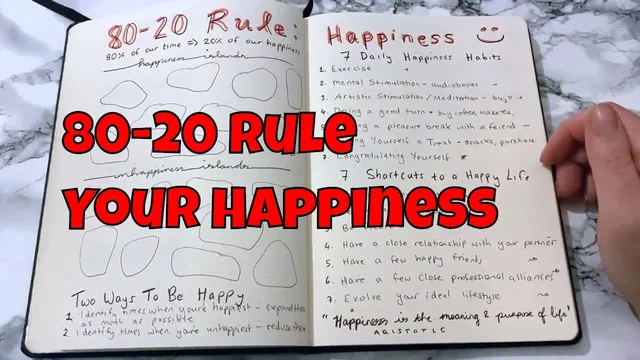
A bullet journal spread built around the 80/20 rule reframes happiness as something you can manage by tracking where your days reliably feel good—and then designing more time around those “happiness islands.” The core idea is simple: roughly 80% of daily inputs tend to produce only 20% of outcomes, and in this framework 80% of time yields just 20% of happiness. That imbalance becomes actionable once you identify the specific stretches of life—days, weeks, or months—when happiness is highest, then expand those periods while shrinking the “unhappiness islands.”
The spread is organized around two layers from the 80/20 approach. First comes the “two ways to be happy”: (1) identify when happiness is strongest and increase those moments, and (2) identify when unhappiness peaks and reduce exposure to those conditions. Second comes a structured “seven steps to happiness,” split into seven daily habits and seven broader shortcuts to a happier life.
The daily habits are mapped into practical routines. Exercise is paired with mental stimulation through activities like audiobooks or reading, while artistic stimulation is tied to bullet journaling itself. Spiritual or meditation appears as a category, and “doing a good turn” is translated into small, concrete acts—buying a friend a coffee, making tea for someone else, or other everyday kindness. The plan also includes pleasure breaks with friends and giving oneself a treat, such as a small snack or a modest purchase saved for over time. One habit—congratulating yourself—stands out as the hardest to maintain, so it’s turned into a recurring journal mechanism.
To make self-congratulation stick, the creator builds a monthly page that functions like a daily gratitude log but focused on wins: “Congrats today” prompts a specific reflection for each day. An example given is noting achievements like returning to the gym and booking personal training. The intent is to capture small wins that might otherwise be forgotten, creating a visible sense of progress and motivation even when the accomplishments are modest.
The “seven shortcuts” then connect happiness to lifestyle design. They include maximizing control over time, setting attainable goals, staying flexible, maintaining close relationships with a partner, cultivating a small circle of happy friends, building professional alliances, and evolving an ideal lifestyle. Several of these are already embedded in a routine built around a 12-week year plan—goal-setting for the next 12 weeks with the pressure of short-term deadlines. The creator links the 12-week structure to daily scheduling, walking routines, evening journaling, and reading before bed, aiming for a healthier, happier rhythm.
Overall, the spread turns an abstract happiness framework into a system: identify high- and low-happiness periods, practice seven daily habits, and reinforce them with tracking tools that make progress feel tangible. The result is less about chasing constant positivity and more about steering time toward what reliably improves mood and meaning.
Cornell Notes
The 80/20 happiness framework treats happiness as something you can influence by managing inputs and time. It recommends finding “happiness islands” (days or stretches when you feel best) and “unhappiness islands” (when you feel worst), then expanding the former and reducing the latter. It also lays out “seven daily happiness habits” such as exercise, mental stimulation (audiobooks/reading), artistic stimulation (bullet journaling), doing good turns, pleasure breaks, treats, and—most importantly—congratulating yourself. To make self-congratulation routine, a monthly “Congrats today” page prompts a specific win for each day. Finally, “seven shortcuts to a happy life” connect happiness to time control, attainable goals (supported by a 12-week year plan), relationships, and evolving an ideal lifestyle.
How does the 80/20 rule translate into a practical model for happiness?
What are the “two ways to be happy” in this framework?
Which seven daily habits are used to build a happiness routine, and how are they made concrete?
Why does “congratulating yourself” get special treatment, and what tool supports it?
How do the “seven shortcuts to a happy life” connect to planning and scheduling?
What role does the 12-week year play in the happiness plan?
Review Questions
- Which specific “happiness island” conditions would you try to identify in your own life, and what would you change to spend more time there?
- Pick one daily habit from the seven—how would you convert it into a trackable routine the way “congratulating yourself” was turned into a monthly prompt?
- How would a 12-week goal cycle affect your ability to pursue happiness-related habits compared with longer-term goals?
Key Points
- 1
Use the 80/20 happiness model to identify “happiness islands” and “unhappiness islands,” then redesign time to favor the former.
- 2
Translate the seven daily happiness habits into concrete actions (exercise, audiobooks/reading, bullet journaling, meditation, good turns, pleasure breaks, treats).
- 3
Treat “congratulating yourself” as a habit that needs a system; a daily prompt can capture small wins you might otherwise forget.
- 4
Support happiness habits with a structured goal cycle like a 12-week year to keep goals attainable and execution-focused.
- 5
Connect happiness to lifestyle design by maximizing control of your schedule and aligning weekly plans with an “ideal day.”
- 6
Strengthen relationships and community as part of the happiness shortcuts, including partner closeness, happy friends, and professional alliances.
- 7
Build flexibility into the plan, since it’s identified as a shortcut but may require deliberate practice to implement.